Marina - Panama Canal Navigator: Double Transit from Miami
Oceania's Marina makes a rare double Panama Canal transit on this 20-night Miami roundtrip, threading Western Caribbean ports, an overnight-style Panama City turnaround, then Colombia, the ABC islands and Jamaica on the way home.
Price Range
$$$
Premium
*Prices vary by cabin type, sailing date, and availability. Confirm rates with Oceania Cruises before booking.
Ship Details — Marina
View full Marina details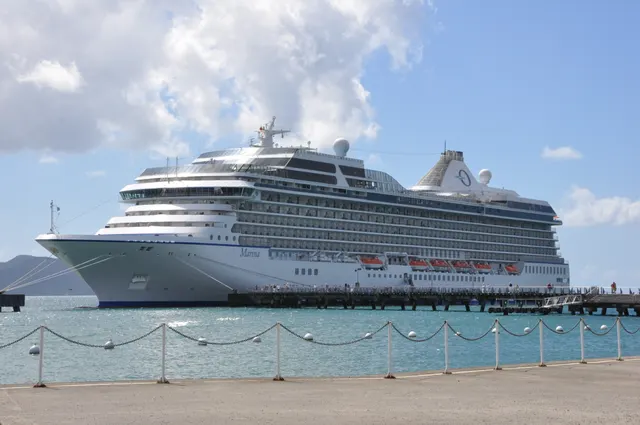
Year Built
2011
Tonnage
66,084 GT
Passengers
1,250
Crew
800
Decks
14
Class
Oceania
Itinerary & Route Map
Loading map…
Where this cruise calls, day by day
17 ports and 4 sea days over 20 Nights.
- Day 1
Miami, FL
United StatesDepartPortMiami is the busiest cruise port on earth and behaves like it: a lettered row of terminals strung along Dodge Island - A for Royal Caribbean, B for Norwegian, C for MSC, D through F for the Carnival brands, V for Virgin. Traffic funnels in over the Port Boulevard causeway or through the tunnel under Government Cut, and on a Saturday with six ships turning around, both back up.
- Ocean Drive and the Art Deco district in South Beach, 20 minutes across the causeway
- Wynwood Walls and the warehouse murals around it
- Calle Ocho in Little Havana - a cortadito and the domino tables at Maximo Gomez Park
- Vizcaya Museum and Gardens, a 1916 bayfront villa in Coconut Grove
- Getting ashore
- Terminals A-G and V sit on Dodge Island, reached by the Port Boulevard causeway or the PortMiami Tunnel; Miami International is about 8 miles west, usually 20-30 minutes but longer on a heavy turnaround morning.
- Best months
- Nov-Apr (Aug-Oct is peak hurricane season and August ashore is punishing)
Day 2 · At sea
- Day 3
Cozumel
MexicoPortCozumel is an island 12 miles off the Yucatán that runs almost entirely on cruise traffic - three piers, up to six ships at once, and a downtown built to absorb them. Which pier you draw matters more than anything else: Punta Langosta puts you in San Miguel on foot, while Puerta Maya and the International Pier sit a few miles south and need a taxi. The reason to come is underwater, on the Palancar and Colombia reefs.
- Snorkel or dive Palancar Reef
- Chankanaab Park's lagoon and shore snorkelling
- A beach club day at Mr. Sancho's or Nachi Cocom
- San Gervasio Maya ruins in the island's interior
- Getting ashore
- All ships dock; Punta Langosta is a walk into San Miguel, while Puerta Maya and the International Pier are 3-4 miles south, about 10 minutes by taxi.
- Best months
- Dec-Apr is driest and calmest; Jun-Nov is hurricane season, and sargassum can wash ashore May-Aug
- Day 4
Costa Maya
MexicoPortCosta Maya is a port with no town attached. The pier was built for ships, and the village behind it - saltwater pools, tequila stalls, a dolphin pen - is a purpose-built shopping compound. The actual settlement of Mahahual is a couple of miles up the road: a sandy malecón, beach clubs, and reef close enough to swim to. Most passengers skip both and head inland to Chacchoben or Bacalar.
- Chacchoben Maya ruins, about an hour inland
- Bacalar's Lagoon of Seven Colours (a long day, roughly two hours each way)
- Beach clubs along the Mahahual malecón
- Snorkelling the Mesoamerican reef from shore
- Getting ashore
- Ships dock at Puerto Costa Maya; Mahahual town is a 10-minute shuttle or taxi, or a hot 25-minute walk from the pier gate.
- Best months
- Dec-Apr is dry; sargassum is common Apr-Aug and Sep-Oct is the wettest, riskiest stretch
- Day 5
Harvest Caye
BelizePortNorwegian built this 75-acre island off southern Belize precisely to avoid Belize City's long tender ride - ships tie up at a pier and you walk ashore. What is there is a resort day: a large freshwater pool with a swim-up bar, a saltwater lagoon, a zip line, a ropes course and a shopping village, on Norwegian ships only. Food and drink are for sale rather than included.
- The saltwater lagoon and the freshwater pool
- Zip line over the water and the ropes course
- The butterfly house and wildlife exhibit
- Boat-and-bus excursions to Placencia and the southern Maya sites
- Getting ashore
- Ships dock at Harvest Caye itself; mainland Belize excursions leave by boat to Placencia or Independence, adding 20-30 minutes each way.
- Best months
- Dec-Apr is the dry season; Jun-Oct is wet and hot, with hurricane risk peaking Aug-Oct
- Day 6
Santo Tomas de Castilla
GuatemalaPortGuatemala's Caribbean port sits in the Bay of Amatique next to Puerto Barrios, and it is a commercial pier with a shed of craft stalls rather than a destination. This side of the country is Garífuna and Q'eqchi' rather than highland Maya, and the good excursions reflect that - a river gorge, a coastal town reachable only by boat, and one of the great Maya carving sites.
- Quiriguá's carved stelae, a UNESCO site about 90 minutes away
- A Río Dulce gorge boat trip and the Castillo de San Felipe
- Livingston, the Garífuna town reachable only by boat
- Las Escobas waterfalls in the Cerro San Gil reserve
- Getting ashore
- Ships dock at the commercial pier; there is no town at the gate, Puerto Barrios is a short drive, and everything else is an hour or more.
- Best months
- Jan-Apr is driest; this coast is wet most of the year and Sep-Nov is heaviest
- Day 7
Roatán
HondurasPortRoatán is a long, thin island sitting on the Mesoamerican Barrier Reef, and the day splits by pier. Carnival ships use Mahogany Bay at Dixon Cove, which has its own manufactured beach and a chairlift down to it; Royal Caribbean's Port of Roatán is in Coxen Hole, the workaday capital. Neither is really where you want to be - the reef at West Bay starts about twenty feet off the sand, half an hour west.
- Snorkel the reef straight off West Bay Beach
- West End village for dive shops and lunch
- Gumbalimba Park's macaws and capuchins
- A day pass at Little French Key
- Getting ashore
- Both Mahogany Bay and Port of Roatán are alongside berths, not tenders; West Bay Beach is a 30-45 minute taxi from either, and drivers negotiate hard.
- Best months
- Feb-Sep for the clearest water; Oct-Jan is the wet season, with November the heaviest month
Day 8 · At sea
- Day 9
Puerto Limon
Costa RicaPortLimón is Costa Rica's Caribbean port and a working one - the pier is in town, the town is scruffy and humid, and almost nobody stays. This coast is the country's wettest and its most Afro-Caribbean, with Jamaican-descended Creole culture and rainforest starting right behind the city. Everything worth doing runs inland to the canals, the aerial trams and the whitewater rivers.
- Tortuguero canal boat trips
- The Veragua Rainforest or the Braulio Carrillo aerial tram
- Whitewater rafting the Pacuare or Reventazón
- Cahuita National Park and Puerto Viejo down the coast
- Getting ashore
- Ships dock at the pier in central Limón; you can walk into town in minutes, though there is little reason to linger.
- Best months
- Feb-Mar and Sep-Oct are the driest windows - the Caribbean side reverses the national pattern and rains hardest Nov-Jan
- Day 10
Panama Canal (Transit)
PanamaPortThis is a sea day where the ship itself is the excursion. A full transit takes eight to ten hours, lifting the ship 85 feet through the Gatún chambers, across Gatún Lake and the Culebra Cut, then down through Pedro Miguel and Miraflores. Partial transits go only as far as the lake, land passengers for shore tours, and back out the way they came. Forward deck space fills before dawn.
- Watching a lock chamber fill from a forward deck
- The Culebra Cut, the section hacked through the continental divide
- The wider Agua Clara and Cocolí locks, if your ship is Neopanamax
- The onboard canal narrator, who boards with the pilot
- Getting ashore
- Not a port call - the ship transits; on partial transits passengers tender ashore in Gatún Lake for excursions and rejoin the ship there.
- Best months
- Jan-Apr is the dry season; drought years have cut the number of daily transit slots, so schedules can shift
- Day 11
Panama City (Fuerte Amador)
PanamaPortFuerte Amador is an anchorage off the causeway that links Panama City to four islands at the Pacific mouth of the canal. Many ships still tender here, though a cruise terminal opened at Amador in 2023 and some now berth alongside. Either way, the skyline across the water is a wall of glass towers, and the day belongs to Casco Viejo's restored colonial quarter and the Miraflores lock viewing platform.
- Miraflores Locks visitor centre
- Casco Viejo, the old walled quarter
- Panamá Viejo, the ruins of the original 1519 city
- Gamboa and Soberanía National Park rainforest
- Getting ashore
- Mixed - many ships still tender to the Fuerte Amador marina (15-20 minutes) while others use the Amador cruise terminal; downtown is another 15-20 minutes by taxi.
- Best months
- Dec-Apr is the dry season; May-Nov brings heavy afternoon rain most days
- Day 12
Panama Canal (Transit)
PanamaPortThis is a sea day where the ship itself is the excursion. A full transit takes eight to ten hours, lifting the ship 85 feet through the Gatún chambers, across Gatún Lake and the Culebra Cut, then down through Pedro Miguel and Miraflores. Partial transits go only as far as the lake, land passengers for shore tours, and back out the way they came. Forward deck space fills before dawn.
- Watching a lock chamber fill from a forward deck
- The Culebra Cut, the section hacked through the continental divide
- The wider Agua Clara and Cocolí locks, if your ship is Neopanamax
- The onboard canal narrator, who boards with the pilot
- Getting ashore
- Not a port call - the ship transits; on partial transits passengers tender ashore in Gatún Lake for excursions and rejoin the ship there.
- Best months
- Jan-Apr is the dry season; drought years have cut the number of daily transit slots, so schedules can shift
- Day 13
Cartagena
ColombiaPortThe berth sits inside a working container port, and the walk out passes a small aviary the port maintains - flamingos, macaws and monkeys in the trees, an odd but real feature of the arrival. The walled city is 20 to 30 minutes by taxi and earns the trip: a complete colonial core inside Spanish fortifications, with Getsemaní's murals just outside the gates. It is punishingly hot and the plaza vendors are relentless.
- The walled city and Las Bóvedas
- Castillo San Felipe de Barajas
- Getsemaní's street art and Plaza de la Trinidad
- A boat out to the Rosario Islands
- Getting ashore
- Ships dock in the commercial port; the walled city is a 20-30 minute taxi ride, and official port taxis queue at the terminal.
- Best months
- Dec-Apr is drier and marginally less humid; Sep-Nov is wettest. Outside the main hurricane track
- Day 14
Santa Marta
ColombiaPortSanta Marta is the oldest surviving Spanish city in Colombia, founded in 1525, and the pier puts you within a short walk of its cathedral and the restored Parque de los Novios. It is smaller and rougher than Cartagena, with a working-port city beach you would not swim at, but it sits between the Caribbean and the Sierra Nevada - Tayrona's coves an hour east, coffee farms climbing the mountains behind.
- Tayrona National Park's beaches and jungle trails
- Quinta de San Pedro Alejandrino, where Simón Bolívar died
- Minca's coffee farms and waterfalls in the Sierra Nevada
- The Centro Histórico and Parque de los Novios at dusk
- Getting ashore
- Ships dock at the city pier; the historic centre is a 5-10 minute walk from the terminal gate.
- Best months
- Dec-Apr is dry and windy; Sep-Nov is the rainiest. Outside the main hurricane track
- Day 15
Oranjestad
ArubaPortAruba sits below the hurricane belt and gets under 20 inches of rain a year, which is why the leeward coast is one long resort beach and the interior is cactus and divi-divi trees permanently bent by the trade wind. The cruise terminal is in central Oranjestad, with Dutch-colonial pastel shopfronts starting at the gate and a free streetcar running the main street.
- Eagle Beach and Palm Beach
- Arikok National Park and the Natural Pool by 4x4
- Baby Beach at the far southeast tip
- The California Lighthouse and the dunes below it
- Getting ashore
- Ships dock in downtown Oranjestad - walk out of the terminal into town; Eagle Beach is a 10-minute taxi or bus ride.
- Best months
- Good all year; Jan-Apr is driest and busiest, Oct-Dec brings brief showers. Outside the hurricane belt
- Day 16
Willemstad
CuracaoPortThe arrival is the best part of the day. Ships either tie up at the Mega Pier just outside the harbour mouth or sail directly into St. Anna Bay past the Handelskade's row of ochre and mint waterfront houses. Willemstad is a UNESCO site and a genuinely Dutch city dropped into the tropics - floating market, a pontoon bridge that swings open for shipping, and the oldest synagogue still in use in the Americas.
- The Queen Emma pontoon bridge and the Handelskade waterfront
- Mikvé Israel-Emanuel synagogue and its sand floor
- Kurá Hulanda museum's slavery collection
- West-coast beaches like Cas Abao and Grote Knip
- Getting ashore
- Ships dock; the Mega Pier is a 10-15 minute walk into Otrobanda, while the inner-harbour berth puts you beside the pontoon bridge.
- Best months
- Year-round; Oct-Dec is wettest but the rain is brief. Outside the hurricane belt
Day 17 · At sea
- Day 18
Port Antonio
JamaicaPortPort Antonio is the north-east corner of Jamaica, the wettest and greenest part, and it never got the resort build-out the rest of the north coast did. Only small ships call, tying up at the Ken Wright Pier in the middle of town. This is where jerk cooking comes from, where Errol Flynn turned bamboo rafting on the Rio Grande into a business, and where the Blue Lagoon of the film actually is.
- Bamboo rafting the Rio Grande
- The Blue Lagoon
- Frenchman's Cove, where a river meets the beach
- Jerk pork at Boston Bay
- Getting ashore
- Small ships dock at Ken Wright Pier and you walk off into town; Frenchman's Cove is about 15 minutes east by taxi.
- Best months
- Dec-Apr and Jul-Aug are the drier stretches; this is Jamaica's wettest coast and rain is possible any month
Day 19 · At sea
- Day 20
Great Stirrup Cay
BahamasPortNorwegian's Berry Islands beach is the oldest of the private-island calls - the line has used it since 1977. It was a tender operation for decades, which made short calls miserable, until a two-ship pier opened at the end of 2025 and ships began tying up. Bertram's Cove is the main swimming beach. The buffet lunch is included; cabanas, the Silver Cove villas, watersports rentals and the spa are not.
- Bertram's Cove, the main beach
- The included beach barbecue buffet
- Snorkel gear, kayaks and floats for rent (extra cost)
- Private cabanas and the Silver Cove lagoon villas (extra cost)
- Getting ashore
- Ships dock at the pier that opened in December 2025 - older trip reports describing a tender ride no longer apply.
- Best months
- Nov-Apr for calm seas and reliable calls; summer is hotter with afternoon storms
- Day 21
Miami, FL
United StatesArrivePortMiami is the busiest cruise port on earth and behaves like it: a lettered row of terminals strung along Dodge Island - A for Royal Caribbean, B for Norwegian, C for MSC, D through F for the Carnival brands, V for Virgin. Traffic funnels in over the Port Boulevard causeway or through the tunnel under Government Cut, and on a Saturday with six ships turning around, both back up.
- Ocean Drive and the Art Deco district in South Beach, 20 minutes across the causeway
- Wynwood Walls and the warehouse murals around it
- Calle Ocho in Little Havana - a cortadito and the domino tables at Maximo Gomez Park
- Vizcaya Museum and Gardens, a 1916 bayfront villa in Coconut Grove
- Getting ashore
- Terminals A-G and V sit on Dodge Island, reached by the Port Boulevard causeway or the PortMiami Tunnel; Miami International is about 8 miles west, usually 20-30 minutes but longer on a heavy turnaround morning.
- Best months
- Nov-Apr (Aug-Oct is peak hurricane season and August ashore is punishing)
Onboard Amenities
Cruise Highlights
About the Ship
What Travelers Say About Marina
Reviews of the ship itself — the same for every Marina sailing. Based on 600 discussions.
Oceania Marina is a 1,250-guest, mid-size ship that built its reputation on food and a refined, grown-up atmosphere. Launched in 2011 and given an extensive refurbishment in May 2024, it balances near-luxury amenities with fares that sit below all-inclusive luxury lines. The vibe is quiet, traditional and unhurried, with minimal announcements, an adults-only feel (no kids' programming) and just-fancy-enough surroundings that lead guests to expect, and generally receive, high-class service.
What People Love
- Genuinely standout cuisine for a cruise ship: four open-seating specialty restaurants (Jacques, Red Ginger, Polo Grill, Toscana) plus the new wellness-focused Aquamar Kitchen, all included in the fare with no surcharge
- Exceptional fresh-baked breads and proper white-glove afternoon tea with scones, clotted cream and a string quartet that guests rave about
- Roomy, well-appointed cabins with marble bathrooms and an unusually high 95% balcony ratio, all refreshed in the 2024 refurbishment
Common Complaints
- Food quality is divisive: some guests who came specifically for Oceania's culinary reputation found the main dining consistently average and underwhelming
- The specialty-restaurant reservation system works poorly on week-long sailings, forcing guests to miss venues or dine very late
- Despite the 2024 refit, some passengers still note signs of age and wear on a ship dating to 2011
More Panama Canal Cruises
View all Panama Canal cruisesCelebrity Cruises
Celebrity Ascent - Panama Canal & Southern Caribbean
Holland America Line
Rotterdam - Panama Canal Sunfarer from Fort Lauderdale
Norwegian Cruise Line
Norwegian Encore - Panama Canal Repositioning
Norwegian Cruise Line
Norwegian Bliss - Panama Canal from Los Angeles to Miami