Norwegian Joy - Panama Canal Repositioning: Seattle to Miami
When Alaska season ends, Norwegian Joy runs the entire Pacific coast from Seattle to Miami - an overnight in San Francisco, five Latin American ports and a full Panama Canal transit on one 21-night repositioning.
Price Range
$
Budget
*Prices vary by cabin type, sailing date, and availability. Confirm rates with Norwegian Cruise Line before booking.
Ship Details — Norwegian Joy
View full Norwegian Joy details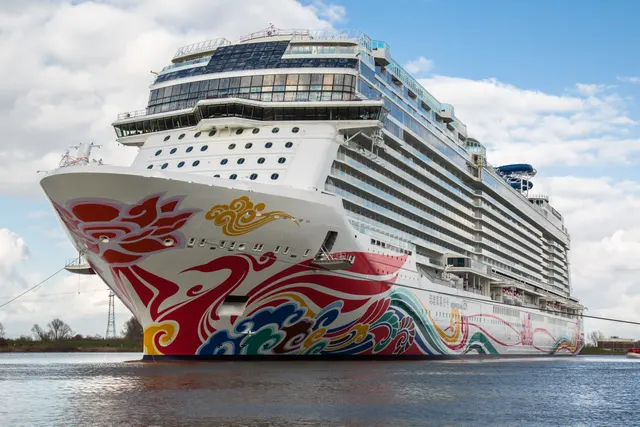
Year Built
2017
Tonnage
167,725 GT
Passengers
3,804
Crew
1,821
Decks
20
Class
Breakaway Plus
Itinerary & Route Map
Loading map…
Where this cruise calls, day by day
13 ports and 9 sea days over 21 Nights.
- Day 1
Seattle, WA
United StatesDepartSeattle is the busiest Alaska turnaround port in the US, and which pier you get matters. Pier 91 at Smith Cove is a converted cargo terminal about three miles north of downtown; Pier 66 on Bell Street puts you a steep ten-minute walk from Pike Place Market. Because sailings from here are US-flagged only in part, almost every Seattle Alaska itinerary is legally obliged to call in Canada, usually Victoria.
- Pike Place Market and the original Starbucks, best done before 9am
- The Museum of Pop Culture and Chihuly Garden and Glass at Seattle Center
- A ferry across Elliott Bay to Bainbridge Island for the skyline view back
- Pioneer Square and the Klondike Gold Rush National Historical Park museum, free and directly relevant to where you are sailing
- Getting ashore
- Two terminals: Pier 66 is downtown and walkable, Pier 91 is three miles out and needs a taxi or shuttle - check your ticket, they are not interchangeable.
- Best months
- May-Sep (Jul-Aug reliably dry and warm; May and Sep wetter but far less crowded)
- Day 2
Victoria, BC
CanadaPortVictoria's oddity is the clock. US cabotage law requires round-trip Alaska sailings to touch a foreign port, so most ships arrive here late in the evening on the final night and leave near midnight - four hours, much of it dark. Ogden Point is a working breakwater terminal a couple of kilometres from the Inner Harbour, and the city itself is low-rise, English-inflected and easy.
- Butchart Gardens, about 30 minutes north and lit for evening visits in summer
- The Inner Harbour, the Parliament Buildings and tea at the Fairmont Empress
- Royal BC Museum for its First Nations and natural-history collections
- Fisherman's Wharf and its float homes, a walk along the water from the pier
- Getting ashore
- Docked at Ogden Point; it is roughly a 30-minute waterfront walk to the Inner Harbour, or a short shuttle, taxi or pedicab.
- Best months
- May-Sep; late calls suit Butchart's summer illuminations
Day 3 · At sea
- Day 4
San Francisco, CA
United StatesPortArriving here is the point: ships pass under the Golden Gate Bridge and berth at Pier 27, on the Embarcadero within sight of Coit Tower and a walk from the Ferry Building. It serves as a turnaround port for Alaska and Hawaii sailings and an occasional day call. Fog can swallow the bridge entirely even in July, so the famous approach is not guaranteed.
- Alcatraz Island, which sells out weeks ahead and cannot be booked on the day
- The Ferry Building marketplace and the Embarcadero waterfront
- Cable car from Powell Street over Nob Hill
- Golden Gate Park, the Presidio and the view back at the bridge from Fort Point
- Getting ashore
- Docks at Pier 27 on the Embarcadero; Fisherman's Wharf and the Ferry Building are walkable in either direction.
- Best months
- Year-round (Sep-Oct warmest and least foggy; Jun-Aug is peak fog season)
- Day 5
San Francisco, CA
United StatesPortArriving here is the point: ships pass under the Golden Gate Bridge and berth at Pier 27, on the Embarcadero within sight of Coit Tower and a walk from the Ferry Building. It serves as a turnaround port for Alaska and Hawaii sailings and an occasional day call. Fog can swallow the bridge entirely even in July, so the famous approach is not guaranteed.
- Alcatraz Island, which sells out weeks ahead and cannot be booked on the day
- The Ferry Building marketplace and the Embarcadero waterfront
- Cable car from Powell Street over Nob Hill
- Golden Gate Park, the Presidio and the view back at the bridge from Fort Point
- Getting ashore
- Docks at Pier 27 on the Embarcadero; Fisherman's Wharf and the Ferry Building are walkable in either direction.
- Best months
- Year-round (Sep-Oct warmest and least foggy; Jun-Aug is peak fog season)
Day 6 · At sea
- Day 7
Los Angeles, CA
United StatesPortShips berth at the World Cruise Center in San Pedro, under the green span of the Vincent Thomas Bridge and ringed by container cranes. This is a working port rather than a waterfront to stroll, and it is overwhelmingly a turnaround terminal for Mexican Riviera and Hawaii runs. Los Angeles proper starts about 25 miles inland, so most passengers meet a freeway before they meet a beach.
- Tour the battleship USS Iowa, moored a short walk up the channel from the terminal
- Point Fermin Lighthouse and the collapsed bluffs of Sunken City on the San Pedro headland
- Cabrillo Marine Aquarium and the tide pools below it
- Griffith Observatory or the Santa Monica Pier if you are willing to spend the day in traffic
- Getting ashore
- Docks at the World Cruise Center in San Pedro; there is no walkable city here, and downtown, Hollywood or Santa Monica each mean 45-75 minutes by road.
- Best months
- Year-round (Sep-Nov clearest; May-Jun often overcast on the coast)
Day 8 · At sea
- Day 9
Cabo San Lucas
MexicoPortCabo is a tender port, and one of the better ones - the boat drops you at the marina in the middle of town rather than a mile from anywhere. The setting does the work: desert mountains falling straight into the Pacific, with the granite arch at Land's End a ten-minute panga ride from the dock. Expect timeshare pitches from the moment you step onto the boardwalk.
- Water taxi to El Arco and Lover's Beach
- Médano Beach, the one bay in town that is safe to swim
- Snorkelling at Chileno Bay or Santa María
- Grey and humpback whale watching in winter
- Getting ashore
- Tender port - about 10-15 minutes to the marina, which puts you in the centre of town; heavy Pacific swell occasionally cancels the operation.
- Best months
- Nov-May is dry and mild, with whales Dec-Apr; Aug-Oct is humid and hurricane-prone
Day 10 · At sea
- Day 11
Acapulco
MexicoPortAcapulco has had a brutal decade. Cartel violence emptied out its international tourism, then Hurricane Otis came ashore as a Category 5 in October 2023 and flattened much of the hotel strip. Cruise calls are far fewer than they once were and the rebuild is uneven. Ships berth beside the old town near the zócalo, but Guerrero state carries the US State Department's strongest warning, so most passengers go ashore only on ship tours.
- The La Quebrada cliff divers
- Fort San Diego and its museum
- Playa Caleta and Caletilla in the old town
- A boat tour around Acapulco Bay
- Getting ashore
- Ships dock next to the old town and the zócalo is a short walk, but the state's security advisory means most people stay with an organised group.
- Best months
- Nov-Apr is dry and warm; Jun-Oct is the rainy season with real hurricane exposure on this coast
Day 12 · At sea
- Day 13
Puerto Quetzal
GuatemalaPortThere is nothing at Puerto Quetzal but a container terminal, a craft market that appears on ship days, and black volcanic sand. Everything worth doing is a long transfer inland: Antigua, the cobbled colonial capital ringed by volcanoes, is 90 minutes to two hours each way, and Lake Atitlán is closer to three. Plan the day around one destination, not several.
- Antigua Guatemala's colonial centre and the Cerro de la Cruz viewpoint
- Hiking Pacaya volcano
- Lake Atitlán, if you accept a very long day
- Macadamia and coffee farm tours on the volcanic slopes
- Getting ashore
- Ships dock at the commercial port; there is no town within walking distance, so the day depends entirely on a coach transfer.
- Best months
- Nov-Apr is the dry season; May-Oct brings afternoon downpours
Day 14 · At sea
- Day 15
Puntarenas
Costa RicaPortPuntarenas is a narrow sand spit with a long pier down the middle, and walking off the ship puts you straight onto the Paseo de los Turistas, a seafront promenade of soda stands and ice-cream carts. Do not swim - the estuary water here is grey and murky. This is a jumping-off point, and the headline trips, Monteverde above all, run close to three hours each way.
- Monteverde cloud forest, accepting the long drive
- Manuel Antonio National Park
- Tárcoles River crocodiles and Carara National Park
- A Churchill, the local shaved-ice dessert, on the Paseo
- Getting ashore
- Ships dock at the pier and you walk directly onto the Paseo de los Turistas; San José is about two hours inland.
- Best months
- Dec-Apr is dry; May-Nov brings afternoon rain, heaviest in September and October
Day 16 · At sea
- Day 17
Panama City (Fuerte Amador)
PanamaPortFuerte Amador is an anchorage off the causeway that links Panama City to four islands at the Pacific mouth of the canal. Many ships still tender here, though a cruise terminal opened at Amador in 2023 and some now berth alongside. Either way, the skyline across the water is a wall of glass towers, and the day belongs to Casco Viejo's restored colonial quarter and the Miraflores lock viewing platform.
- Miraflores Locks visitor centre
- Casco Viejo, the old walled quarter
- Panamá Viejo, the ruins of the original 1519 city
- Gamboa and Soberanía National Park rainforest
- Getting ashore
- Mixed - many ships still tender to the Fuerte Amador marina (15-20 minutes) while others use the Amador cruise terminal; downtown is another 15-20 minutes by taxi.
- Best months
- Dec-Apr is the dry season; May-Nov brings heavy afternoon rain most days
- Day 18
Panama Canal (Transit)
PanamaPortThis is a sea day where the ship itself is the excursion. A full transit takes eight to ten hours, lifting the ship 85 feet through the Gatún chambers, across Gatún Lake and the Culebra Cut, then down through Pedro Miguel and Miraflores. Partial transits go only as far as the lake, land passengers for shore tours, and back out the way they came. Forward deck space fills before dawn.
- Watching a lock chamber fill from a forward deck
- The Culebra Cut, the section hacked through the continental divide
- The wider Agua Clara and Cocolí locks, if your ship is Neopanamax
- The onboard canal narrator, who boards with the pilot
- Getting ashore
- Not a port call - the ship transits; on partial transits passengers tender ashore in Gatún Lake for excursions and rejoin the ship there.
- Best months
- Jan-Apr is the dry season; drought years have cut the number of daily transit slots, so schedules can shift
- Day 19
Cartagena
ColombiaPortThe berth sits inside a working container port, and the walk out passes a small aviary the port maintains - flamingos, macaws and monkeys in the trees, an odd but real feature of the arrival. The walled city is 20 to 30 minutes by taxi and earns the trip: a complete colonial core inside Spanish fortifications, with Getsemaní's murals just outside the gates. It is punishingly hot and the plaza vendors are relentless.
- The walled city and Las Bóvedas
- Castillo San Felipe de Barajas
- Getsemaní's street art and Plaza de la Trinidad
- A boat out to the Rosario Islands
- Getting ashore
- Ships dock in the commercial port; the walled city is a 20-30 minute taxi ride, and official port taxis queue at the terminal.
- Best months
- Dec-Apr is drier and marginally less humid; Sep-Nov is wettest. Outside the main hurricane track
Day 20 · At sea
Day 21 · At sea
- Day 22
Miami, FL
United StatesArrivePortMiami is the busiest cruise port on earth and behaves like it: a lettered row of terminals strung along Dodge Island - A for Royal Caribbean, B for Norwegian, C for MSC, D through F for the Carnival brands, V for Virgin. Traffic funnels in over the Port Boulevard causeway or through the tunnel under Government Cut, and on a Saturday with six ships turning around, both back up.
- Ocean Drive and the Art Deco district in South Beach, 20 minutes across the causeway
- Wynwood Walls and the warehouse murals around it
- Calle Ocho in Little Havana - a cortadito and the domino tables at Maximo Gomez Park
- Vizcaya Museum and Gardens, a 1916 bayfront villa in Coconut Grove
- Getting ashore
- Terminals A-G and V sit on Dodge Island, reached by the Port Boulevard causeway or the PortMiami Tunnel; Miami International is about 8 miles west, usually 20-30 minutes but longer on a heavy turnaround morning.
- Best months
- Nov-Apr (Aug-Oct is peak hurricane season and August ashore is punishing)
Onboard Amenities
Cruise Highlights
About the Ship
What Travelers Say About Norwegian Joy
Reviews of the ship itself — the same for every Norwegian Joy sailing. Based on 1,300 discussions.
Norwegian Joy is a 2017 Breakaway-Plus mega-ship with an unusual backstory: it was originally built and outfitted for the Chinese cruise market, then pulled to North America in 2018 and refurbished to mirror its sister ship, Norwegian Bliss. A second major refurbishment in early 2024 modernized it further, adding cabins, expanding the Vibe Beach Club to two levels and installing what reviewers call the best Thermal Suite at sea. The result is a ship that looks nearly new and carries the familiar Breakaway-Plus thrills, but with a slightly quirky heritage layout.
What People Love
- The 2024 refurbishment left the ship looking nearly new, with fresh furnishings and a generally well-maintained feel for a 2017-built vessel
- The new Thermal Suite added in 2024 is widely called the best at sea, surpassing even NCL's newer Prima and Viva
- The expanded two-level Vibe Beach Club is a standout adults-only retreat that many reviewers say is worth paying for every time
Common Complaints
- The 2024 refurbishment added 24 cabins, increasing passenger load to over 4,300 on some sailings and worsening crowding
- Reviewers report the ship feels crowded at pools, restaurants and elevators, with only two elevator banks instead of three
- Food draws heavy criticism in recent member reviews, with the buffet and main dining rooms called bland, repetitive and sometimes cold
More Panama Canal Cruises
View all Panama Canal cruisesCelebrity Cruises
Celebrity Ascent - Panama Canal & Southern Caribbean
Holland America Line
Rotterdam - Panama Canal Sunfarer from Fort Lauderdale
Norwegian Cruise Line
Norwegian Encore - Panama Canal Repositioning
Norwegian Cruise Line
Norwegian Bliss - Panama Canal from Los Angeles to Miami