Eurodam - Panama Canal Repositioning: Seattle to Fort Lauderdale
A 21-night ocean-to-ocean repositioning on Holland America's Eurodam from Seattle to Fort Lauderdale, transiting the Panama Canal after a string of Pacific coast and Central American calls.
Price Range
$
Budget
*Prices vary by cabin type, sailing date, and availability. Confirm rates with Holland America Line before booking.
Ship Details — Eurodam
View full Eurodam details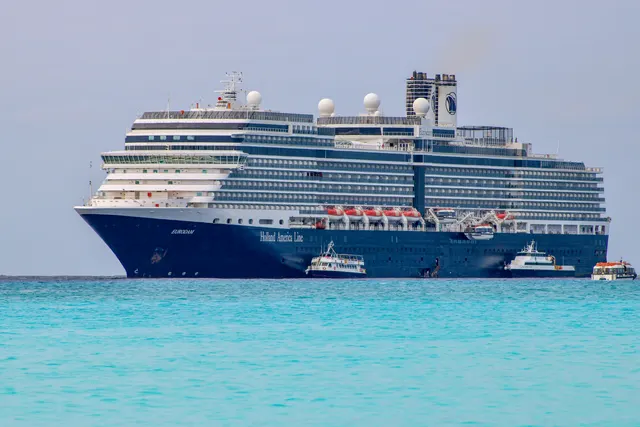
Year Built
2008
Tonnage
86,700 GT
Passengers
2,104
Crew
929
Decks
12
Class
Signature
Itinerary & Route Map
Loading map…
Where this cruise calls, day by day
13 ports and 9 sea days over 21 Nights.
- Day 1
Seattle, WA
United StatesDepartSeattle is the busiest Alaska turnaround port in the US, and which pier you get matters. Pier 91 at Smith Cove is a converted cargo terminal about three miles north of downtown; Pier 66 on Bell Street puts you a steep ten-minute walk from Pike Place Market. Because sailings from here are US-flagged only in part, almost every Seattle Alaska itinerary is legally obliged to call in Canada, usually Victoria.
- Pike Place Market and the original Starbucks, best done before 9am
- The Museum of Pop Culture and Chihuly Garden and Glass at Seattle Center
- A ferry across Elliott Bay to Bainbridge Island for the skyline view back
- Pioneer Square and the Klondike Gold Rush National Historical Park museum, free and directly relevant to where you are sailing
- Getting ashore
- Two terminals: Pier 66 is downtown and walkable, Pier 91 is three miles out and needs a taxi or shuttle - check your ticket, they are not interchangeable.
- Best months
- May-Sep (Jul-Aug reliably dry and warm; May and Sep wetter but far less crowded)
- Day 2
Vancouver, BC
CanadaPortCanada Place is the rare cruise terminal that is genuinely in the middle of the city - white sail-roofs on the downtown waterfront, with Gastown five minutes away on foot. Most Vancouver calls are turnaround days for Alaska, which means customs queues and half a day rather than a whole one. Ships that don't fit or can't get a slot go to Ballantyne Pier, which is a shuttle ride out.
- The Stanley Park seawall and the totem poles at Brockton Point
- Granville Island Public Market, reached by the little rainbow ferries
- Capilano Suspension Bridge and the Grouse Mountain gondola on the North Shore
- Gastown's steam clock, then Chinatown and the Dr. Sun Yat-Sen Classical Chinese Garden
- Getting ashore
- Docked. Canada Place opens onto the downtown waterfront beside the Waterfront SkyTrain station; the overflow berth at Ballantyne Pier is a few kilometres east and needs a taxi or shuttle.
- Best months
- May-Sep (Alaska season); Jul-Aug driest
Day 3 · At sea
Day 4 · At sea
- Day 5
Santa Barbara, CA
United StatesPortSanta Barbara has no cruise berth, so ships anchor in the open roadstead and tender passengers to the harbour or Stearns Wharf. The town is a rare California case where the walk from the landing is genuinely the point: red-tiled Spanish Revival architecture enforced by city code, a palm-lined beachfront, and State Street running straight inland from the water.
- Old Mission Santa Barbara, the 1786 'Queen of the Missions' above town
- The Santa Barbara County Courthouse and its free clock tower viewpoint
- The Funk Zone tasting rooms, a few blocks from the tender landing
- Stearns Wharf and the waterfront path toward the harbour
- Getting ashore
- Tender only into the harbour or Stearns Wharf; downtown and the Funk Zone are walkable, the Mission is uphill and better by taxi.
- Best months
- May-Oct (Sep-Oct warmest and clearest; winter swell causes tender cancellations)
- Day 6
San Diego, CA
United StatesPortSan Diego is one of the easiest cruise arrivals in the country: the B Street and Broadway piers sit directly on the downtown Embarcadero, with the aircraft carrier USS Midway permanently moored a few hundred yards along the same waterfront. The Gaslamp Quarter is a flat ten-minute walk. It works as both a turnaround port for Mexico runs and a pleasant one-day call.
- USS Midway Museum, with the flight deck and hangar open to walk
- Balboa Park's museums and the San Diego Zoo
- Old Town San Diego State Historic Park, the original Mexican-era settlement
- The ferry across the bay to Coronado and the Hotel del Coronado
- Getting ashore
- Docks downtown at the B Street or Broadway Pier; the Gaslamp Quarter, Midway and Little Italy are all walkable.
- Best months
- Year-round (Sep-Oct warmest and clearest; May-Jun often grey until afternoon)
Day 7 · At sea
- Day 8
Cabo San Lucas
MexicoPortCabo is a tender port, and one of the better ones - the boat drops you at the marina in the middle of town rather than a mile from anywhere. The setting does the work: desert mountains falling straight into the Pacific, with the granite arch at Land's End a ten-minute panga ride from the dock. Expect timeshare pitches from the moment you step onto the boardwalk.
- Water taxi to El Arco and Lover's Beach
- Médano Beach, the one bay in town that is safe to swim
- Snorkelling at Chileno Bay or Santa María
- Grey and humpback whale watching in winter
- Getting ashore
- Tender port - about 10-15 minutes to the marina, which puts you in the centre of town; heavy Pacific swell occasionally cancels the operation.
- Best months
- Nov-May is dry and mild, with whales Dec-Apr; Aug-Oct is humid and hurricane-prone
Day 9 · At sea
- Day 10
Acapulco
MexicoPortAcapulco has had a brutal decade. Cartel violence emptied out its international tourism, then Hurricane Otis came ashore as a Category 5 in October 2023 and flattened much of the hotel strip. Cruise calls are far fewer than they once were and the rebuild is uneven. Ships berth beside the old town near the zócalo, but Guerrero state carries the US State Department's strongest warning, so most passengers go ashore only on ship tours.
- The La Quebrada cliff divers
- Fort San Diego and its museum
- Playa Caleta and Caletilla in the old town
- A boat tour around Acapulco Bay
- Getting ashore
- Ships dock next to the old town and the zócalo is a short walk, but the state's security advisory means most people stay with an organised group.
- Best months
- Nov-Apr is dry and warm; Jun-Oct is the rainy season with real hurricane exposure on this coast
- Day 11
Huatulco
MexicoPortHuatulco is a planned resort development on the Oaxacan coast, but a restrained one - nine bays, most of them undeveloped national park, and a low-rise village at Santa Cruz where the ships tie up. You can walk off the pier onto Playa Santa Cruz, which is rare on this coast, and the snorkelling in the sheltered bays is better than the Mexican Pacific's reputation suggests.
- A panga tour of the nine bays
- La Entrega beach for snorkelling
- La Crucecita's plaza and its painted church ceiling
- Hiking in Huatulco National Park
- Getting ashore
- Ships dock at Santa Cruz Huatulco; the beach and village are at the gangway, and La Crucecita is five minutes by taxi.
- Best months
- Nov-Apr is dry and sunny; Jun-Oct is the rainy season
- Day 12
Puerto Chiapas
MexicoPortPuerto Chiapas is a purpose-built terminal near the Guatemalan border, in a corner of Mexico almost no tourists reach, and calls are rare. The port has a small complex with a pool and shops. Beyond it are coffee and cacao fincas on the slopes of the Tacaná volcano, the Izapa ruins, and mangrove estuaries. The beaches are dark volcanic sand with heavy surf and are not for swimming.
- The Izapa archaeological site
- A coffee finca tour in the Soconusco highlands
- Cacao plantations and chocolate-making
- Boat trips through La Encrucijada Biosphere Reserve
- Getting ashore
- Ships dock at the cruise terminal; Tapachula is about 40 minutes inland and there is no town at the port gate.
- Best months
- Dec-Apr is the dry season; May-Oct is very wet - this is one of the rainiest parts of Mexico
- Day 13
Puerto Quetzal
GuatemalaPortThere is nothing at Puerto Quetzal but a container terminal, a craft market that appears on ship days, and black volcanic sand. Everything worth doing is a long transfer inland: Antigua, the cobbled colonial capital ringed by volcanoes, is 90 minutes to two hours each way, and Lake Atitlán is closer to three. Plan the day around one destination, not several.
- Antigua Guatemala's colonial centre and the Cerro de la Cruz viewpoint
- Hiking Pacaya volcano
- Lake Atitlán, if you accept a very long day
- Macadamia and coffee farm tours on the volcanic slopes
- Getting ashore
- Ships dock at the commercial port; there is no town within walking distance, so the day depends entirely on a coach transfer.
- Best months
- Nov-Apr is the dry season; May-Oct brings afternoon downpours
Day 14 · At sea
- Day 15
Puerto Caldera
Costa RicaPortCaldera is the cargo alternative to Puntarenas, ten miles down the coast - a container and bulk terminal with no town, no beach and nothing at the gate but a line of waiting coaches. The excursion menu is the standard Pacific-slope set: crocodiles on the Tárcoles, monkeys at Manuel Antonio, coffee, and the cloud forest. Judge the day by the tour you booked, not by the port.
- Tárcoles River crocodile boats and Carara National Park
- Manuel Antonio National Park
- A central valley coffee plantation tour
- Jacó beach and the surf coast
- Getting ashore
- Ships dock at the commercial port; Puntarenas is about 20 minutes by road and nothing is within walking distance.
- Best months
- Dec-Apr is the Pacific dry season; Sep-Oct is the wettest stretch
Day 16 · At sea
- Day 17
Panama Canal (Transit)
PanamaPortThis is a sea day where the ship itself is the excursion. A full transit takes eight to ten hours, lifting the ship 85 feet through the Gatún chambers, across Gatún Lake and the Culebra Cut, then down through Pedro Miguel and Miraflores. Partial transits go only as far as the lake, land passengers for shore tours, and back out the way they came. Forward deck space fills before dawn.
- Watching a lock chamber fill from a forward deck
- The Culebra Cut, the section hacked through the continental divide
- The wider Agua Clara and Cocolí locks, if your ship is Neopanamax
- The onboard canal narrator, who boards with the pilot
- Getting ashore
- Not a port call - the ship transits; on partial transits passengers tender ashore in Gatún Lake for excursions and rejoin the ship there.
- Best months
- Jan-Apr is the dry season; drought years have cut the number of daily transit slots, so schedules can shift
Day 18 · At sea
- Day 19
Oranjestad
ArubaPortAruba sits below the hurricane belt and gets under 20 inches of rain a year, which is why the leeward coast is one long resort beach and the interior is cactus and divi-divi trees permanently bent by the trade wind. The cruise terminal is in central Oranjestad, with Dutch-colonial pastel shopfronts starting at the gate and a free streetcar running the main street.
- Eagle Beach and Palm Beach
- Arikok National Park and the Natural Pool by 4x4
- Baby Beach at the far southeast tip
- The California Lighthouse and the dunes below it
- Getting ashore
- Ships dock in downtown Oranjestad - walk out of the terminal into town; Eagle Beach is a 10-minute taxi or bus ride.
- Best months
- Good all year; Jan-Apr is driest and busiest, Oct-Dec brings brief showers. Outside the hurricane belt
Day 20 · At sea
Day 21 · At sea
- Day 22
Fort Lauderdale, FL
United StatesArrivePort Everglades is the easy one. Fort Lauderdale-Hollywood International sits barely two miles from the berths - the shortest airport-to-ship hop of any major US homeport - and the eight passenger terminals are spread far enough apart that traffic rarely knots the way Miami's does. Check your terminal number before you set off; they are not close together.
- Las Olas Boulevard for lunch, then the walk down to the beach
- The Water Taxi loop along the New River and Intracoastal, past the yacht basins
- Bonnet House Museum and Gardens, a 1920s estate hemmed in by condo towers
- Hollywood Broadwalk, 20 minutes south, for a flatter and cheaper beach day
- Getting ashore
- Eight passenger terminals (2, 4, 18, 19, 21, 25, 26 and 29) ring the harbour on separate access roads, and FLL is about 2 miles out - often under 15 minutes door to door.
- Best months
- Nov-Apr (Aug-Oct is peak hurricane season)
Onboard Amenities
Cruise Highlights
About the Ship
What Travelers Say About Eurodam
Reviews of the ship itself — the same for every Eurodam sailing. Based on 1,500 discussions.
Eurodam is a Signature-class Holland America ship that trades megaship spectacle for a calm, classic, premium-leaning experience. At roughly 2,100 guests it hits a sweet spot - big enough for a full slate of dining and entertainment, small enough to skip the queues of giant ships. Reviewers consistently describe a refined, adult-oriented atmosphere well matched to the line's destination-driven Alaska, Caribbean, and Europe itineraries, with service repeatedly singled out as the strongest asset.
What People Love
- Gracious, attentive service that anchors the experience, with crew who learn names and preferences within a day or two
- Food punches above the premium category - the Rembrandt main dining room and a better-than-average Lido Market buffet draw consistent praise
- Deep specialty-dining roster: Pinnacle Grill for steak, Tamarind/Morimoto by Sea for genuinely fresh fish, and Canaletto for made-to-order pasta
Common Complaints
- The ship shows its age - the 2023 refurbishment didn't reach everything, leaving scratched and dinged cabin furniture
- Standard cabin bathrooms remain dated tub/shower combos with shower curtains rather than modern walk-in showers
- Reports of plumbing trouble, including hallway sewage odors and shower-drain failures in some cabins
More Panama Canal Cruises
View all Panama Canal cruisesCelebrity Cruises
Celebrity Ascent - Panama Canal & Southern Caribbean
Holland America Line
Rotterdam - Panama Canal Sunfarer from Fort Lauderdale
Norwegian Cruise Line
Norwegian Encore - Panama Canal Repositioning
Norwegian Cruise Line
Norwegian Bliss - Panama Canal from Los Angeles to Miami