Viking Longship - Passage to Eastern Europe
A Viking Longship traces the lower Danube from Bucharest to Budapest through five countries once behind the Iron Curtain, sailing the dramatic Iron Gate gorge between Serbia and Romania.
Price Range
$$$
Premium
*Prices vary by cabin type, sailing date, and availability. Confirm rates with Viking River Cruises before booking.
Ship Details — Viking Longship
View full Viking Longship details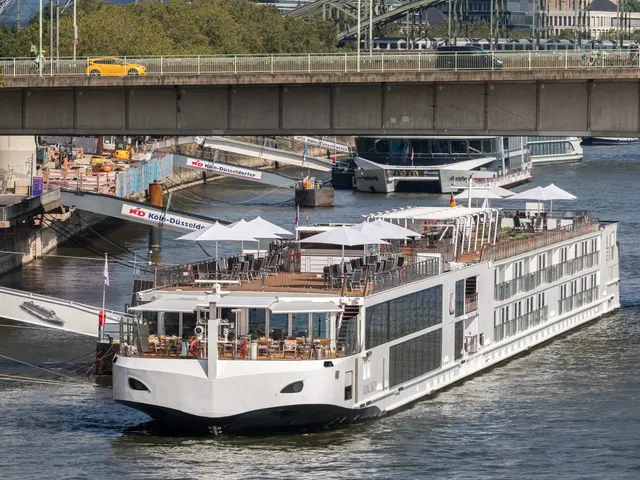
Year Built
2015
Tonnage
2,400 GT
Passengers
190
Crew
45
Decks
4
Class
Longship
Itinerary & Route Map
Loading map…
Where this cruise calls, day by day
11 ports over 10 Nights.
- Day 1
Bucharest
RomaniaDepartRiver ships cannot reach Bucharest - the city is not on the Danube - so the call is made from Giurgiu and the day begins with a coach of an hour or more each way. Bucharest repays the drive but is hard to like quickly: grand French-influenced boulevards run straight into Ceausescu's demolition zone, and the sheer scale of what he built there is what most people come away remembering.
- The Palace of the Parliament, still one of the largest buildings on earth
- Revolution Square and the balcony where Ceausescu's last speech fell apart
- The open-air Village Museum in Herastrau Park
- Lipscani old town and the tiny Stavropoleos Monastery church
- Getting ashore
- No river berth in Bucharest. Ships tie up at Giurgiu on the Danube - occasionally Oltenita, which is much the same distance - and coach in, roughly 64km and an hour and a half each way.
- Best months
- May-Jun and Sep-Oct (Jul-Aug on the Wallachian plain is very hot)
- Day 2
Bucharest
RomaniaPortRiver ships cannot reach Bucharest - the city is not on the Danube - so the call is made from Giurgiu and the day begins with a coach of an hour or more each way. Bucharest repays the drive but is hard to like quickly: grand French-influenced boulevards run straight into Ceausescu's demolition zone, and the sheer scale of what he built there is what most people come away remembering.
- The Palace of the Parliament, still one of the largest buildings on earth
- Revolution Square and the balcony where Ceausescu's last speech fell apart
- The open-air Village Museum in Herastrau Park
- Lipscani old town and the tiny Stavropoleos Monastery church
- Getting ashore
- No river berth in Bucharest. Ships tie up at Giurgiu on the Danube - occasionally Oltenita, which is much the same distance - and coach in, roughly 64km and an hour and a half each way.
- Best months
- May-Jun and Sep-Oct (Jul-Aug on the Wallachian plain is very hot)
- Day 3
Rousse
BulgariaPortRuse is Bulgaria's main Danube port, and its centre looks unlike the rest of the country - neo-baroque and secession facades put up when 19th-century merchant and customs money arrived, which is why it gets called the little Vienna of the Danube. Ships tie up within walking distance of Freedom Square. The excursions inland are the stronger half of the day.
- The Ivanovo Rock-Hewn Churches, 14th-century frescoes cut into a cliff 32m above the river
- Basarbovo, the only working cave monastery left in Bulgaria, 9km out of town
- Veliko Tarnovo and the Tsarevets fortress, capital of the Second Bulgarian Empire
- The Monument of Liberty on Freedom Square and the neo-baroque streets around it
- Getting ashore
- Docked on the Ruse riverfront, a short walk from the centre; Ivanovo is about 26km out, and Veliko Tarnovo is 108km and roughly two hours each way by coach.
- Best months
- May-Jun and Sep-Oct
- Day 4
Vidin
BulgariaPortVidin has gone from about 65,000 people to under 35,000 since 1989, and it does not hide it - shuttered shopfronts and wide quiet streets. The compensation is Baba Vida, a largely intact medieval fortress standing on the bank at the end of the pedestrian street, a short walk from where the ship ties up. The main excursion runs inland to the Belogradchik rocks.
- Baba Vida fortress on the riverbank, built between the 10th and 14th centuries
- The Belogradchik Rocks - sandstone towers up to 200m high over some 50 square km
- Belogradchik Fortress, whose walls use the rock formations themselves as defences
- The New Europe Bridge to Calafat, only the second bridge ever built between the two banks
- Getting ashore
- Docked on the Vidin quay at the foot of the pedestrian centre; Baba Vida is a short riverside walk, and Belogradchik is 58km and about 1hr15 each way by coach.
- Best months
- May-Jun and Sep-Oct
- Day 5
Iron Gate Gorge (Scenic Cruising)
SerbiaPortThis is a scenic-cruising day rather than a port call. The Danube cuts through the Carpathians for 134km along the Serbia-Romania border, and the ship spends the daylight hours inside it. At the Great Kazan the river squeezes to 150m wide and drops to 53m deep. Nobody goes ashore - you watch it from the open decks with commentary running.
- Golubac Fortress, the ten-towered 14th-century castle at the gorge entrance, restored in 2019
- The Decebalus rock relief above Orsova - 55m tall, carved between 1994 and 2004, not ancient
- The Tabula Traiana, the Roman road plaque cut free and raised 22m to escape the reservoir
- The Kazan narrows, where the Danube runs at its tightest and deepest
- Getting ashore
- No berth - this is a transit. The ship stays underway through the gorge and the viewing happens from the top decks.
- Best months
- May-Jun and Sep-Oct (heat haze blunts the views in midsummer)
- Day 6
Belgrade
SerbiaPortBelgrade has been fought over and rebuilt so often that it has no single old quarter - Habsburg blocks, Ottoman traces, socialist concrete and new riverfront towers sit within a few streets of each other. River ships moor close to the centre, frequently rafted two or three deep. Kalemegdan Fortress, on the bluff above the confluence of the Sava and the Danube, is the obvious first stop and it is walkable.
- Kalemegdan Fortress and the Victor monument above the Sava-Danube confluence
- Knez Mihailova, the pedestrian spine, and the old taverns of Skadarlija
- The Church of Saint Sava, among the largest Orthodox churches in the world
- The House of Flowers, Tito's mausoleum, up at Dedinje
- Getting ashore
- Moored at the passenger quay on the Sava rather than the Danube cargo port, a short walk below Kalemegdan; as everywhere on the rivers, ships may raft alongside each other and you cross another vessel to get ashore.
- Best months
- May-Jun and Sep-Oct (Jul-Aug is hot, and low water on the Danube can force coach transfers)
- Day 7
Vukovar
CroatiaPortVukovar was besieged for 87 days in 1991 and largely destroyed, and its memory of that is the substance of a visit rather than a footnote to it. The shell-scarred water tower has been left as the fighting finished it and opened as a memorial. Parts of the baroque town have been rebuilt, and the guides here are frequently people who lived through the siege.
- The Vukovar Water Tower, hit more than 600 times and never repaired, open since 2020
- The Ovcara Memorial Centre, 8km out, and the hospital's Place of Memory in the basement
- The Vucedol Culture Museum and its Copper Age settlement downstream of the town
- Ilok, the wine town 35km upriver, with its Odescalchi castle and cellars
- Getting ashore
- Docked on the Danube quay in the centre of Vukovar; the town is walkable, the water tower a short shuttle or a 20-minute walk, and Ovcara about 8km out by coach.
- Best months
- May-Jun and Sep-Oct
- Day 8
Osijek
CroatiaPortOsijek is on the Drava, 25km above where it meets the Danube, so most Danube itineraries reach it by coach from Vukovar rather than sailing in. What you come for is Tvrda, the Habsburg citadel quarter built between 1693 and 1735 to hold the frontier against the Ottomans. Around 90 percent of it was damaged in the 1990s war and it has been patiently put back since.
- Tvrda, the baroque citadel quarter, and the 1730 Holy Trinity plague column on its square
- The Museum of Slavonia, the largest general museum in Croatia, inside Tvrda
- The Co-Cathedral of St Peter and St Paul and its 90m neo-Gothic tower
- Kopacki Rit, the Drava-Danube floodplain nature park, northeast of the city
- Getting ashore
- Usually a coach excursion rather than a berth: roughly 45km and 50 minutes from the Danube mooring at Vukovar. Only smaller vessels work up the Drava to Osijek itself.
- Best months
- May-Jun and Sep-Oct
- Day 9
Kalocsa
HungaryPortKalocsa is Hungary's paprika town, and it sits several kilometres back from the Danube, so ships moor at a river landing and everyone coaches in. Its claims are the archbishop's Baroque cathedral and library, and folk art - the dense floral patterns local women painted onto walls and furniture, now a protected craft.
- The Paprika Museum and the drying strings of peppers
- The archbishop's Baroque cathedral and the archiepiscopal library
- Kalocsa painted folk art and embroidery at the Viski Károly museum
- The puszta horse show on the plain outside town, with riders standing across galloping pairs
- Getting ashore
- The mooring is a plain river landing outside town with nothing at it; every call is a coach transfer of several kilometres.
- Best months
- Apr-Oct; Sep for the paprika harvest
- Day 10
Budapest
HungaryPortTwo cities on opposite banks - flat, commercial Pest and the hills of Buda - with the Danube running straight between them, so the ship ties up inside the view rather than outside it. Berths line the Pest embankment near the Chain Bridge, often two or three vessels rafted together. Most itineraries hold overnight for the floodlit Parliament from the top deck.
- Buda Castle hill, Matthias Church and the Fisherman's Bastion terraces
- Soaking at the Széchenyi or Gellért thermal baths
- The Shoes on the Danube Bank memorial, a short walk from most berths
- The Great Market Hall and the ruin bars of the old Jewish quarter
- Getting ashore
- Ships moor on the Pest embankment near Vigadó tér and the Chain Bridge, walking distance to the centre, but rafting means you may cross another vessel's lounge to get ashore.
- Best months
- Apr-Oct; late Nov-Dec for the Vörösmarty tér Christmas market
- Day 11
Budapest
HungaryArriveTwo cities on opposite banks - flat, commercial Pest and the hills of Buda - with the Danube running straight between them, so the ship ties up inside the view rather than outside it. Berths line the Pest embankment near the Chain Bridge, often two or three vessels rafted together. Most itineraries hold overnight for the floodlit Parliament from the top deck.
- Buda Castle hill, Matthias Church and the Fisherman's Bastion terraces
- Soaking at the Széchenyi or Gellért thermal baths
- The Shoes on the Danube Bank memorial, a short walk from most berths
- The Great Market Hall and the ruin bars of the old Jewish quarter
- Getting ashore
- Ships moor on the Pest embankment near Vigadó tér and the Chain Bridge, walking distance to the centre, but rafting means you may cross another vessel's lounge to get ashore.
- Best months
- Apr-Oct; late Nov-Dec for the Vörösmarty tér Christmas market
Onboard Amenities
Cruise Highlights
About the Ship
What Travelers Say About Viking Longship
Reviews of the ship itself — the same for every Viking Longship sailing. Based on 650 discussions.
The Viking Longship class is the vessel that arguably remade modern European river cruising, and it still sets the template. These near-identical ~190-guest ships trade the casino-and-waterslide bustle of ocean megaships for a calm, design-forward, adults-only experience: clean Scandinavian lines, plenty of glass, and an unhurried atmosphere aimed squarely at well-traveled North American couples in their 50s and up. The signature feature is the Aquavit Terrace at the bow — an indoor/outdoor lounge and dining space where floor-to-ceiling glass folds back so you can watch castles, vineyards, and river towns drift by while you eat or sip a drink.
What People Love
- Bright, airy Scandinavian design that genuinely revitalized river cruising — open public spaces and lots of glass make the 190-guest ships feel modern and uncramped
- Service is the single most-praised element: attentive, warm crew who learn your name within a day or two
- The Aquavit Terrace is a standout — an indoor/outdoor space at the bow where you can eat or have a drink while scenery glides past
Common Complaints
- Very limited onboard amenities and entertainment — no pool or real gym, and evening entertainment is typically just a pianist plus an occasional local act
- Dinner times are relatively fixed and run late (often 7 pm), which some older passengers find inconvenient
- Low-water disruptions are a recurring risk on European rivers — itineraries can turn into long bus transfers or ship swaps, sometimes with little advance notice