Viking Longship - Lyon & Provence
Aboard a France-based Viking Longship, sail the Rhone from Avignon to Lyon through Roman Provence and Cotes du Rhone wine country, ending in France's gastronomic capital.
Price Range
$$$$
Luxury
*Prices vary by cabin type, sailing date, and availability. Confirm rates with Viking River Cruises before booking.
Ship Details — Viking Longship
View full Viking Longship details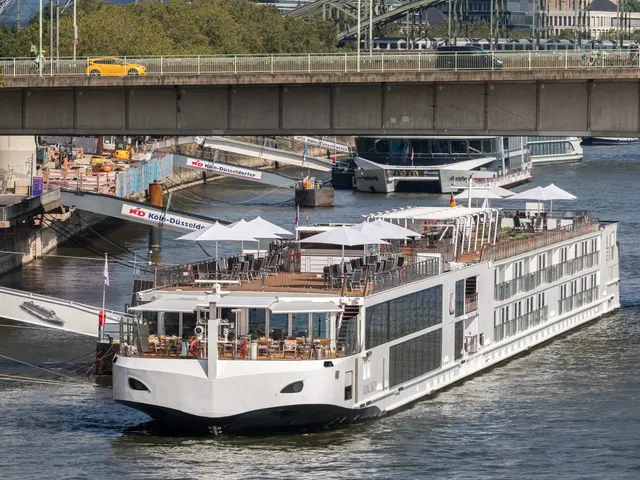
Year Built
2015
Tonnage
2,400 GT
Passengers
190
Crew
45
Decks
4
Class
Longship
Itinerary & Route Map
Loading map…
Where this cruise calls, day by day
8 ports over 7 Nights.
- Day 1
Avignon
FranceDepartFor most of the 14th century the papacy operated from Avignon rather than Rome, and the enormous Gothic palace they built still dominates the walled town. River ships moor just outside the ramparts, so you pass through a medieval gate to get into town. This is the usual base for Provence excursions - the Pont du Gard aqueduct and the Chateauneuf-du-Pape vineyards are both close.
- The Palais des Papes, the largest Gothic palace in Europe
- Pont Saint-Benezet, the broken bridge of the song, and the Rocher des Doms garden
- Les Halles covered market and its living green wall
- The Pont du Gard Roman aqueduct, or a Chateauneuf-du-Pape tasting
- Getting ashore
- Ships tie up at the Allees de l'Oulle beside the city walls - you walk off and through the gate in a few minutes.
- Best months
- Apr-Jun and Sep-Oct (Jul brings the theatre festival and full hotels)
- Day 2
Avignon
FrancePortFor most of the 14th century the papacy operated from Avignon rather than Rome, and the enormous Gothic palace they built still dominates the walled town. River ships moor just outside the ramparts, so you pass through a medieval gate to get into town. This is the usual base for Provence excursions - the Pont du Gard aqueduct and the Chateauneuf-du-Pape vineyards are both close.
- The Palais des Papes, the largest Gothic palace in Europe
- Pont Saint-Benezet, the broken bridge of the song, and the Rocher des Doms garden
- Les Halles covered market and its living green wall
- The Pont du Gard Roman aqueduct, or a Chateauneuf-du-Pape tasting
- Getting ashore
- Ships tie up at the Allees de l'Oulle beside the city walls - you walk off and through the gate in a few minutes.
- Best months
- Apr-Jun and Sep-Oct (Jul brings the theatre festival and full hotels)
- Day 3
Arles
FrancePortThe southern end of most Rhone itineraries, and a town where the Roman remains are still in daily use - the amphitheatre hosts events rather than sitting behind glass. Van Gogh spent fifteen productive months here in 1888-89 and painted many of the surviving locations, though none of the paintings stayed. Arles is also the gateway to the Camargue, the marsh and salt-flat delta south of town.
- The Roman amphitheatre and the adjacent Theatre Antique
- Fondation Vincent van Gogh Arles and the Van Gogh walking trail
- The Saturday market along the Boulevard des Lices
- The Camargue's white horses and flamingos, or Les Baux-de-Provence
- Getting ashore
- River ships moor on the quay directly below the town, a short walk up into the Roman centre.
- Best months
- Apr-Jun and Sep-Oct (the mistral is strongest in spring)
- Day 4
Viviers
FrancePortA very small medieval town on the Ardeche bank of the Rhone, with under four thousand residents and a stacked upper quarter of narrow cobbled lanes. Saint-Vincent cathedral at the top is often described as the smallest working cathedral in France, and cruise groups are frequently given a short organ recital inside. The stop is quiet and entirely walkable, and often paired with an excursion further into the Ardeche.
- Saint-Vincent cathedral and the climb through the old upper town
- The Maison des Chevaliers and its carved Renaissance facade
- The viewpoint over the Rhone from the cathedral terrace
- An excursion to the Ardeche gorges or the Grotte Chauvet 2 cave replica
- Getting ashore
- Vessels tie up on the quay at the edge of the town and passengers walk off directly - the whole place is a few minutes on foot.
- Best months
- May-Jun and Sep-Oct
- Day 5
Tournon
FrancePortTournon-sur-Rhone and Tain-l'Hermitage face each other across the river, joined by a slim suspension bridge built by Marc Seguin in the 1820s. The steep terraced hill above Tain is Hermitage, one of the great Syrah vineyards, and the two towns split the day between wine and chocolate - Valrhona has its factory and visitor centre in Tain. A castle museum on the Tournon side covers the river's own history.
- The Cite du Chocolat Valrhona in Tain-l'Hermitage
- A tasting from the Hermitage or Crozes-Hermitage terraces
- Chateau de Tournon and its museum above the quay
- The Train de l'Ardeche steam railway up the Doux gorge
- Getting ashore
- Vessels moor on one bank or the other in the middle of the two towns; you walk off and cross the footbridge between them.
- Best months
- May-Jun and Sep-Oct
- Day 6
Vienne
FrancePortA Roman town on a tight bend of the Rhone south of Lyon, with more surviving antiquity than its size suggests. A near-complete temple to Augustus and Livia stands in the middle of the street grid, a Roman theatre is cut into the hill behind, and a whole excavated Roman quarter sits across the river at Saint-Romain-en-Gal. In late June and July the theatre hosts a long-running international jazz festival.
- The Temple of Augustus and Livia in the town centre
- The Roman theatre on the slopes of Mont Pipet
- Saint-Maurice cathedral and the Pyramide of the Roman circus
- The Gallo-Roman museum and excavated site at Saint-Romain-en-Gal
- Getting ashore
- Ships moor on the quay in the middle of Vienne, so the Roman sites are all within an easy walk of the gangway.
- Best months
- May-Jun and Sep-Oct
- Day 7
Lyon
FrancePortFrance's gastronomic capital and the northern terminus of most Rhone itineraries, set where the Saone joins the Rhone. Vieux Lyon is one of the largest Renaissance quarters in Europe, threaded with traboules - covered passageways cut between buildings that silk workers once used. Above it, the Fourviere hill holds the Roman theatres and a basilica with the best view in the city.
- Vieux Lyon and its traboules, reached across the Saone footbridges
- Fourviere basilica and the Roman theatres, via the funicular
- Les Halles de Lyon Paul Bocuse for charcuterie and cheese
- Lunch in a bouchon, the city's traditional small restaurants
- Getting ashore
- River ships moor on the Rhone at the Quai Claude Bernard or nearby quays, a 10-15 minute walk across to the Presqu'ile.
- Best months
- May-Jun and Sep-Oct (early Dec for the Fete des Lumieres)
- Day 8
Lyon
FranceArriveFrance's gastronomic capital and the northern terminus of most Rhone itineraries, set where the Saone joins the Rhone. Vieux Lyon is one of the largest Renaissance quarters in Europe, threaded with traboules - covered passageways cut between buildings that silk workers once used. Above it, the Fourviere hill holds the Roman theatres and a basilica with the best view in the city.
- Vieux Lyon and its traboules, reached across the Saone footbridges
- Fourviere basilica and the Roman theatres, via the funicular
- Les Halles de Lyon Paul Bocuse for charcuterie and cheese
- Lunch in a bouchon, the city's traditional small restaurants
- Getting ashore
- River ships moor on the Rhone at the Quai Claude Bernard or nearby quays, a 10-15 minute walk across to the Presqu'ile.
- Best months
- May-Jun and Sep-Oct (early Dec for the Fete des Lumieres)
Onboard Amenities
Cruise Highlights
About the Ship
What Travelers Say About Viking Longship
Reviews of the ship itself — the same for every Viking Longship sailing. Based on 650 discussions.
The Viking Longship class is the vessel that arguably remade modern European river cruising, and it still sets the template. These near-identical ~190-guest ships trade the casino-and-waterslide bustle of ocean megaships for a calm, design-forward, adults-only experience: clean Scandinavian lines, plenty of glass, and an unhurried atmosphere aimed squarely at well-traveled North American couples in their 50s and up. The signature feature is the Aquavit Terrace at the bow — an indoor/outdoor lounge and dining space where floor-to-ceiling glass folds back so you can watch castles, vineyards, and river towns drift by while you eat or sip a drink.
What People Love
- Bright, airy Scandinavian design that genuinely revitalized river cruising — open public spaces and lots of glass make the 190-guest ships feel modern and uncramped
- Service is the single most-praised element: attentive, warm crew who learn your name within a day or two
- The Aquavit Terrace is a standout — an indoor/outdoor space at the bow where you can eat or have a drink while scenery glides past
Common Complaints
- Very limited onboard amenities and entertainment — no pool or real gym, and evening entertainment is typically just a pianist plus an occasional local act
- Dinner times are relatively fixed and run late (often 7 pm), which some older passengers find inconvenient
- Low-water disruptions are a recurring risk on European rivers — itineraries can turn into long bus transfers or ship swaps, sometimes with little advance notice