Viking Longship - Grand European Tour
Viking's signature 15-day Longship voyage crosses Europe from Amsterdam to Budapest on three rivers - the Rhine, Main and Danube - threading the Main-Danube Canal through Bavaria's medieval heart.
Price Range
$$$
Premium
*Prices vary by cabin type, sailing date, and availability. Confirm rates with Viking River Cruises before booking.
Ship Details — Viking Longship
View full Viking Longship details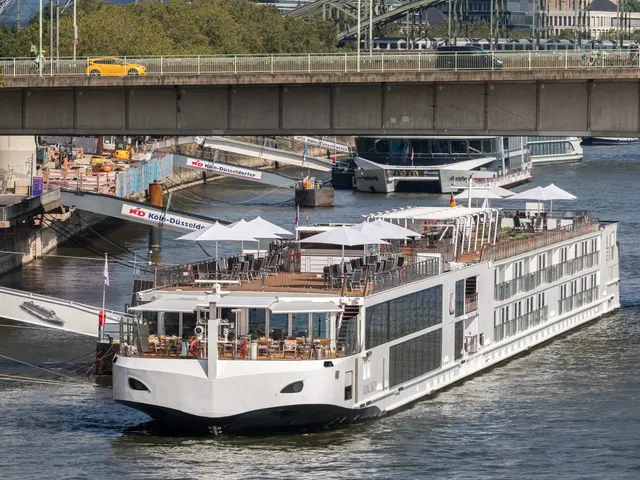
Year Built
2015
Tonnage
2,400 GT
Passengers
190
Crew
45
Decks
4
Class
Longship
Itinerary & Route Map
Loading map…
Where this cruise calls, day by day
15 ports over 14 Nights.
- Day 1
Amsterdam
NetherlandsDepartOne of the few big European cities where the cruise berth is genuinely in town - the Passenger Terminal Amsterdam sits on the IJ waterfront, a ten-minute walk from Centraal Station. Note that the city has capped sea cruise calls at 100 a year from 2026 and plans to move the terminal out of the centre by 2035, so berths here are getting scarcer. River ships moor nearby along the same quays.
- Anne Frank House on the Prinsengracht (timed tickets, book weeks ahead)
- Rijksmuseum and the Van Gogh Museum on Museumplein
- A canal boat through the 17th-century grachtengordel
- Cycling out to the Jordaan or the Albert Cuyp market
- Getting ashore
- Ships berth alongside at PTA on Piet Heinkade; it is a flat 10-15 minute walk west to Centraal Station and the top of the Damrak, no shuttle needed.
- Best months
- Apr-Oct (tulip season mid-Apr)
- Day 2
Kinderdijk
NetherlandsPortA river-cruise stop rather than a town: 19 windmills built around 1740 to drain the Alblasserwaard polder, standing along the dykes below sea level between Rotterdam and Dordrecht. It is a UNESCO site and the whole visit is a flat walk or bike ride along the canals, with two of the mills open as museums showing how the miller families lived inside them.
- Walking the dyke path past all 19 mills
- Going inside the Museum Mill Nederwaard, still furnished as a home
- The Wisboom pumping station and its visitor film
- A hopper boat between the mill groups if you would rather not walk
- Getting ashore
- River ships moor alongside at the Kinderdijk landing, right at the entrance to the mill network; larger ocean ships do not call here.
- Best months
- Apr-Oct
- Day 3
Cologne
GermanyPortThe cathedral is the entire approach - twin soot-blackened Gothic spires standing directly over the water, a couple of minutes from where ships tie up. Cologne was bombed flat and rebuilt plainly around it, so the pleasures are concentrated: the Dom, the museums beside it, and the brewhouses where Kölsch arrives in small glasses until you put a mat over the top.
- Cologne Cathedral, and the 500-odd step climb up the south tower
- Museum Ludwig for Pop Art and one of the largest Picasso collections in Europe
- Kölsch in the Altstadt at Früh am Dom or Päffgen
- The Hohenzollern railway bridge, its fencing buried under padlocks
- Getting ashore
- Vessels moor at the Frankenwerft below the cathedral or slightly downstream at Rheinauhafen; both are a short flat walk into the old town.
- Best months
- Apr-Oct; late Nov-Dec, when the city runs several Christmas markets at once
- Day 4
Koblenz
GermanyPortKoblenz sits at the Deutsches Eck, the wedge of land where the Moselle empties into the Rhine under a colossal equestrian statue of Kaiser Wilhelm I. It is the hinge between two river routes and the northern gate of the Rhine gorge, so a call here usually comes immediately before or after the castle stretch. A cable car crosses the river to the fortress above.
- The Deutsches Eck confluence and the Kaiser Wilhelm monument
- Seilbahn cable car over the Rhine to Ehrenbreitstein Fortress
- The Baroque Electoral Palace and the Schängelbrunnen spitting-boy fountain
- Sailing the Middle Rhine gorge south past Marksburg and the Loreley rock
- Getting ashore
- Vessels moor on the Rhine promenade at the Konrad-Adenauer-Ufer or on the quieter Moselle bank, both a flat five to fifteen minute walk into the old town.
- Best months
- Apr-Oct; Aug for the Rhein in Flammen fireworks
- Day 5
Miltenberg
GermanyPortA Main valley town squeezed between the river and wooded hills, with a market square that is genuinely odd: it narrows to a cleft called the Schnatterloch where a stream once ran down from the castle above. The Gasthaus zum Riesen claims to be one of the oldest inns in Germany, and the town brews its own beer.
- The Marktplatz and the Schnatterloch gap with its timber houses
- Mildenburg castle on the hill above the old town
- Gasthaus zum Riesen, an inn that has been serving since the medieval period
- Faust brewery beer and the Roman stones from the nearby Limes frontier in the town museum
- Getting ashore
- Ships moor on the Main promenade a short walk from the market square, with no terminal and no tender.
- Best months
- Apr-Oct
- Day 6
Würzburg
GermanyPortWürzburg is the capital of Franconian wine country and the Residenz is the showpiece - a prince-bishop's palace whose staircase is roofed by Tiepolo's fresco, the largest ceiling painting ever done. Ships moor on the Main promenade near the old bridge, which the town treats as an open-air bar: you buy a glass of Silvaner and drink it leaning on the parapet.
- The Residenz, its Tiepolo staircase and mirror cabinet
- Marienberg Fortress on the hill, reached by a climb through vineyards
- A Brückenschoppen on the Alte Mainbrücke among the stone saints
- Franconian Silvaner in flat Bocksbeutel bottles at the Juliusspital or Bürgerspital cellars
- Getting ashore
- The berth is on the Main quay near the Alter Kranen, five to ten minutes' walk from the old bridge and the Residenz.
- Best months
- Apr-Oct; late May-Jun for the wine festivals
- Day 7
Bamberg
GermanyPortBamberg's old town spreads over the Regnitz with a painted town hall built on its own island mid-stream, but river vessels cannot reach it - they moor out on the Main-Danube Canal and you transfer in by coach. Once there it is a UNESCO site that came through the war almost untouched, and it brews a smoked beer that tastes convincingly of ham.
- The Altes Rathaus standing on an island with frescoed walls
- The four-towered cathedral and the Bamberg Horseman carving inside
- Schlenkerla for Rauchbier, poured from the barrel
- Klein-Venedig, the row of old fishermen's houses along the water
- Getting ashore
- The berth is on the Main-Danube Canal outside the centre, so expect a short coach shuttle rather than a walk off the gangway into town.
- Best months
- Apr-Oct; Dec for the Christmas market and nativity trail
- Day 8
Nuremberg
GermanyPortNuremberg's berth is out on the Main-Danube Canal, a coach ride from anything worth seeing, so this is a tour day rather than a wander. The city carries two histories at once and does not hide either - the rebuilt imperial castle and Dürer's house on one hand, the rally grounds and the trials courtroom on the other.
- The Kaiserburg castle and Albrecht Dürer's house below it
- The Documentation Centre at the Nazi Party Rally Grounds and the unfinished Congress Hall
- Memorium Nuremberg Trials and Courtroom 600
- Hauptmarkt, the Schöner Brunnen fountain, and Lebkuchen and grilled Nürnberger sausages
- Getting ashore
- Ships moor at the canal port outside the city, roughly a twenty to thirty minute coach transfer from the old town.
- Best months
- Apr-Oct; Dec for the Christkindlesmarkt, the market other markets copy
- Day 9
Regensburg
GermanyPortRegensburg came through the war largely undamaged, which makes it the best-preserved medieval city in Germany: a dense grid of patrician tower houses built by merchant families competing on height, a Gothic cathedral with its own boys' choir, and a 12th-century stone bridge that crusading armies crossed. Ships moor on the quay right beside it.
- The Steinerne Brücke, the medieval stone bridge over the Danube
- St Peter's Cathedral and the Regensburger Domspatzen choir
- The Historische Wurstkuchl at the bridgehead, grilling sausages over charcoal for centuries
- Roman remains including the Porta Praetoria gate, and Schloss Thurn und Taxis
- Getting ashore
- The berth is on the Danube quay by the stone bridge; you walk off straight into the old town in under five minutes.
- Best months
- Apr-Oct; Dec for the Thurn und Taxis palace Christmas market
- Day 10
Passau
GermanyPortPassau is squeezed onto a narrow spit where the Inn and the small dark Ilz meet the Danube, and from the fortress above you can watch the three currents hold separate colours for a while before mixing. The old town behind it is Italian Baroque - Salzburg architects rebuilt it after fires - and it is a common start or end point for Danube itineraries.
- St Stephen's Cathedral and its organ, among the largest in the world, with midday recitals in season
- The three-rivers point at the Dreiflusseck
- Veste Oberhaus fortress, reached on foot or by shuttle bus, for the view down onto the spit
- Flood high-water marks painted up the wall of the old town hall
- Getting ashore
- Ships tie up along the Danube promenade below the old town, and you step straight off into it - no tender, no terminal.
- Best months
- Apr-Oct; Dec for the cathedral square Christmas market
- Day 11
Melk
AustriaPortMelk's Benedictine abbey sits on a rock over the town, a long ochre-yellow Baroque block visible for kilometres up the river. The interiors are what you climb for: Troger's ceiling in the marble hall and a library of twelve rooms of manuscripts. Sailing on downstream from here through the Wachau is the best hour of scenery on the Danube.
- Melk Abbey's library, marble hall and gilded church
- The abbey terrace looking down the Danube valley
- The Wachau sail between Melk and Krems past Spitz and Dürnstein
- Wachau apricot products, from schnapps to dumplings, sold all over town
- Getting ashore
- Vessels moor at the landing on the Danube about fifteen minutes' walk from town, with the abbey a further climb; most lines run a shuttle up.
- Best months
- Apr-Oct; Apr for apricot blossom, Jul for the fruit itself
- Day 12
Vienna
AustriaPortThe catch with Vienna is that the Danube does not actually run through the city it built. Vessels moor on the Handelskai and Praterkai stretch northeast of the centre, and the Ringstrasse is a shuttle or a few U-Bahn stops away, so budget the transfer both directions. At the other end is imperial Vienna at full scale, plus coffee houses that treat sitting for three hours as the point.
- Schönbrunn Palace and its gardens
- The Hofburg complex, the Spanish Riding School and the Kunsthistorisches Museum
- St Stephen's Cathedral and the lanes around it
- Café Central or Demel for Sachertorte and a newspaper on a wooden stick
- Getting ashore
- Berths are on the Handelskai/Praterkai reach several kilometres from the historic centre; expect a coach shuttle or the U1 rather than a walk.
- Best months
- Apr-Oct; late Nov-Dec for the Rathausplatz Christmas market
- Day 13
Vienna
AustriaPortThe catch with Vienna is that the Danube does not actually run through the city it built. Vessels moor on the Handelskai and Praterkai stretch northeast of the centre, and the Ringstrasse is a shuttle or a few U-Bahn stops away, so budget the transfer both directions. At the other end is imperial Vienna at full scale, plus coffee houses that treat sitting for three hours as the point.
- Schönbrunn Palace and its gardens
- The Hofburg complex, the Spanish Riding School and the Kunsthistorisches Museum
- St Stephen's Cathedral and the lanes around it
- Café Central or Demel for Sachertorte and a newspaper on a wooden stick
- Getting ashore
- Berths are on the Handelskai/Praterkai reach several kilometres from the historic centre; expect a coach shuttle or the U1 rather than a walk.
- Best months
- Apr-Oct; late Nov-Dec for the Rathausplatz Christmas market
- Day 14
Budapest
HungaryPortTwo cities on opposite banks - flat, commercial Pest and the hills of Buda - with the Danube running straight between them, so the ship ties up inside the view rather than outside it. Berths line the Pest embankment near the Chain Bridge, often two or three vessels rafted together. Most itineraries hold overnight for the floodlit Parliament from the top deck.
- Buda Castle hill, Matthias Church and the Fisherman's Bastion terraces
- Soaking at the Széchenyi or Gellért thermal baths
- The Shoes on the Danube Bank memorial, a short walk from most berths
- The Great Market Hall and the ruin bars of the old Jewish quarter
- Getting ashore
- Ships moor on the Pest embankment near Vigadó tér and the Chain Bridge, walking distance to the centre, but rafting means you may cross another vessel's lounge to get ashore.
- Best months
- Apr-Oct; late Nov-Dec for the Vörösmarty tér Christmas market
- Day 15
Budapest
HungaryArriveTwo cities on opposite banks - flat, commercial Pest and the hills of Buda - with the Danube running straight between them, so the ship ties up inside the view rather than outside it. Berths line the Pest embankment near the Chain Bridge, often two or three vessels rafted together. Most itineraries hold overnight for the floodlit Parliament from the top deck.
- Buda Castle hill, Matthias Church and the Fisherman's Bastion terraces
- Soaking at the Széchenyi or Gellért thermal baths
- The Shoes on the Danube Bank memorial, a short walk from most berths
- The Great Market Hall and the ruin bars of the old Jewish quarter
- Getting ashore
- Ships moor on the Pest embankment near Vigadó tér and the Chain Bridge, walking distance to the centre, but rafting means you may cross another vessel's lounge to get ashore.
- Best months
- Apr-Oct; late Nov-Dec for the Vörösmarty tér Christmas market
Onboard Amenities
Cruise Highlights
About the Ship
What Travelers Say About Viking Longship
Reviews of the ship itself — the same for every Viking Longship sailing. Based on 650 discussions.
The Viking Longship class is the vessel that arguably remade modern European river cruising, and it still sets the template. These near-identical ~190-guest ships trade the casino-and-waterslide bustle of ocean megaships for a calm, design-forward, adults-only experience: clean Scandinavian lines, plenty of glass, and an unhurried atmosphere aimed squarely at well-traveled North American couples in their 50s and up. The signature feature is the Aquavit Terrace at the bow — an indoor/outdoor lounge and dining space where floor-to-ceiling glass folds back so you can watch castles, vineyards, and river towns drift by while you eat or sip a drink.
What People Love
- Bright, airy Scandinavian design that genuinely revitalized river cruising — open public spaces and lots of glass make the 190-guest ships feel modern and uncramped
- Service is the single most-praised element: attentive, warm crew who learn your name within a day or two
- The Aquavit Terrace is a standout — an indoor/outdoor space at the bow where you can eat or have a drink while scenery glides past
Common Complaints
- Very limited onboard amenities and entertainment — no pool or real gym, and evening entertainment is typically just a pianist plus an occasional local act
- Dinner times are relatively fixed and run late (often 7 pm), which some older passengers find inconvenient
- Low-water disruptions are a recurring risk on European rivers — itineraries can turn into long bus transfers or ship swaps, sometimes with little advance notice