Viking Longship - Tulips & Windmills
A springtime Viking Longship roundtrip from Amsterdam through the Dutch and Belgian waterways, timed to the tulip bloom with Keukenhof Gardens, Kinderdijk's windmills and Antwerp's Renaissance old town.
Price Range
$$$
Premium
*Prices vary by cabin type, sailing date, and availability. Confirm rates with Viking River Cruises before booking.
Ship Details — Viking Longship
View full Viking Longship details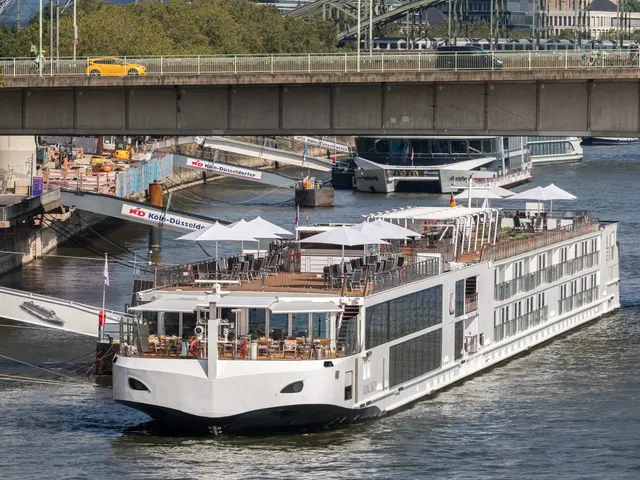
Year Built
2015
Tonnage
2,400 GT
Passengers
190
Crew
45
Decks
4
Class
Longship
Itinerary & Route Map
Loading map…
Where this cruise calls, day by day
10 ports over 9 Nights.
- Day 1
Amsterdam
NetherlandsDepartOne of the few big European cities where the cruise berth is genuinely in town - the Passenger Terminal Amsterdam sits on the IJ waterfront, a ten-minute walk from Centraal Station. Note that the city has capped sea cruise calls at 100 a year from 2026 and plans to move the terminal out of the centre by 2035, so berths here are getting scarcer. River ships moor nearby along the same quays.
- Anne Frank House on the Prinsengracht (timed tickets, book weeks ahead)
- Rijksmuseum and the Van Gogh Museum on Museumplein
- A canal boat through the 17th-century grachtengordel
- Cycling out to the Jordaan or the Albert Cuyp market
- Getting ashore
- Ships berth alongside at PTA on Piet Heinkade; it is a flat 10-15 minute walk west to Centraal Station and the top of the Damrak, no shuttle needed.
- Best months
- Apr-Oct (tulip season mid-Apr)
- Day 2
Amsterdam
NetherlandsPortOne of the few big European cities where the cruise berth is genuinely in town - the Passenger Terminal Amsterdam sits on the IJ waterfront, a ten-minute walk from Centraal Station. Note that the city has capped sea cruise calls at 100 a year from 2026 and plans to move the terminal out of the centre by 2035, so berths here are getting scarcer. River ships moor nearby along the same quays.
- Anne Frank House on the Prinsengracht (timed tickets, book weeks ahead)
- Rijksmuseum and the Van Gogh Museum on Museumplein
- A canal boat through the 17th-century grachtengordel
- Cycling out to the Jordaan or the Albert Cuyp market
- Getting ashore
- Ships berth alongside at PTA on Piet Heinkade; it is a flat 10-15 minute walk west to Centraal Station and the top of the Damrak, no shuttle needed.
- Best months
- Apr-Oct (tulip season mid-Apr)
- Day 3
Enkhuizen
NetherlandsPortA small West Frisian harbour town on the Markermeer that was a wealthy VOC port in the 1600s and then stopped growing, which left the 17th-century town largely intact. The Drommedaris gate tower guards the old harbour mouth. Only small ships and river vessels come here; the main visit is the open-air Zuiderzee museum along the waterfront.
- The Zuiderzee Museum's relocated fishing village and boat sheds
- The Drommedaris tower and the old harbour
- Westerkerk and the merchant houses on the Westerstraat
- Sailing out on a traditional flat-bottomed botter
- Getting ashore
- Small ships moor alongside in the town harbour, within a few minutes' walk of everything.
- Best months
- Apr-Oct
- Day 4
Arnhem
NetherlandsPortA river-cruise call on the Nederrijn in Gelderland, and for most passengers the reason is 1944 - Operation Market Garden ended here, and the road bridge is the 'bridge too far'. Outside the war history the surrounding Veluwe is heath and forest, with one of the best small art collections in Europe sitting in the middle of it.
- Airborne Museum Hartenstein in Oosterbeek, in the former British divisional HQ
- The John Frost Bridge over the Rhine
- Kröller-Müller Museum and its Van Goghs, inside Hoge Veluwe National Park
- The Netherlands Open Air Museum's relocated farmhouses and windmills
- Getting ashore
- River ships moor alongside on the Rhine quay near the centre; ocean ships do not call, and the museums out at Oosterbeek and Hoge Veluwe need a coach.
- Best months
- Apr-Oct
- Day 5
Kinderdijk
NetherlandsPortA river-cruise stop rather than a town: 19 windmills built around 1740 to drain the Alblasserwaard polder, standing along the dykes below sea level between Rotterdam and Dordrecht. It is a UNESCO site and the whole visit is a flat walk or bike ride along the canals, with two of the mills open as museums showing how the miller families lived inside them.
- Walking the dyke path past all 19 mills
- Going inside the Museum Mill Nederwaard, still furnished as a home
- The Wisboom pumping station and its visitor film
- A hopper boat between the mill groups if you would rather not walk
- Getting ashore
- River ships moor alongside at the Kinderdijk landing, right at the entrance to the mill network; larger ocean ships do not call here.
- Best months
- Apr-Oct
- Day 6
Antwerp
BelgiumPortA Flemish port city on the Scheldt, historically the richest in northern Europe and still the centre of the world diamond trade. Rubens lived and worked here, and his altarpieces are in the cathedral he painted them for. Ships come up the river to quays on the edge of the old town, which is compact enough to cover on foot.
- Cathedral of Our Lady and its four Rubens altarpieces
- Grote Markt, the guild houses and the Brabo fountain
- The MAS museum's escalator route up to a free rooftop view
- Plantin-Moretus, the preserved 16th-century printing house
- Getting ashore
- Ships berth alongside on the Scheldt quays close to the centre; from the Steenplein area the Grote Markt is a few minutes' walk, though berth assignment varies and some sea ships use quays further north.
- Best months
- Apr-Oct
- Day 7
Middelburg
NetherlandsPortThe capital of Zeeland, on the Walcheren peninsula, reached by canal from Vlissingen. It was badly bombed in 1940 and carefully rebuilt, so the abbey complex and the flamboyant Gothic town hall look older than their reconstruction dates. This is a small-ship and river-cruise call; the pace ashore is slow and the town is walkable end to end.
- Climbing Lange Jan, the abbey tower over the town
- The Stadhuis on the Markt, one of the finest Gothic town halls in the Low Countries
- The Abdij complex and the Zeeuws Museum inside it
- Veere or Domburg, both a short drive across Walcheren
- Getting ashore
- River and small ships moor alongside on the canal quays a short walk from the centre; some itineraries berth at Vlissingen instead and coach in, roughly 15-20 minutes.
- Best months
- Apr-Oct
- Day 8
Zeeland (Veere)
NetherlandsPortA tiny former herring and wool town on the Veerse Meer in Zeeland, once wealthy from trade with Scotland and now barely 1,500 people behind its old fortifications. The scale is the point: an outsized 15th-century church, a lavish town hall and two Gothic merchant houses on the quay, all serving a village. Only small vessels call.
- De Schotse Huizen, the two Gothic Scottish merchant houses on the harbour
- The Grote Kerk, huge and mostly empty, with a tower climb
- The 15th-century Stadhuis and its carillon
- Cycling the dyke to Domburg or across Walcheren to Middelburg
- Getting ashore
- Small ships and river vessels moor in the little harbour beside the town, which is a couple of minutes' walk end to end.
- Best months
- Apr-Oct
- Day 9
Amsterdam
NetherlandsPortOne of the few big European cities where the cruise berth is genuinely in town - the Passenger Terminal Amsterdam sits on the IJ waterfront, a ten-minute walk from Centraal Station. Note that the city has capped sea cruise calls at 100 a year from 2026 and plans to move the terminal out of the centre by 2035, so berths here are getting scarcer. River ships moor nearby along the same quays.
- Anne Frank House on the Prinsengracht (timed tickets, book weeks ahead)
- Rijksmuseum and the Van Gogh Museum on Museumplein
- A canal boat through the 17th-century grachtengordel
- Cycling out to the Jordaan or the Albert Cuyp market
- Getting ashore
- Ships berth alongside at PTA on Piet Heinkade; it is a flat 10-15 minute walk west to Centraal Station and the top of the Damrak, no shuttle needed.
- Best months
- Apr-Oct (tulip season mid-Apr)
- Day 10
Amsterdam
NetherlandsArriveOne of the few big European cities where the cruise berth is genuinely in town - the Passenger Terminal Amsterdam sits on the IJ waterfront, a ten-minute walk from Centraal Station. Note that the city has capped sea cruise calls at 100 a year from 2026 and plans to move the terminal out of the centre by 2035, so berths here are getting scarcer. River ships moor nearby along the same quays.
- Anne Frank House on the Prinsengracht (timed tickets, book weeks ahead)
- Rijksmuseum and the Van Gogh Museum on Museumplein
- A canal boat through the 17th-century grachtengordel
- Cycling out to the Jordaan or the Albert Cuyp market
- Getting ashore
- Ships berth alongside at PTA on Piet Heinkade; it is a flat 10-15 minute walk west to Centraal Station and the top of the Damrak, no shuttle needed.
- Best months
- Apr-Oct (tulip season mid-Apr)
Onboard Amenities
Cruise Highlights
About the Ship
What Travelers Say About Viking Longship
Reviews of the ship itself — the same for every Viking Longship sailing. Based on 650 discussions.
The Viking Longship class is the vessel that arguably remade modern European river cruising, and it still sets the template. These near-identical ~190-guest ships trade the casino-and-waterslide bustle of ocean megaships for a calm, design-forward, adults-only experience: clean Scandinavian lines, plenty of glass, and an unhurried atmosphere aimed squarely at well-traveled North American couples in their 50s and up. The signature feature is the Aquavit Terrace at the bow — an indoor/outdoor lounge and dining space where floor-to-ceiling glass folds back so you can watch castles, vineyards, and river towns drift by while you eat or sip a drink.
What People Love
- Bright, airy Scandinavian design that genuinely revitalized river cruising — open public spaces and lots of glass make the 190-guest ships feel modern and uncramped
- Service is the single most-praised element: attentive, warm crew who learn your name within a day or two
- The Aquavit Terrace is a standout — an indoor/outdoor space at the bow where you can eat or have a drink while scenery glides past
Common Complaints
- Very limited onboard amenities and entertainment — no pool or real gym, and evening entertainment is typically just a pianist plus an occasional local act
- Dinner times are relatively fixed and run late (often 7 pm), which some older passengers find inconvenient
- Low-water disruptions are a recurring risk on European rivers — itineraries can turn into long bus transfers or ship swaps, sometimes with little advance notice