Viking Longship - Chateaux, Rivers & Wine
Roundtrip from Bordeaux, the Longship Viking Forseti sails the Garonne, Gironde and Dordogne through France's most storied wine country, from Medoc chateaux to medieval Saint-Emilion.
Price Range
$$$$
Luxury
*Prices vary by cabin type, sailing date, and availability. Confirm rates with Viking River Cruises before booking.
Ship Details — Viking Longship
View full Viking Longship details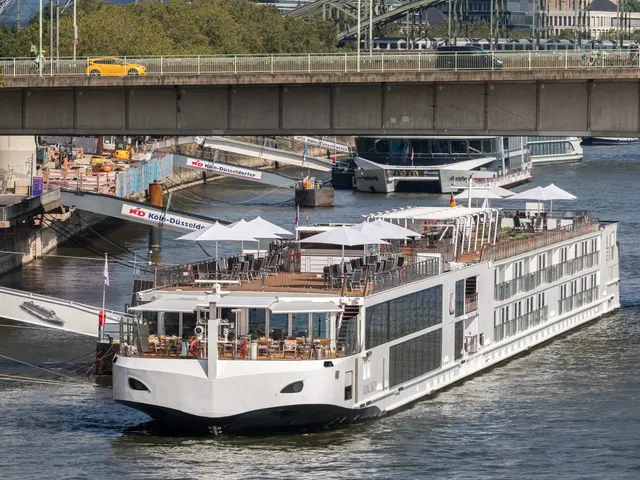
Year Built
2015
Tonnage
2,400 GT
Passengers
190
Crew
45
Decks
4
Class
Longship
Itinerary & Route Map
Loading map…
Where this cruise calls, day by day
8 ports over 7 Nights.
- Day 1
Bordeaux
FranceDepartRiver ships sail up the Garonne and tie up along the Port de la Lune, the crescent of 18th-century stone quays that gives Bordeaux its UNESCO listing. The whole centre was scrubbed of soot and traffic in the 2000s and is now one of the largest pedestrian zones in Europe. Wine is the obvious draw, but the city works perfectly well as a walking day on its own.
- Place de la Bourse and the Miroir d'Eau reflecting pool
- La Cite du Vin and its tasting belvedere
- The Grand Theatre and the Rue Sainte-Catherine shopping street
- A run out to Saint-Emilion for the monolithic church and Grand Cru tastings
- Getting ashore
- River vessels moor on the central quays - Chartrons or Richelieu - and you walk straight into the city; ocean ships use a berth slightly further downriver.
- Best months
- May-Jun and Sep-Oct (harvest activity in late Sep)
- Day 2
Bordeaux
FrancePortRiver ships sail up the Garonne and tie up along the Port de la Lune, the crescent of 18th-century stone quays that gives Bordeaux its UNESCO listing. The whole centre was scrubbed of soot and traffic in the 2000s and is now one of the largest pedestrian zones in Europe. Wine is the obvious draw, but the city works perfectly well as a walking day on its own.
- Place de la Bourse and the Miroir d'Eau reflecting pool
- La Cite du Vin and its tasting belvedere
- The Grand Theatre and the Rue Sainte-Catherine shopping street
- A run out to Saint-Emilion for the monolithic church and Grand Cru tastings
- Getting ashore
- River vessels moor on the central quays - Chartrons or Richelieu - and you walk straight into the city; ocean ships use a berth slightly further downriver.
- Best months
- May-Jun and Sep-Oct (harvest activity in late Sep)
- Day 3
Cadillac
FrancePortA small fortified town on the right bank of the Garonne, walled in the 14th century and still entered through its old gates. The dominant building is the Chateau des Ducs d'Epernon, begun in 1599 and unusually early as an example of French classical style. Cadillac gives its name to a sweet white appellation, and the Sauternes vineyards lie just across the river, which is why river ships stop here at all.
- Chateau de Cadillac, the Duc d'Epernon's residence and later a women's prison
- A Sauternes tasting at one of the estates across the Garonne
- The bastide street grid and remaining town gates
- The Cadillac Cotes de Bordeaux cellars in and around the town
- Getting ashore
- River vessels tie up at the town quay and passengers walk off into Cadillac, with coaches waiting for the Sauternes vineyard runs.
- Best months
- May-Jun and Sep-Oct (harvest in Sauternes runs late, often into Oct)
- Day 4
Pauillac
FrancePortA small quayside town in the middle of the Medoc, which for wine purposes means it is surrounded by some of the most expensive vineyard land on earth - three of the five First Growths sit within a few kilometres. Pauillac itself is modest: a waterfront, a few restaurants, and a wine tourism office on the quay that arranges tastings. Ships stop here purely as the gateway to the chateaux.
- Chateau Mouton Rothschild and its museum of wine-label art
- The estate roads past Chateau Lafite Rothschild and Chateau Latour
- The Maison du Tourisme et du Vin on the quay for regional tastings
- A drive north to the Medoc's oyster shacks or the estuary lighthouses
- Getting ashore
- River ships tie up at the quay in the centre of Pauillac, so you walk off into the town and coaches leave from the waterfront.
- Best months
- May-Jun and Sep-Oct (harvest is usually late Sep into Oct)
- Day 5
Blaye
FrancePortA small town on the right bank of the Gironde estuary, dominated by a Vauban citadel that is part of the UNESCO-listed group of his fortifications. The fortress is essentially a walled village on a bluff, with ramparts you can walk for estuary views across to the Medoc. Wine here is the less famous Cotes de Blaye, and it is priced accordingly.
- The Citadelle de Blaye ramparts and the Porte Dauphine gate
- A Cotes de Blaye tasting at one of the small chateaux inland
- The prehistoric engravings at the Grottes de Pair-non-Pair near Bourg
- A crossing to the Medoc bank for the classified-growth estates
- Getting ashore
- River ships tie up on the quay directly below the citadel and you walk off and up into the fortress in about ten minutes.
- Best months
- May-Jun and Sep-Oct
- Day 6
Libourne
FrancePortA 13th-century bastide town at the point where the Isle runs into the Dordogne, with an arcaded central square and a Wednesday and Sunday market that is genuinely local. Libourne is on the itinerary chiefly as the landing point for Saint-Emilion, about 10 km east, along with the Pomerol appellation on its doorstep. The town is pleasant enough for an hour but is not the reason ships call.
- Saint-Emilion's monolithic church, carved down into the rock
- Grand Cru tastings among the Saint-Emilion and Pomerol estates
- Place Abel Surchamp and the arcaded bastide centre
- The market at Libourne on Wednesday, Friday or Sunday morning
- Getting ashore
- River ships tie up on the quay in Libourne itself, an easy walk into the square, with coaches for the short run to Saint-Emilion.
- Best months
- May-Jun and Sep-Oct
- Day 7
Bordeaux
FrancePortRiver ships sail up the Garonne and tie up along the Port de la Lune, the crescent of 18th-century stone quays that gives Bordeaux its UNESCO listing. The whole centre was scrubbed of soot and traffic in the 2000s and is now one of the largest pedestrian zones in Europe. Wine is the obvious draw, but the city works perfectly well as a walking day on its own.
- Place de la Bourse and the Miroir d'Eau reflecting pool
- La Cite du Vin and its tasting belvedere
- The Grand Theatre and the Rue Sainte-Catherine shopping street
- A run out to Saint-Emilion for the monolithic church and Grand Cru tastings
- Getting ashore
- River vessels moor on the central quays - Chartrons or Richelieu - and you walk straight into the city; ocean ships use a berth slightly further downriver.
- Best months
- May-Jun and Sep-Oct (harvest activity in late Sep)
- Day 8
Bordeaux
FranceArriveRiver ships sail up the Garonne and tie up along the Port de la Lune, the crescent of 18th-century stone quays that gives Bordeaux its UNESCO listing. The whole centre was scrubbed of soot and traffic in the 2000s and is now one of the largest pedestrian zones in Europe. Wine is the obvious draw, but the city works perfectly well as a walking day on its own.
- Place de la Bourse and the Miroir d'Eau reflecting pool
- La Cite du Vin and its tasting belvedere
- The Grand Theatre and the Rue Sainte-Catherine shopping street
- A run out to Saint-Emilion for the monolithic church and Grand Cru tastings
- Getting ashore
- River vessels moor on the central quays - Chartrons or Richelieu - and you walk straight into the city; ocean ships use a berth slightly further downriver.
- Best months
- May-Jun and Sep-Oct (harvest activity in late Sep)
Onboard Amenities
Cruise Highlights
About the Ship
What Travelers Say About Viking Longship
Reviews of the ship itself — the same for every Viking Longship sailing. Based on 650 discussions.
The Viking Longship class is the vessel that arguably remade modern European river cruising, and it still sets the template. These near-identical ~190-guest ships trade the casino-and-waterslide bustle of ocean megaships for a calm, design-forward, adults-only experience: clean Scandinavian lines, plenty of glass, and an unhurried atmosphere aimed squarely at well-traveled North American couples in their 50s and up. The signature feature is the Aquavit Terrace at the bow — an indoor/outdoor lounge and dining space where floor-to-ceiling glass folds back so you can watch castles, vineyards, and river towns drift by while you eat or sip a drink.
What People Love
- Bright, airy Scandinavian design that genuinely revitalized river cruising — open public spaces and lots of glass make the 190-guest ships feel modern and uncramped
- Service is the single most-praised element: attentive, warm crew who learn your name within a day or two
- The Aquavit Terrace is a standout — an indoor/outdoor space at the bow where you can eat or have a drink while scenery glides past
Common Complaints
- Very limited onboard amenities and entertainment — no pool or real gym, and evening entertainment is typically just a pianist plus an occasional local act
- Dinner times are relatively fixed and run late (often 7 pm), which some older passengers find inconvenient
- Low-water disruptions are a recurring risk on European rivers — itineraries can turn into long bus transfers or ship swaps, sometimes with little advance notice