Seven Seas Explorer - Vintners & Artisans of the Pacific: Auckland to Sydney
Regent's all-inclusive Seven Seas Explorer traces New Zealand top to bottom from Auckland — Bay of Islands to Fiordland's three sounds — before crossing the Tasman via Hobart to finish beneath the Sydney Harbour Bridge.
Price Range
$$$$$
Ultra-Luxury
*Prices vary by cabin type, sailing date, and availability. Confirm rates with Regent Seven Seas before booking.
Ship Details — Seven Seas Explorer
View full Seven Seas Explorer details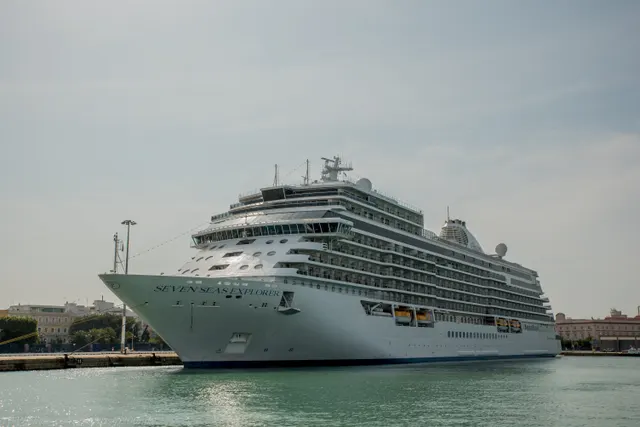
Year Built
2016
Tonnage
55,254 GT
Passengers
750
Crew
542
Decks
11
Class
Explorer
Itinerary & Route Map
Loading map…
Where this cruise calls, day by day
11 ports and 4 sea days over 14 Nights.
- Day 1
Auckland
New ZealandDepartAuckland berths its ships at Queens Wharf, which is the bottom of Queen Street, so the CBD begins where the terminal ends. It is a harbour city built across an old volcanic field, and the best of it is on the water rather than in the centre. Ferries leave from the terminal next door to the ship.
- Ferry to Waiheke Island for the vineyards and Oneroa
- Sky Tower observation deck, or the SkyWalk around the rim
- Auckland War Memorial Museum for the Maori and Pacific collections and the daily cultural performance
- Walk up Maungawhau/Mount Eden into the crater for the isthmus view
- Getting ashore
- Docked at Shed 10 on Queens Wharf, the primary berth, or at Princes Wharf next door; both are about five minutes' walk from Britomart and the bottom of Queen Street, with no shuttle needed.
- Best months
- Nov-Mar (southern summer)
- Day 2
Bay of Islands
New ZealandPortShips anchor off Waitangi in a scattered archipelago at the top of the North Island and tender in. This is where the Treaty of Waitangi was signed in 1840, so the day has real historical weight alongside the boating. Paihia and Russell face each other across the water, connected by a constant passenger ferry.
- Waitangi Treaty Grounds, the meeting house and the ceremonial war canoe
- Hole in the Rock boat trip through Motukokako island
- Ferry over to Russell, once a lawless whaling port, now very quiet
- Haruru Falls and the boardwalk through the mangroves
- Getting ashore
- Tender only - no wharf in the bay takes cruise ships. Ship's tours generally land at Waitangi Wharf and independents at Paihia; a free shuttle links the two, or it is a pleasant 25-minute beach walk between them.
- Best months
- Nov-Mar (southern summer)
- Day 3
Tauranga
New ZealandPortThe berth is at Mount Maunganui, on the ocean side of Tauranga Harbour, and the extinct cone of Mauao rises straight off the end of the wharf. Almost everyone treats this as the door to Rotorua's geothermal country, about an hour inland, which means a long coach day. Stay local instead and you get a surf beach and a good hill walk within ten minutes of the ship.
- Climb Mauao, or circle its base track at sea level
- Rotorua geothermal parks - Te Puia's Pohutu geyser or Wai-O-Tapu
- Hobbiton Movie Set near Matamata, the longest excursion of the day
- Mount Hot Pools, saltwater and right by the wharf
- Getting ashore
- Docked beside Pilot Bay at Mount Maunganui - not in Tauranga city, which is 6.7km across the harbour bridge; the Mount's beaches and main street are a short walk, and Rotorua is 78km, about an hour and a quarter each way.
- Best months
- Nov-Mar (southern summer)
- Day 4
Napier
New ZealandPortAn earthquake flattened Napier in 1931 and the town was rebuilt over the following few years, which is why an entire small city centre is coherent 1930s Art Deco. It is a genuinely unusual thing to walk around. The port is a working breakwater terminal a few kilometres out, and Hawke's Bay's vineyards start almost immediately behind the town.
- Art Deco walking tour around Emerson Street and Tennyson Street
- Hawke's Bay wineries - Mission Estate, Church Road, Te Mata
- Cape Kidnappers gannet colony by tractor-trailer along the beach
- Te Mata Peak lookout over the plains
- Getting ashore
- Docked at Napier Port, which since the 2022 Te Whiti wharf takes very large ships; town is only about 2km but walking on the wharf is prohibited, so everyone takes the free shuttle to the drop-off where the local operators wait.
- Best months
- Nov-Mar (southern summer)
- Day 5
Wellington
New ZealandPortNew Zealand's capital sits in a wind tunnel at the bottom of the North Island, wrapped around a harbour with hills coming down to the water on every side. Most ships tie up at Aotea Quay, a container berth a couple of kilometres north of the centre with a shuttle laid on; a lucky few get Queens Wharf downtown. It is a compact, walkable, coffee-obsessed city once you reach it.
- Te Papa Tongarewa, the national museum, free and genuinely good
- Wellington Cable Car up to the Botanic Garden and walk back down
- Weta Workshop tour out at Miramar
- Zealandia, a fenced valley sanctuary with kaka, takahe and tuatara
- Getting ashore
- Almost always docked at Aotea Quay, a working commercial berth you cannot walk out of - the shuttle loop is effectively the only way ashore, covering the 2km to downtown; the rare Queens Wharf berth is a straight walk into town.
- Best months
- Nov-Mar (southern summer)
- Day 6
Picton
New ZealandPortPicton sits at the head of Queen Charlotte Sound, one of the drowned river valleys of the Marlborough Sounds, and the approach through the sounds is the best part of the call. The town itself is small - the ferry terminal, a foreshore, and not much more. Behind it, 30 minutes south, is the Marlborough wine region that made New Zealand sauvignon blanc famous.
- Marlborough wineries around Blenheim - Cloudy Bay, Brancott Estate
- Walking a section of the Queen Charlotte Track from a water-taxi drop
- Edwin Fox Maritime Museum, one of the oldest surviving merchant ships
- Motuara Island bird sanctuary cruise
- Getting ashore
- Docked at Waitohi Wharf, with ships over 245m going to Shakespeare Bay a few minutes further out; you may not walk on the wharf, so a complimentary shuttle covers the 800m into Picton, and Blenheim is about 30 minutes on.
- Best months
- Nov-Mar (southern summer)
- Day 7
Christchurch (Lyttelton)
New ZealandPortLyttelton is Christchurch's port, tucked in a drowned volcanic crater on the far side of the Port Hills, with a road tunnel doing the connecting. The 2011 earthquake wrecked the cruise berth and pushed ships to Akaroa for most of a decade; a new berth reopened here in 2020. Christchurch itself is still visibly a city being rebuilt, which is more interesting than it sounds.
- Punting on the Avon and the Christchurch Botanic Gardens
- Transitional Cathedral (the Cardboard Cathedral) and the earthquake memorial
- Christchurch Gondola over the Port Hills back above Lyttelton
- TranzAlpine train west through Arthur's Pass, for full-day excursions
- Getting ashore
- Docked at Lyttelton's cruise berth, which reopened in November 2020 and takes the largest ships; Christchurch is about 12km through the road tunnel, 15-20 minutes by shuttle or coach, with no walk-in option.
- Best months
- Nov-Mar (southern summer)
- Day 8
Dunedin (Port Chalmers)
New ZealandPortPort Chalmers is a small deepwater port at the mouth of Otago Harbour, roughly 13km short of the Scottish-founded city it serves. There is a strip of cafes and galleries by the berth, but Dunedin proper and the wildlife of the Otago Peninsula both need transport. Between the albatross colony and the penguins, this is one of the better wildlife port days in New Zealand.
- Royal Albatross Centre at Taiaroa Head, the only mainland albatross breeding colony
- Larnach Castle and its gardens on the Otago Peninsula
- Dunedin Railway Station and the scenic train up the Taieri Gorge
- Yellow-eyed penguin and sea lion viewing on the peninsula beaches
- Getting ashore
- Docked at Port Chalmers, 20 minutes from Dunedin's Octagon by shuttle bus or taxi - the shuttle is a paid one; some smaller ships instead continue up the harbour and berth about a kilometre from the city centre, so check which berth your ship has.
- Best months
- Nov-Mar (southern summer)
- Day 9
Fiordland National Park (Scenic Cruising)
New ZealandPortThis is a morning spent on deck rather than a port. The ship turns in off the Tasman Sea and works its way into one or more of the fiords cut into New Zealand's southwest corner, where glaciated rock walls go up more than a kilometre straight out of black water. Rain is the normal condition and it improves things - every wall starts running with temporary waterfalls.
- Mitre Peak standing over the entrance to Milford Sound
- Stirling Falls and Bowen Falls, both fed straight off the tops
- Fur seal colonies on the rock shelves near the fiord mouths
- Bottlenose dolphins, which regularly run alongside inside the fiords
- Getting ashore
- No landing - the ship transits the fiords and turns around; the whole call happens from the open decks.
- Best months
- Oct-Apr (cruise season; expect rain in any month)
Day 10 · At sea
Day 11 · At sea
- Day 12
Hobart
AustraliaPortMacquarie Wharf drops you a ten-minute walk from Salamanca Place, which makes Hobart one of the easiest port days in Australia. The city sits under kunanyi/Mount Wellington on the Derwent estuary, and it has an unusual amount going on for its size - a serious art museum, colonial sandstone, and the best produce in the country. If your call falls on a Saturday, the market alone justifies the day.
- Mona, reached by the catamaran up the Derwent from Brooke Street Pier
- Salamanca Market on Saturday mornings
- Drive or shuttle to the kunanyi/Mount Wellington summit
- Port Arthur historic site, about 90 minutes each way
- Getting ashore
- Docked at Macquarie Wharf, within 800m of the CBD and about 15 flat minutes from Salamanca Place - no shuttle needed, which makes this one of the best walk-off ports in Australia.
- Best months
- Dec-Feb (southern summer; Tasmania is cold outside it)
Day 13 · At sea
Day 14 · At sea
- Day 15
Sydney
AustraliaArriveTwo terminals, and which one you get changes the day completely. The Overseas Passenger Terminal sits on Circular Quay east of the Harbour Bridge, with no air-draft limit and the Opera House directly opposite the gangway. White Bay, out at Rozelle, only takes ships that fit under the bridge, and it has no train, no ferry and no bus at the gate. Berths are assigned by availability, so nobody can promise you one.
- Sydney Opera House backstage or architectural tour
- The Bondi to Coogee clifftop walk, or just the Bondi Beach bus
- BridgeClimb over the Sydney Harbour Bridge
- Ferry across to Manly or Taronga Zoo for the harbour view back
- Getting ashore
- Docked either at the Overseas Passenger Terminal, five minutes' walk from Circular Quay's trains and ferries, or at White Bay about 6km out, which is taxi or rideshare only - 15-25 minutes to the CBD.
- Best months
- Oct-Apr (southern spring to autumn)
Onboard Amenities
Cruise Highlights
About the Ship
What Travelers Say About Seven Seas Explorer
Reviews of the ship itself — the same for every Seven Seas Explorer sailing. Based on 400 discussions.
Seven Seas Explorer is Regent's flagship statement of ultra-luxury: an all-suite, all-balcony ship for roughly 746 guests that bills itself as the most luxurious ever built, backed by some 2,500 artworks and around 500 chandeliers. The vibe is refined, quiet and mature - an affluent, older clientele who prize space and personal service over party energy or crowds. With about 548 crew, staff learn your name fast, and the genuinely all-inclusive fare (drinks, gratuities, specialty dining, Wi-Fi and most shore excursions) means almost no nickel-and-diming once you're aboard.
What People Love
- Every one of the 373 accommodations is a balcony suite (55 to nearly 1,000 sq ft) with marble baths and walk-in closets - among the most spacious at sea
- Genuinely all-inclusive fare bundles wine, spirits, beer, soda, gratuities, all specialty dining, unlimited Wi-Fi AND most shore excursions
- Included shore excursions are a major value differentiator versus Silversea and Seabourn, which charge for most tours
Common Complaints
- Production shows in the Constellation Theater rate only about average (3/5) - the ship's weakest pillar versus big-ship entertainment
- Food execution is inconsistent in Compass Rose, with recurring reports of cold or stone-cold dishes outside the specialty venues
- Included unlimited Wi-Fi is frequently slow and degrades the farther you sail from port