Viking Star - Mediterranean Odyssey
Embark on a comprehensive Mediterranean odyssey aboard the elegant Viking Star, from Barcelona to Athens, experiencing world-class art, cuisine, and ancient history at every port of call.
Price Range
$$$
Premium
*Prices vary by cabin type, sailing date, and availability. Confirm rates with Viking Ocean Cruises before booking.
Ship Details — Viking Star
View full Viking Star details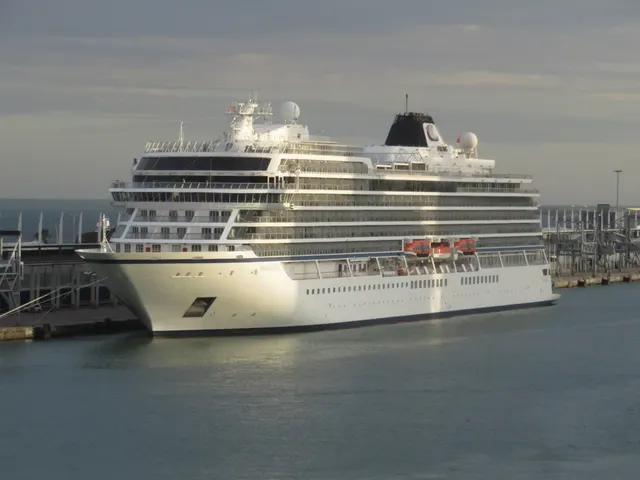
Year Built
2015
Tonnage
47,800 GT
Passengers
930
Crew
550
Decks
9
Class
Viking Ocean
Itinerary & Route Map
Loading map…
Where this cruise calls, day by day
10 ports and 4 sea days over 13 Nights.
- Day 1
Barcelona
SpainDepartThe busiest cruise port in Europe, and for many Western Mediterranean itineraries the place the whole trip starts or ends. Barcelona is a full-scale city rather than a port town: Gaudi's unfinished basilica, a dense medieval quarter, and a working waterfront all within a few metro stops. Ships berth on a long industrial mole well outside the centre, so the day begins with a bus ride rather than a gangway stroll.
- Sagrada Familia - book a timed entry well ahead; walk-ups are usually turned away
- Park Guell and the Gaudi mosaics on Carmel hill
- The Gothic Quarter and Barcelona Cathedral, on foot from Placa de Catalunya
- La Boqueria market and a walk down La Rambla to the Columbus monument
- Getting ashore
- All cruise ships now use the Moll d'Adossat terminals roughly 3 km from the old city; the paid blue Portbus shuttle runs to the foot of La Rambla, and walking out is not practical.
- Best months
- Apr-Jun and Sep-Oct (Jul-Aug is hot, crowded and expensive)
Day 2 · At sea
- Day 3
Toulon
FrancePortHome base of the French Mediterranean fleet, so the harbour view from the deck is grey hulls rather than yachts. The town was heavily bombed in the war and rebuilt plainly, but the old quarter behind the quay has a good daily market and the cable car up Mont Faron gives one of the widest views on the coast. Toulon is also a practical starting point for Hyeres and the Iles d'Or.
- Musee National de la Marine, next to the arsenal gate
- The Mont Faron cable car and the Memorial to the Allied landings
- The Provencal market on the Cours Lafayette
- A harbour boat tour past the naval fleet, or a ferry to Porquerolles
- Getting ashore
- Ships dock at the Quai Cronstadt beside the old port, close enough to walk into the market streets in a few minutes.
- Best months
- May-Jun and Sep-Oct
- Day 4
Monte Carlo
MonacoPortMonaco is two square kilometres of banked hillside, and a cruise call drops you at the bottom of it in Port Hercule. Everything is walkable if you are willing to climb, or you can use the public lifts that thread up through the rock. The appeal is concentrated and unapologetically expensive: the casino, the palace, and a harbour of boats worth more than the ship.
- The Casino de Monte-Carlo and the square in front of the Hotel de Paris
- The Musee Oceanographique, built into the cliff face at Monaco-Ville
- The Prince's Palace and the changing of the guard just before noon
- Walking the Grand Prix circuit - the tunnel and the Rascasse hairpin are ordinary streets
- Getting ashore
- Larger ships anchor in the bay and tender into Port Hercule while smaller ones come alongside the Quai Rainier III jetty; either way you land in the middle of town.
- Best months
- Apr-Jun and Sep-Oct (May is Grand Prix month - spectacular, but the town is fenced off)
- Day 5
Livorno (Florence/Pisa)
ItalyPortLivorno is a container and ferry port with a canal-laced old quarter called Venezia Nuova, and almost nobody comes for it. The call exists because Florence is about 90 minutes inland and Pisa about 45. Understand what that buys: a Florence excursion is roughly three hours on a coach around four hours in the city, and the Uffizi alone can eat half of that.
- The Duomo, the Baptistery and Piazza della Signoria in Florence
- The Uffizi, or the Accademia for Michelangelo's David - pre-booked, or you will not get in
- The Leaning Tower and the Campo dei Miracoli at Pisa
- Venezia Nuova's canals and the Mercato Centrale in Livorno itself
- Getting ashore
- Ships dock in Livorno's commercial port with a shuttle to Piazza del Municipio; Florence is about 90 minutes away by coach or train and Pisa about 45.
- Best months
- Apr-Jun and Sep-Oct (Jul-Aug very hot, and Florence is overwhelmed)
- Day 6
Rome (Civitavecchia)
ItalyPortCivitavecchia is a working port town on the Tyrrhenian coast, and it is not Rome - the city is about 80km southeast, roughly 80 minutes each way. Budget for that honestly: a Rome day is some four hours of transit bracketing whatever you actually see. The port has Fort Michelangelo on the quay and good fish-market lunches, a real option if you have done Rome before.
- St Peter's Basilica and the Vatican Museums, with a timed entry booked well ahead
- The Colosseum and the Roman Forum, a short walk apart on the Termini side
- The Pantheon and the Trevi Fountain on a walking loop of the centro storico
- Fort Michelangelo and the Terme Taurine Roman baths, for a day that stays in Civitavecchia
- Getting ashore
- Ships dock in Civitavecchia and a free shuttle runs to the port gate at Largo della Pace, from where it is a short walk to the station and a 70-80 minute train into Rome.
- Best months
- Apr-Jun and Sep-Oct (Jul-Aug hot, and the Rome queues are brutal)
- Day 7
Naples
ItalyPortNaples is one of the few big Italian calls where the ship parks in the middle of the city - the Stazione Marittima sits at Molo Angioino with Castel Nuovo directly across the road. That makes it a rare port you can genuinely walk out of, though most passengers spend the day at Pompeii or on Capri instead. The city is loud, sooty and unpolished.
- Pompeii or Herculaneum, both on the Circumvesuviana line from Garibaldi station
- The Museo Archeologico Nazionale, which holds the mosaics and bronzes lifted out of Pompeii
- Spaccanapoli and the Cappella Sansevero, home of the Veiled Christ
- A hydrofoil to Capri from Molo Beverello, a few minutes' walk from the ship
- Getting ashore
- Ships berth at the Stazione Marittima on Molo Angioino in the city centre, a ten-minute walk from Piazza del Plebiscito with the hydrofoil pier next door.
- Best months
- Apr-Jun and Sep-Oct (Jul-Aug hot and crowded, and Pompeii has almost no shade)
Day 8 · At sea
- Day 9
Corfu
GreecePortCorfu was Venetian for four centuries and then British for fifty, and the Old Town shows it - tall shuttered Italianate terraces, a cricket ground on the main square, and an arcaded promenade the French put up. The island is green and wooded in a way the Cyclades are not. The cruise terminal is a couple of kilometres from the Old Town, an unremarkable walk or a short shuttle ride.
- The Old Fortress and the Liston arcade on the Spianada, the largest square in Greece
- The Achilleion, the palace Empress Elisabeth of Austria built above Gastouri
- Paleokastritsa - the monastery on the headland and the coves beneath it
- Kanoni, with the Vlacherna monastery and Mouse Island offshore
- Getting ashore
- Docked at the cruise terminal about 2km from the Old Town; a shuttle runs to the port gate, and it is a 20-25 minute walk from there along the waterfront.
- Best months
- May-Jun and Sep-Oct (Corfu gets far more rain than the Aegean islands, so shoulder season can be wet)
Day 10 · At sea
- Day 11
Dubrovnik
CroatiaPortDubrovnik's walled Old Town is small, hard-surfaced and steep, and on a two-ship day it does not cope - which is why the city capped cruise arrivals. Ships berth at Gruz, about 3km round the headland, so you arrive by bus or taxi rather than stepping out at the gate. The wall circuit is what people come for and it earns the ticket, but it is a 2km loop with almost no shade.
- The city walls circuit - roughly 2km, stepped, shadeless, and about EUR40
- The Stradun, the Rector's Palace, and the Franciscan monastery pharmacy of 1317
- The cable car up Mount Srd for the view down onto the Old Town and Lokrum
- A boat across to Lokrum island, or sea kayaking beneath the walls
- Getting ashore
- Docked at Gruz, about 2.5km from the Pile Gate; ship shuttles run to the gate, local buses 1A and 1B take ten minutes, and the walk is 35 minutes along a busy road.
- Best months
- May-Jun and Sep-Oct (Jul-Aug means heat on the walls and the worst of the crowding)
- Day 12
Split
CroatiaPortSplit is built inside a Roman palace. Diocletian retired here in AD 305 and the town simply kept using the walls - shops, flats and bars are wedged into the emperor's substructures, so it reads as a lived-in neighbourhood rather than a ruin. Cruise ships berth on the harbour a short walk from the Riva, which makes it one of the easier Adriatic port days to do on your own.
- Diocletian's Palace: the Peristyle, the cellars, and the Cathedral of St Domnius in his mausoleum
- The Marjan hill paths above the town, for the view along the coast
- Trogir, a walled Venetian island town about 30 minutes west
- The waterfalls and boardwalks of Krka National Park, roughly an hour inland
- Getting ashore
- Docked in the city harbour basin beside the ferries. Small ships take Gat sv. Petra, five minutes from the palace's Silver Gate; large ships take the outer Gat sv. Duje, a flat but unshaded 10-20 minutes. A blue line painted on the ground leads you in.
- Best months
- May-Jun and Sep-Oct (Jul-Aug is hot and the palace lanes are shoulder to shoulder)
Day 13 · At sea
- Day 14
Venice
ItalyArriveSince August 2021 ships above roughly 25,000 gross tons have been barred from the Giudecca Canal and St Mark's Basin, so the classic sail-past no longer happens. Large ships now berth at Porto Marghera, the industrial port on the mainland edge of the lagoon, and transfer passengers in; many lines moved turnarounds to Trieste or Ravenna. Only small vessels still use the Stazione Marittima.
- The Basilica di San Marco and the Doge's Palace, both worth a pre-booked slot
- The Gallerie dell'Accademia and the Peggy Guggenheim Collection on the Dorsoduro bank
- The Rialto market early, before the day-trippers land
- A vaporetto the length of the Grand Canal - the cheap version of the sail-in you no longer get
- Getting ashore
- Large ships berth at Porto Marghera on the mainland and transfer passengers by bus and boat; only ships under the tonnage limit still reach the Stazione Marittima in the lagoon.
- Best months
- Apr-May and Sep-Oct (summer is hot and packed, and Nov-Jan brings acqua alta)
Onboard Amenities
Cruise Highlights
About the Ship
What Travelers Say About Viking Star
Reviews of the ship itself — the same for every Viking Star sailing. Based on 600 discussions.
Viking Star is the ship that launched Viking's ocean fleet in 2015, and a decade on it still anchors the line's reputation as a refined, destination-first alternative to the big resort ships. Carrying just around 930 adults in an all-balcony, strictly 18-and-over environment, it trades casinos and waterslides for serene Scandinavian interiors, guest lecturers and longer days in port. U.S. News rates it 4.3 out of 5 across 117 passenger reviews, ranking it #9 of 11 in the Viking ocean fleet — respectable but at the lower end largely because it is the oldest hull and a few recent guests have flagged signs of age.
What People Love
- Destination-focused, port-intensive itineraries with longer port calls and frequent overnights so you see far more of each place
- Genuinely inclusive value — one free shore excursion per port, wine and beer at lunch and dinner, WiFi, specialty restaurants, the thermal spa and self-service laundry all come with the fare
- Adults-only (18+) atmosphere keeps the ship calm and sophisticated, with no kids anywhere onboard
Common Complaints
- Premium pricing that typically runs well above mainstream cruise lines for a comparable length sailing
- Quiet, low-key entertainment with no casino, no Broadway-style production shows and no waterslides — can feel sleepy at night
- Skews to an older 50-plus and retiree crowd, so limited nightlife and little younger social scene
More Mediterranean Cruises
View all Mediterranean cruisesCelebrity Cruises
Celebrity Xcel - Western Mediterranean Cruise
Viking Ocean Cruises
Viking Vesta - Iconic Western Mediterranean
Silversea
Silver Ray - Riviera & Italian Coast: Monte Carlo to Rome
Celebrity Cruises
Celebrity Ascent - Italy, Greece & Croatia from Rome