Viking Longship - Rhine River Journey
Viking's award-winning Rhine River itinerary takes you through the heartland of Europe, from Amsterdam's canals to Basel's medieval Old Town. Pass through the dramatic Rhine Gorge with its hilltop castles, visit Strasbourg's half-timbered Grande Île, and sample Riesling in the wine villages of the Rhine Valley.
Price Range
$$$
Premium
*Prices vary by cabin type, sailing date, and availability. Confirm rates with Viking River Cruises before booking.
Ship Details — Viking Longship
View full Viking Longship details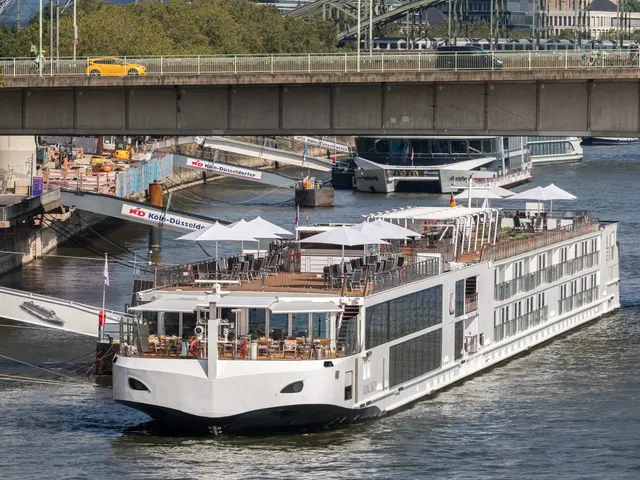
Year Built
2015
Tonnage
2,400 GT
Passengers
190
Crew
45
Decks
4
Class
Longship
Itinerary & Route Map
Loading map…
Where this cruise calls, day by day
9 ports over 8 Nights.
- Day 1
Amsterdam
NetherlandsDepartOne of the few big European cities where the cruise berth is genuinely in town - the Passenger Terminal Amsterdam sits on the IJ waterfront, a ten-minute walk from Centraal Station. Note that the city has capped sea cruise calls at 100 a year from 2026 and plans to move the terminal out of the centre by 2035, so berths here are getting scarcer. River ships moor nearby along the same quays.
- Anne Frank House on the Prinsengracht (timed tickets, book weeks ahead)
- Rijksmuseum and the Van Gogh Museum on Museumplein
- A canal boat through the 17th-century grachtengordel
- Cycling out to the Jordaan or the Albert Cuyp market
- Getting ashore
- Ships berth alongside at PTA on Piet Heinkade; it is a flat 10-15 minute walk west to Centraal Station and the top of the Damrak, no shuttle needed.
- Best months
- Apr-Oct (tulip season mid-Apr)
- Day 2
Kinderdijk
NetherlandsPortA river-cruise stop rather than a town: 19 windmills built around 1740 to drain the Alblasserwaard polder, standing along the dykes below sea level between Rotterdam and Dordrecht. It is a UNESCO site and the whole visit is a flat walk or bike ride along the canals, with two of the mills open as museums showing how the miller families lived inside them.
- Walking the dyke path past all 19 mills
- Going inside the Museum Mill Nederwaard, still furnished as a home
- The Wisboom pumping station and its visitor film
- A hopper boat between the mill groups if you would rather not walk
- Getting ashore
- River ships moor alongside at the Kinderdijk landing, right at the entrance to the mill network; larger ocean ships do not call here.
- Best months
- Apr-Oct
- Day 3
Cologne
GermanyPortThe cathedral is the entire approach - twin soot-blackened Gothic spires standing directly over the water, a couple of minutes from where ships tie up. Cologne was bombed flat and rebuilt plainly around it, so the pleasures are concentrated: the Dom, the museums beside it, and the brewhouses where Kölsch arrives in small glasses until you put a mat over the top.
- Cologne Cathedral, and the 500-odd step climb up the south tower
- Museum Ludwig for Pop Art and one of the largest Picasso collections in Europe
- Kölsch in the Altstadt at Früh am Dom or Päffgen
- The Hohenzollern railway bridge, its fencing buried under padlocks
- Getting ashore
- Vessels moor at the Frankenwerft below the cathedral or slightly downstream at Rheinauhafen; both are a short flat walk into the old town.
- Best months
- Apr-Oct; late Nov-Dec, when the city runs several Christmas markets at once
- Day 4
Koblenz
GermanyPortKoblenz sits at the Deutsches Eck, the wedge of land where the Moselle empties into the Rhine under a colossal equestrian statue of Kaiser Wilhelm I. It is the hinge between two river routes and the northern gate of the Rhine gorge, so a call here usually comes immediately before or after the castle stretch. A cable car crosses the river to the fortress above.
- The Deutsches Eck confluence and the Kaiser Wilhelm monument
- Seilbahn cable car over the Rhine to Ehrenbreitstein Fortress
- The Baroque Electoral Palace and the Schängelbrunnen spitting-boy fountain
- Sailing the Middle Rhine gorge south past Marksburg and the Loreley rock
- Getting ashore
- Vessels moor on the Rhine promenade at the Konrad-Adenauer-Ufer or on the quieter Moselle bank, both a flat five to fifteen minute walk into the old town.
- Best months
- Apr-Oct; Aug for the Rhein in Flammen fireworks
- Day 5
Rüdesheim
GermanyPortRüdesheim is a Rheingau wine village that has fully committed to visitors: the Drosselgasse is a couple of hundred metres of tavern doorways and live music, and it is heaving by mid-afternoon. It also marks the mouth of the Rhine gorge, so most ships call here on either side of the castle run. Riesling is the local trade and it is genuinely good.
- The Drosselgasse taverns and Rüdesheimer Kaffee, flamed with Asbach brandy
- Siegfried's Mechanical Music Cabinet, a house full of working automatic instruments
- The vineyard cable car up to the Niederwald monument
- The Rhine gorge run past the Loreley rock and the Mouse Tower
- Getting ashore
- The quay is a two-minute walk from the Drosselgasse, but Rüdesheim rafts hard in season - three vessels deep is normal, so you cross other ships to reach land.
- Best months
- Apr-Oct; Aug for the wine festival
- Day 6
Heidelberg
GermanyPortHeidelberg is up the Neckar rather than on the Rhine, so unless you are on a small vessel working the Neckar locks you arrive here by coach from Ludwigshafen, Mannheim or Speyer. The draw is the red sandstone castle above the old town - part blown up by French troops and deliberately never rebuilt - and Germany's oldest university below it.
- Heidelberg Castle, the Great Tun wine barrel and the funicular up to it
- The Alte Brücke and its gate towers over the Neckar
- The Philosophers' Walk on the far bank for the classic view back
- The old university's Studentenkarzer, the student lock-up covered in graffiti
- Getting ashore
- Most passengers arrive by coach from a Rhine berth; a handful of smaller vessels work up the Neckar and moor within walking distance of the old town.
- Best months
- Apr-Oct; Dec for the Christmas market under the castle
- Day 7
Strasbourg
FrancePortThe Alsatian capital sits on the French bank of the Rhine and is where Rhine cruises meet the German border - Kehl is directly across the water. The Grande Ile, the island holding the cathedral and the old town, is UNESCO-listed, and the timbered quarter of Petite France along the canals is the postcard. Strasbourg is also an EU seat, so the modern European quarter is a genuine second half to the city.
- Strasbourg Cathedral and its 16th-century astronomical clock
- Petite France, the canalside quarter of half-timbered houses and locks
- A boat tour of the Ill through the locks and the European quarter
- The Alsace wine route and villages such as Obernai, a short drive out
- Getting ashore
- Unlike most French river stops this is not a walk-off: larger vessels moor in the Rhine port around Rue du Havre or Rue de la Minoterie, roughly 5 km out, and you take a ship coach or tram line D into the centre.
- Best months
- May-Jun and Sep-Oct, plus late Nov-Dec for the Christmas markets
- Day 8
Breisach
GermanyPortBreisach is a small Rhine wine town under a hilltop minster, and most passengers leave it within minutes - it is the standard berth for the Black Forest and for Colmar and the Alsace wine road just across the border. If you stay put, the climb to the minster earns its keep for the Schongauer frescoes and the view over Kaiserstuhl vineyards.
- St Stephen's Minster on the hill, with Schongauer's Last Judgement wall painting
- The excursion to Colmar's Petite Venise, twenty minutes into Alsace
- Black Forest day trips for cuckoo clocks, Freiburg or Titisee
- Kaiserstuhl volcanic-soil wine, much of it through the Badischer Winzerkeller cooperative
- Getting ashore
- Vessels moor on the quay a short walk below the town, but almost every call is built around a coach excursion rather than the town itself.
- Best months
- Apr-Oct
- Day 9
Basel
SwitzerlandArriveBasel is the practical head of navigation on the Rhine, so most Rhine itineraries begin or end here rather than pass through. Berths sit downstream in the Kleinhüningen and Klybeck port area, which is a tram or shuttle ride from the old town, not a walk. The city is Swiss-serious about art and sits on the corner where Switzerland, France and Germany meet.
- The red sandstone Münster and the Pfalz terrace above the river
- Kunstmuseum Basel, one of the oldest public art collections anywhere
- Fondation Beyeler out at Riehen, in a Renzo Piano building
- The reaction ferries that cross the Rhine using only the current, and Tinguely's clanking fountain
- Getting ashore
- Vessels berth in the industrial port reach north of the centre; embarkation transfers are by coach and getting into town on your own means a tram.
- Best months
- Apr-Oct; Dec for the Münsterplatz and Barfüsserplatz markets
Onboard Amenities
Cruise Highlights
About the Ship
What Travelers Say About Viking Longship
Reviews of the ship itself — the same for every Viking Longship sailing. Based on 650 discussions.
The Viking Longship class is the vessel that arguably remade modern European river cruising, and it still sets the template. These near-identical ~190-guest ships trade the casino-and-waterslide bustle of ocean megaships for a calm, design-forward, adults-only experience: clean Scandinavian lines, plenty of glass, and an unhurried atmosphere aimed squarely at well-traveled North American couples in their 50s and up. The signature feature is the Aquavit Terrace at the bow — an indoor/outdoor lounge and dining space where floor-to-ceiling glass folds back so you can watch castles, vineyards, and river towns drift by while you eat or sip a drink.
What People Love
- Bright, airy Scandinavian design that genuinely revitalized river cruising — open public spaces and lots of glass make the 190-guest ships feel modern and uncramped
- Service is the single most-praised element: attentive, warm crew who learn your name within a day or two
- The Aquavit Terrace is a standout — an indoor/outdoor space at the bow where you can eat or have a drink while scenery glides past
Common Complaints
- Very limited onboard amenities and entertainment — no pool or real gym, and evening entertainment is typically just a pianist plus an occasional local act
- Dinner times are relatively fixed and run late (often 7 pm), which some older passengers find inconvenient
- Low-water disruptions are a recurring risk on European rivers — itineraries can turn into long bus transfers or ship swaps, sometimes with little advance notice
More Europe Cruises
View all Europe cruisesCelebrity Cruises
Celebrity Apex - Canaries & Portugal from Southampton
Regent Seven Seas
Regent Seven Seas Explorer - Northern Europe
Princess Cruises
Sky Princess - Canary Islands & Madeira from Southampton
Cunard
Queen Anne - Spain & Portugal from Southampton