Norwegian Viva - Western Mediterranean & Adriatic from Barcelona
A port-intensive, zero-sea-day crossing on Norwegian Viva from Barcelona to Ravenna, tracing Italy's coast into the Adriatic via Montenegro and Croatia.
Price Range
$
Budget
*Prices vary by cabin type, sailing date, and availability. Confirm rates with Norwegian Cruise Line before booking.
Ship Details — Norwegian Viva
View full Norwegian Viva details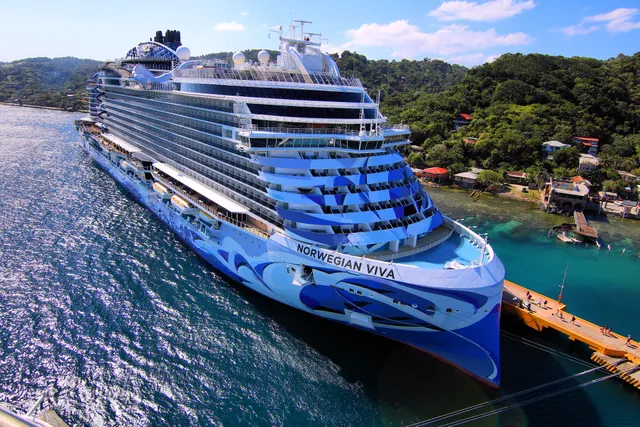
Year Built
2023
Tonnage
142,500 GT
Passengers
3,215
Crew
1,388
Decks
20
Class
Prima
Itinerary & Route Map
Loading map…
Where this cruise calls, day by day
10 ports over 9 Nights.
- Day 1
Barcelona
SpainDepartThe busiest cruise port in Europe, and for many Western Mediterranean itineraries the place the whole trip starts or ends. Barcelona is a full-scale city rather than a port town: Gaudi's unfinished basilica, a dense medieval quarter, and a working waterfront all within a few metro stops. Ships berth on a long industrial mole well outside the centre, so the day begins with a bus ride rather than a gangway stroll.
- Sagrada Familia - book a timed entry well ahead; walk-ups are usually turned away
- Park Guell and the Gaudi mosaics on Carmel hill
- The Gothic Quarter and Barcelona Cathedral, on foot from Placa de Catalunya
- La Boqueria market and a walk down La Rambla to the Columbus monument
- Getting ashore
- All cruise ships now use the Moll d'Adossat terminals roughly 3 km from the old city; the paid blue Portbus shuttle runs to the foot of La Rambla, and walking out is not practical.
- Best months
- Apr-Jun and Sep-Oct (Jul-Aug is hot, crowded and expensive)
- Day 2
Villefranche (Nice)
FrancePortVillefranche-sur-Mer sits in a deep sheltered bay just east of Nice, and it exists on cruise itineraries mainly as the anchorage for the Cote d'Azur. The village itself is a steep stack of ochre houses with a 14th-century covered lane, the Rue Obscure, but nearly everyone leaves. Nice, Monaco and Eze are all short hops along the coast, and the local train from the station above the harbour makes doing it independently realistic.
- Nice's Promenade des Anglais, Cours Saleya market and Vieux Nice
- Monaco and Monte-Carlo, about 30 minutes by train
- The hilltop village of Eze and its exotic garden
- The Chagall and Matisse museums in the Cimiez district of Nice
- Getting ashore
- This is a tender port - ships anchor in the bay and tenders land at the quay in the village, with the railway station a steep 10-minute climb away.
- Best months
- May-Jun and Sep-Oct (Jul-Aug is heavily crowded along the coast)
- Day 3
Livorno (Florence/Pisa)
ItalyPortLivorno is a container and ferry port with a canal-laced old quarter called Venezia Nuova, and almost nobody comes for it. The call exists because Florence is about 90 minutes inland and Pisa about 45. Understand what that buys: a Florence excursion is roughly three hours on a coach around four hours in the city, and the Uffizi alone can eat half of that.
- The Duomo, the Baptistery and Piazza della Signoria in Florence
- The Uffizi, or the Accademia for Michelangelo's David - pre-booked, or you will not get in
- The Leaning Tower and the Campo dei Miracoli at Pisa
- Venezia Nuova's canals and the Mercato Centrale in Livorno itself
- Getting ashore
- Ships dock in Livorno's commercial port with a shuttle to Piazza del Municipio; Florence is about 90 minutes away by coach or train and Pisa about 45.
- Best months
- Apr-Jun and Sep-Oct (Jul-Aug very hot, and Florence is overwhelmed)
- Day 4
Rome (Civitavecchia)
ItalyPortCivitavecchia is a working port town on the Tyrrhenian coast, and it is not Rome - the city is about 80km southeast, roughly 80 minutes each way. Budget for that honestly: a Rome day is some four hours of transit bracketing whatever you actually see. The port has Fort Michelangelo on the quay and good fish-market lunches, a real option if you have done Rome before.
- St Peter's Basilica and the Vatican Museums, with a timed entry booked well ahead
- The Colosseum and the Roman Forum, a short walk apart on the Termini side
- The Pantheon and the Trevi Fountain on a walking loop of the centro storico
- Fort Michelangelo and the Terme Taurine Roman baths, for a day that stays in Civitavecchia
- Getting ashore
- Ships dock in Civitavecchia and a free shuttle runs to the port gate at Largo della Pace, from where it is a short walk to the station and a 70-80 minute train into Rome.
- Best months
- Apr-Jun and Sep-Oct (Jul-Aug hot, and the Rome queues are brutal)
- Day 5
Salerno
ItalyPortSalerno is a working southern city with a Zaha Hadid-designed cruise terminal on its waterfront and a long promenade behind. Ships call because this is the eastern end of the Amalfi Coast - Amalfi and Ravello are reachable by road or, far better, by ferry from the same harbour. The city's own draw is a Norman cathedral with a crypt worth the detour.
- A ferry along the coast to Amalfi and Positano, avoiding the coast road entirely
- Ravello's Villa Rufolo and Villa Cimbrone gardens
- The Duomo di San Matteo and its mosaic-lined crypt
- Paestum's three Greek temples, about an hour south
- Getting ashore
- Ships dock at the Salerno Maritime Terminal on the city waterfront, a short walk from the old town and from the Amalfi Coast ferry berths.
- Best months
- May-Jun and Sep-Oct (the coast road is gridlocked in Jul-Aug)
- Day 6
Messina
ItalyPortMessina faces Calabria across the strait and was flattened by an earthquake in 1908, so the city is mostly rebuilt and low-slung rather than historic. Ships dock right on the seafront, but the call is really a doorway: Taormina is under an hour south and Etna a little further. If you stay put, the set-piece is the cathedral's astronomical clock.
- The Duomo's astronomical clock, the largest of its kind, which performs at noon
- Taormina and its Greek theatre, about 50 minutes down the coast
- Etna's lower craters and lava fields, by jeep or the Rifugio Sapienza cable car
- The Museo Regionale, which holds two Caravaggios
- Getting ashore
- Ships dock on the Messina waterfront a few minutes from Piazza Duomo, and coaches for Taormina and Etna load at the pier.
- Best months
- Apr-Jun and Sep-Oct (Etna can be cold and cloud-capped while the coast is warm)
- Day 7
Corfu
GreecePortCorfu was Venetian for four centuries and then British for fifty, and the Old Town shows it - tall shuttered Italianate terraces, a cricket ground on the main square, and an arcaded promenade the French put up. The island is green and wooded in a way the Cyclades are not. The cruise terminal is a couple of kilometres from the Old Town, an unremarkable walk or a short shuttle ride.
- The Old Fortress and the Liston arcade on the Spianada, the largest square in Greece
- The Achilleion, the palace Empress Elisabeth of Austria built above Gastouri
- Paleokastritsa - the monastery on the headland and the coves beneath it
- Kanoni, with the Vlacherna monastery and Mouse Island offshore
- Getting ashore
- Docked at the cruise terminal about 2km from the Old Town; a shuttle runs to the port gate, and it is a 20-25 minute walk from there along the waterfront.
- Best months
- May-Jun and Sep-Oct (Corfu gets far more rain than the Aegean islands, so shoulder season can be wet)
- Day 8
Bar
MontenegroPortBar is Montenegro's working port - ferries to Italy, container cranes, the rail line to Belgrade - and the town that grew up beside it is functional rather than scenic. What justifies the call sits inland: Stari Bar, the ruined Ottoman and Venetian hill town abandoned after a gunpowder explosion, about 4km up the slope. The coast's showpieces, Budva and Sveti Stefan, are a drive north.
- Stari Bar - the ruined hill town, its aqueduct and the Ottoman clock tower
- The Old Olive Tree at Mirovica, reckoned at 2,000 years and more
- Budva's walled Old Town and the view down onto Sveti Stefan
- Lake Skadar, the largest lake in the Balkans, on the rail line inland
- Getting ashore
- Docked inside the working container port, with no cruise terminal - expect a ten-minute bus through the freight yards to get out. Stari Bar is 4-5km inland by taxi or local bus, and Budva about 50 minutes north.
- Best months
- May-Jun and Sep-Oct
- Day 9
Split
CroatiaPortSplit is built inside a Roman palace. Diocletian retired here in AD 305 and the town simply kept using the walls - shops, flats and bars are wedged into the emperor's substructures, so it reads as a lived-in neighbourhood rather than a ruin. Cruise ships berth on the harbour a short walk from the Riva, which makes it one of the easier Adriatic port days to do on your own.
- Diocletian's Palace: the Peristyle, the cellars, and the Cathedral of St Domnius in his mausoleum
- The Marjan hill paths above the town, for the view along the coast
- Trogir, a walled Venetian island town about 30 minutes west
- The waterfalls and boardwalks of Krka National Park, roughly an hour inland
- Getting ashore
- Docked in the city harbour basin beside the ferries. Small ships take Gat sv. Petra, five minutes from the palace's Silver Gate; large ships take the outer Gat sv. Duje, a flat but unshaded 10-20 minutes. A blue line painted on the ground leads you in.
- Best months
- May-Jun and Sep-Oct (Jul-Aug is hot and the palace lanes are shoulder to shoulder)
- Day 10
Ravenna
ItalyArriveThe berth is Porto Corsini, a canal terminal on the Adriatic about 12km from Ravenna itself, so a shuttle is unavoidable. What waits at the other end is a set of fifth- and sixth-century Byzantine mosaics that survive nowhere else in Europe at this quality - gold ground, deep blue, still in the buildings they were made for. Ravenna also absorbed cruise traffic that once went to Venice.
- The Basilica di San Vitale and the adjoining Mausoleum of Galla Placidia
- Sant'Apollinare Nuovo, and Sant'Apollinare in Classe out of town
- Dante's tomb, beside the Basilica di San Francesco
- The Neonian Baptistery, oldest of the mosaic monuments
- Getting ashore
- Ships dock at Porto Corsini on the Candiano canal and a shuttle covers the 12km into Ravenna, after which the mosaic sites are all within walking distance of each other.
- Best months
- Apr-Jun and Sep-Oct
Onboard Amenities
Cruise Highlights
About the Ship
What Travelers Say About Norwegian Viva
Reviews of the ship itself — the same for every Norwegian Viva sailing. Based on 900 discussions.
Norwegian Viva debuted in 2023 as the second ship in NCL's Prima Class, sharing roughly 95% of its sister Prima's DNA while quietly polishing the first-of-class rough edges. It keeps the same smaller, design-forward formula - about 3,099 guests, up to 36% more space per passenger than typical contemporary ships, and signature spaces like the three-deck Penrose Atrium and the 360-degree Ocean Boulevard promenade, which on Viva includes The Concourse sculpture garden. The result is a ship that reviewers find stylish and less crowded than NCL's older megaships, and it currently sits as the highest-rated Norwegian ship on U.S. News.
What People Love
- Newer second-in-class ship that refined Prima's debut, most notably with two main dining rooms offering rotating daily menus instead of a single fixed menu
- Expanded Indulge Food Hall seating eases the casual-dining crunch that frustrated early Prima guests
- Highest-rated NCL ship on U.S. News (4.3/5, ranked #1 in the fleet), reflecting strong guest satisfaction
Common Complaints
- Small main pool and limited pool-deck space - the same Prima-class shortcoming, with the pool described as better for socializing than swimming
- Premium pricing that some guests feel outpaces the value, especially given the modest pool deck
- Many activities and specialty restaurants carry extra charges, continuing NCL's a la carte fee structure
More Mediterranean Cruises
View all Mediterranean cruisesCelebrity Cruises
Celebrity Xcel - Western Mediterranean Cruise
Viking Ocean Cruises
Viking Vesta - Iconic Western Mediterranean
Silversea
Silver Ray - Riviera & Italian Coast: Monte Carlo to Rome
Celebrity Cruises
Celebrity Ascent - Italy, Greece & Croatia from Rome