AmaCerto - Danube Waltz
AmaWaterways' elegant AmaCerto drifts along the Blue Danube from Budapest to Passau, passing through four countries and centuries of Habsburg history. Enjoy a swim in the onboard pool, gourmet cuisine featuring local ingredients, and complimentary excursions in every port including a Vienna concert.
Price Range
$$$$
Luxury
*Prices vary by cabin type, sailing date, and availability. Confirm rates with AmaWaterways before booking.
Ship Details — AmaCerto
View full AmaCerto details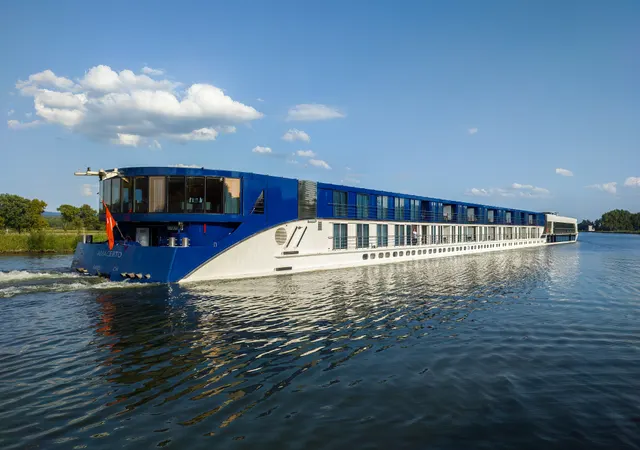
Year Built
2012
Tonnage
N/A
Passengers
164
Crew
51
Decks
4
Class
River Ship
Itinerary & Route Map
Loading map…
Where this cruise calls, day by day
8 ports over 7 Nights.
- Day 1
Budapest
HungaryDepartTwo cities on opposite banks - flat, commercial Pest and the hills of Buda - with the Danube running straight between them, so the ship ties up inside the view rather than outside it. Berths line the Pest embankment near the Chain Bridge, often two or three vessels rafted together. Most itineraries hold overnight for the floodlit Parliament from the top deck.
- Buda Castle hill, Matthias Church and the Fisherman's Bastion terraces
- Soaking at the Széchenyi or Gellért thermal baths
- The Shoes on the Danube Bank memorial, a short walk from most berths
- The Great Market Hall and the ruin bars of the old Jewish quarter
- Getting ashore
- Ships moor on the Pest embankment near Vigadó tér and the Chain Bridge, walking distance to the centre, but rafting means you may cross another vessel's lounge to get ashore.
- Best months
- Apr-Oct; late Nov-Dec for the Vörösmarty tér Christmas market
- Day 2
Budapest
HungaryPortTwo cities on opposite banks - flat, commercial Pest and the hills of Buda - with the Danube running straight between them, so the ship ties up inside the view rather than outside it. Berths line the Pest embankment near the Chain Bridge, often two or three vessels rafted together. Most itineraries hold overnight for the floodlit Parliament from the top deck.
- Buda Castle hill, Matthias Church and the Fisherman's Bastion terraces
- Soaking at the Széchenyi or Gellért thermal baths
- The Shoes on the Danube Bank memorial, a short walk from most berths
- The Great Market Hall and the ruin bars of the old Jewish quarter
- Getting ashore
- Ships moor on the Pest embankment near Vigadó tér and the Chain Bridge, walking distance to the centre, but rafting means you may cross another vessel's lounge to get ashore.
- Best months
- Apr-Oct; late Nov-Dec for the Vörösmarty tér Christmas market
- Day 3
Bratislava
SlovakiaPortA small capital that folds its old town into a few blocks beneath a boxy white castle, with ships mooring on the embankment right below it. The contrast is the interest: Habsburg coronation streets on one bank, the Petržalka high-rise slabs and a flying-saucer observation deck on a bridge over the other. Prices drop sharply here after Vienna.
- Bratislava Castle and the view over the Danube to Austria
- St Martin's Cathedral, where Hungarian kings were crowned for centuries
- Michael's Gate and the Čumil bronze peering out of a manhole
- The UFO deck on the SNP Bridge, or Devín Castle ruin out at the Morava confluence
- Getting ashore
- Berths are on the city-centre embankment, a five to ten minute walk from the pedestrian old town, though rafting is common when several vessels overlap.
- Best months
- Apr-Oct; Dec for the Hlavné námestie Christmas market
- Day 4
Vienna
AustriaPortThe catch with Vienna is that the Danube does not actually run through the city it built. Vessels moor on the Handelskai and Praterkai stretch northeast of the centre, and the Ringstrasse is a shuttle or a few U-Bahn stops away, so budget the transfer both directions. At the other end is imperial Vienna at full scale, plus coffee houses that treat sitting for three hours as the point.
- Schönbrunn Palace and its gardens
- The Hofburg complex, the Spanish Riding School and the Kunsthistorisches Museum
- St Stephen's Cathedral and the lanes around it
- Café Central or Demel for Sachertorte and a newspaper on a wooden stick
- Getting ashore
- Berths are on the Handelskai/Praterkai reach several kilometres from the historic centre; expect a coach shuttle or the U1 rather than a walk.
- Best months
- Apr-Oct; late Nov-Dec for the Rathausplatz Christmas market
- Day 5
Weissenkirchen
AustriaPortA Wachau wine village of a few hundred people pressed between terraced vineyards and the river, with a fortified parish church up on a rise that was built to be defended against Ottoman raiding parties. There is little to do beyond drinking Grüner Veltliner and Riesling where it is grown, which is broadly the point of the stop.
- The fortified church of St Michael above the village
- The Teisenhoferhof courtyard and its small Wachau museum
- Tasting Grüner Veltliner and Riesling from the Achleiten terraces
- Walking or cycling the riverside path toward Dürnstein and its blue church tower
- Getting ashore
- Small vessels use a pontoon landing on the bank and the village is a few minutes' walk, but berths here are limited and some calls tie up at nearby Wachau villages instead.
- Best months
- Apr-Oct; Sep-Oct for the harvest
- Day 6
Melk
AustriaPortMelk's Benedictine abbey sits on a rock over the town, a long ochre-yellow Baroque block visible for kilometres up the river. The interiors are what you climb for: Troger's ceiling in the marble hall and a library of twelve rooms of manuscripts. Sailing on downstream from here through the Wachau is the best hour of scenery on the Danube.
- Melk Abbey's library, marble hall and gilded church
- The abbey terrace looking down the Danube valley
- The Wachau sail between Melk and Krems past Spitz and Dürnstein
- Wachau apricot products, from schnapps to dumplings, sold all over town
- Getting ashore
- Vessels moor at the landing on the Danube about fifteen minutes' walk from town, with the abbey a further climb; most lines run a shuttle up.
- Best months
- Apr-Oct; Apr for apricot blossom, Jul for the fruit itself
- Day 7
Linz
AustriaPortLinz is a working steel city that spent seriously on culture, and the results line the bank where ships moor: the Ars Electronica Center's media labs on one side of the river, the glowing glass slab of the Lentos art museum on the other, with the old main square a short walk inland. Plenty of passengers skip all of it for the coach to Salzburg.
- Ars Electronica Center, a hands-on museum of digital and machine art
- Lentos Kunstmuseum on the Danube bank
- Hauptplatz, its Trinity column, and Linzer Torte at a Konditorei
- The Pöstlingbergbahn tram grinding up to the pilgrimage church above town
- Getting ashore
- Ships tie up on the Donaulände by the Lentos, roughly ten minutes' walk from the Hauptplatz.
- Best months
- Apr-Oct; Dec for the Hauptplatz and Volksgarten markets
- Day 8
Passau
GermanyArrivePassau is squeezed onto a narrow spit where the Inn and the small dark Ilz meet the Danube, and from the fortress above you can watch the three currents hold separate colours for a while before mixing. The old town behind it is Italian Baroque - Salzburg architects rebuilt it after fires - and it is a common start or end point for Danube itineraries.
- St Stephen's Cathedral and its organ, among the largest in the world, with midday recitals in season
- The three-rivers point at the Dreiflusseck
- Veste Oberhaus fortress, reached on foot or by shuttle bus, for the view down onto the spit
- Flood high-water marks painted up the wall of the old town hall
- Getting ashore
- Ships tie up along the Danube promenade below the old town, and you step straight off into it - no tender, no terminal.
- Best months
- Apr-Oct; Dec for the cathedral square Christmas market
Onboard Amenities
Cruise Highlights
About the Ship
What Travelers Say About AmaCerto
Reviews of the ship itself — the same for every AmaCerto sailing. Based on 120 discussions.
AmaCerto is a 164-guest AmaWaterways river ship launched in 2012 that sails the Rhine, Main and Danube, and its calling card is space: most cabins use the line's twin-balcony layout, pairing a floor-to-ceiling French balcony with a genuine walk-out veranda, so guests get more fresh-air room than almost any competitor in the category. The onboard vibe is refined but relaxed and skews toward well-traveled, food-and-wine-minded couples and active retirees rather than party crowds. Parent line AmaWaterways took the No. 1 spot in U.S. News's inaugural 2026-2027 Best River Cruise Lines ranking, and that line-wide reputation is what most travelers buy into when they book AmaCerto.
What People Love
- Twin-balcony staterooms are a standout for the class - most cabins pair a floor-to-ceiling French balcony with a separate walk-out veranda, giving far more open-air space than typical river ships
- Crew service is repeatedly called the highlight, with staff learning guest names quickly and going out of their way (one bartender reportedly assembled a full meal for late-arriving guests)
- Food earns strong marks across venues, including Chaine des Rotisseurs-inspired dishes in the main dining room and the intimate Chef's Table tasting menu with a glass-enclosed demonstration kitchen
Common Complaints
- Itineraries are highly weather-dependent - low water on the Rhine and Danube has forced ship swaps, bus substitutions, or curtailed cruising, with some guests reporting only a couple of days actually sailing
- Several reviews cite logistics and communication failures around transfers, including wrong hotel/timing information for arrival or departure transfers
- Standard (lower-deck) staterooms feel tight, and some guests advise booking up to a balcony category for comfort
More Europe Cruises
View all Europe cruisesViking River Cruises
Viking Longship - Rhine River Journey
Celebrity Cruises
Celebrity Apex - Canaries & Portugal from Southampton
Regent Seven Seas
Regent Seven Seas Explorer - Northern Europe
Princess Cruises
Sky Princess - Canary Islands & Madeira from Southampton