Viking Orion - Komodo & the Australian Coast
A 16-night crossing from Bali to Sydney that links Indonesia's dragon country with nearly the full length of Australia's east coast. After Lombok and a naturalist-led call at Komodo National Park, the ship spends two days in Darwin, rounds the Top End via Thursday Island, then works down the Queensland coast to Cairns, the Whitsundays, Brisbane and Newcastle before sailing into Sydney Harbour.
Price Range
$$$$
Luxury
*Prices vary by cabin type, sailing date, and availability. Confirm rates with Viking Ocean Cruises before booking.
Ship Details — Viking Orion
View full Viking Orion details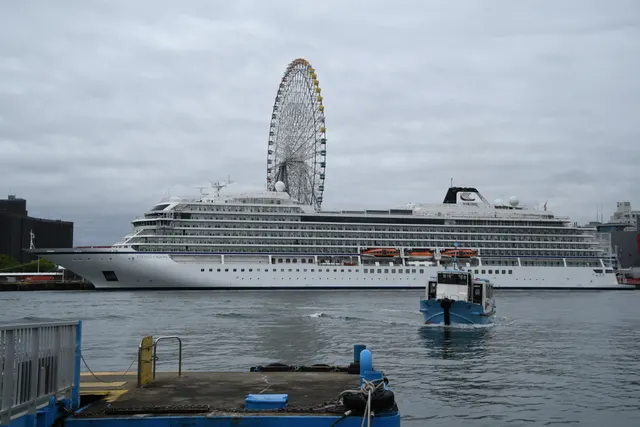
Year Built
2018
Tonnage
47,800 GT
Passengers
930
Crew
550
Decks
9
Class
Viking Ocean
Itinerary & Route Map
Loading map…
Where this cruise calls, day by day
12 ports and 5 sea days over 16 Nights.
- Day 1
Benoa (Bali)
IndonesiaDepartBenoa is Bali's cruise harbour, on a spit of reclaimed land south-east of Denpasar, and it is a port rather than a destination - the ship is your last sight of anything scenic until the bus leaves. Bali itself starts about twenty minutes away and gets better the further inland you go. The honest constraint is traffic: Ubud and the rice terraces are 90 minutes off in the best case, and considerably more in the worst.
- Uluwatu Temple on its clifftop, ideally timed for the late-afternoon kecak dance
- Ubud - the Sacred Monkey Forest Sanctuary, the art markets and the Tegallalang rice terraces
- Tanah Lot, the sea temple on its offshore rock
- Tirta Empul, the spring-fed purification temple near Tampaksiring
- Getting ashore
- Docked at Benoa Harbour, with tendering only when the berths are full; Nusa Dua is 10-15 minutes, Kuta 25-35, and Ubud 60-90 minutes each way.
- Best months
- May-Sep (dry season)
- Day 2
Lombok
IndonesiaPortLombok is Bali's eastern neighbour and runs at a much slower speed - drier, more Muslim, with Mount Rinjani's volcanic cone dominating the interior. Ships use the Gili Mas terminal beside Lembar on the west coast, which is a purpose-built berth rather than a town. Most of the day goes on a drive: pottery villages, traditional Sasak settlements, or the beaches north towards Senggigi.
- Sade, a traditional Sasak village of thatched houses and rice barns
- Banyumulek, where the terracotta pottery is thrown and sold
- Snorkelling off the southern Gilis - Nanggu, Sudak and Kedis, the practical Gili option from this berth
- Senggigi's beaches, or the long haul north to Gili Trawangan
- Getting ashore
- Docked at the Gili Mas cruise terminal, a couple of miles south of the old Lembar port; the Sasak villages are 30-45 minutes away and Senggigi about an hour.
- Best months
- May-Sep (dry season)
- Day 3
Komodo National Park (Slawi Bay)
IndonesiaPortThis is a wildlife call rather than a town call: ships anchor in Slawi Bay off Komodo Island and tender passengers to the ranger station for guided walks among the world's largest lizards. Rangers escort every group with a forked stick, which is less reassuring than it sounds. The island itself is dry savannah, hot and steep, with excellent reef just offshore.
- The ranger-led walk to find Komodo dragons around the island's waterholes
- Pink Beach, coloured by fragments of red coral in the sand, reached by boat rather than on foot
- Snorkelling on the reefs off Komodo, among the richest in Indonesia
- The savannah ridge above the ranger station, for the view back over the bay
- Getting ashore
- Tender. Ships anchor in Slawi Bay and land passengers at the Loh Liang jetty on Komodo Island, a 10-15 minute ride; there is no town, and everything ashore is on foot with a ranger or by small boat.
- Best months
- Apr-Nov (dry season); dragons are most active in the cool of the morning
Day 4 · At sea
- Day 5
Darwin
AustraliaPortDarwin is the closest Australian capital to Asia and feels it - a small, hot, rebuilt city that has been flattened twice, by Japanese bombing in 1942 and by Cyclone Tracy in 1974. Both stories are told well here. Ships use Fort Hill Wharf just below the CBD, and the walk up the escarpment into town is short but steep in the heat.
- Museum and Art Gallery of the Northern Territory - the Cyclone Tracy room and Sweetheart the crocodile
- Mindil Beach Sunset Market, dry-season Thursdays and Sundays
- WWII oil storage tunnels under the waterfront
- Litchfield National Park waterfalls, about 90 minutes out
- Getting ashore
- Docked at Fort Hill Wharf, though some calls get the commercial port instead; the CBD sits on the cliff above and there is a public lift up the escarpment, which makes it about 15 minutes on foot - the Waterfront Precinct is immediately alongside.
- Best months
- May-Sep (dry season)
- Day 6
Darwin
AustraliaPortDarwin is the closest Australian capital to Asia and feels it - a small, hot, rebuilt city that has been flattened twice, by Japanese bombing in 1942 and by Cyclone Tracy in 1974. Both stories are told well here. Ships use Fort Hill Wharf just below the CBD, and the walk up the escarpment into town is short but steep in the heat.
- Museum and Art Gallery of the Northern Territory - the Cyclone Tracy room and Sweetheart the crocodile
- Mindil Beach Sunset Market, dry-season Thursdays and Sundays
- WWII oil storage tunnels under the waterfront
- Litchfield National Park waterfalls, about 90 minutes out
- Getting ashore
- Docked at Fort Hill Wharf, though some calls get the commercial port instead; the CBD sits on the cliff above and there is a public lift up the escarpment, which makes it about 15 minutes on foot - the Waterfront Precinct is immediately alongside.
- Best months
- May-Sep (dry season)
Day 7 · At sea
- Day 8
Thursday Island
AustraliaPortThursday Island is the administrative centre of the Torres Strait, in the water between the tip of Cape York and Papua New Guinea. It is small - a few streets, a couple of pubs, a hill fort - and its culture is Torres Strait Islander rather than mainland Australian. The pearling industry brought Japanese, Malay and Filipino divers here, and their cemeteries are part of the story.
- Green Hill Fort, built in the 1890s against a Russian invasion that never came
- Gab Titui Cultural Centre for Torres Strait Islander art
- Quetta Memorial Cathedral, built after the 1890 shipwreck
- The Japanese pearl divers' section of the town cemetery
- Getting ashore
- Tender in to the main wharf at Port Kennedy, about a kilometre of flat walking from the town centre; taxis are few and there is no organised transport beyond the ship's own tours.
- Best months
- May-Oct (dry season)
Day 9 · At sea
- Day 10
Cairns (Yorkeys Knob)
AustraliaPortYorkeys Knob is not a town so much as an anchorage. Cairns dredged its channel in 2020 and now berths ships up to about 300m right in the city, so anything bigger anchors off here instead, roughly 15km north, and tenders to a small boat harbour from which coaches do the rest. It adds a solid chunk of transfer to a day that is really about the reef and the rainforest behind the coast.
- Outer reef pontoon day - snorkelling or an intro dive on the Great Barrier Reef
- Kuranda by Skyrail Rainforest Cableway one way and the Scenic Railway the other
- Daintree Rainforest and Mossman Gorge
- Cairns Esplanade lagoon, since the sea here is not for casual swimming
- Getting ashore
- Anchored off Yorkeys Knob with a tender to the boat harbour, then 20-25 minutes by coach into Cairns; there is very little at the landing itself, so check whether your ship berths in the city instead.
- Best months
- May-Oct (dry season; the wet and stinger season runs Nov-Apr)
- Day 11
Townsville
AustraliaPortTownsville is a North Queensland garrison and university city sitting under Castle Hill, a pink granite monolith right behind the CBD. It is drier and less touristed than Cairns, and its reef access is different - Magnetic Island is a twenty-minute ferry from the middle of town, with koalas in the eucalypts above old wartime gun emplacements. The Strand runs along the waterfront.
- Ferry to Magnetic Island and the Forts Walk for wild koalas
- Castle Hill lookout above the city
- Museum of Tropical Queensland and its HMS Pandora wreck collection
- The Strand foreshore, with a stinger enclosure for swimming
- Getting ashore
- Docked at Berth 10 beside the Quayside Terminal; the CBD is about 2km, walkable or a short taxi, and the port runs local markets at the terminal on ship days.
- Best months
- May-Oct (dry season)
- Day 12
Airlie Beach
AustraliaPortAirlie Beach is the mainland launch point for the Whitsundays and is small - one main street of tour desks, bars and backpackers, plus a public lagoon because of the stingers. Ships anchor in the bay and tender to the Port of Airlie marina. Nobody comes here for the town; the day is about getting out to the islands and the reef.
- Whitehaven Beach on Whitsunday Island, silica sand that squeaks
- Hill Inlet lookout at Tongue Point for the swirling sandbank view
- Great Barrier Reef snorkel trip out to Hardy or Bait Reef
- Airlie Beach Lagoon, the safe stinger-free swim in town
- Getting ashore
- Tender to Port of Airlie; the main street is a flat 10-minute walk from the landing, and reef operators often collect passengers from the ship's side rather than from shore, which is the quickest way out to the Whitsundays.
- Best months
- May-Oct (dry season)
Day 13 · At sea
- Day 14
Brisbane
AustraliaPortBrisbane's cruise terminal opened in 2020 at Luggage Point, near the river mouth beside the airport, and it is a long way from the city it serves - there is no train, no tram and nothing within walking distance. Once you cover the transfer, Brisbane is a warm, low-key river city that spends most of the year outdoors. The Gold Coast is another hour further south again.
- South Bank Parklands and Streets Beach, a lagoon in the middle of the city
- Lone Pine Koala Sanctuary, reachable by river cruise up the Brisbane
- Story Bridge Adventure Climb
- Mount Coot-tha lookout and the botanic gardens beneath it
- Getting ashore
- Docked at the Brisbane International Cruise Terminal at Luggage Point, about 21km and 30 minutes from the CBD; no public transport serves the terminal at all, so it is the cruise shuttle, a taxi or a rideshare - the single most common surprise here.
- Best months
- Oct-Apr (cruise season; Jul-Sep is drier and cooler)
Day 15 · At sea
- Day 16
Newcastle
AustraliaPortNewcastle is a coal port at the mouth of the Hunter River that has spent the last two decades rebuilding itself around its beaches and its harbour foreshore. It is compact and easy, with surf beaches and an ocean bath within walking distance of the terminal. The wine country of the Hunter Valley is about an hour inland, which is where a good share of passengers go.
- Bathers Way coastal walk past Newcastle Ocean Baths and Nobbys Beach
- Fort Scratchley, the coastal battery that returned fire on a Japanese submarine in 1942
- Hunter Valley wineries, roughly an hour by coach
- Nobbys Head lighthouse and the breakwall walk
- Getting ashore
- Docked at the Channel Berth in Carrington, a working-port berth with no terminal building - you cannot walk out, so the shuttle is the only way ashore and drops you about 10 minutes' drive from the city centre.
- Best months
- Nov-Mar (southern summer)
- Day 17Sydney port guide: where ships dock and what to do ashore
Sydney
AustraliaArrive
Onboard Amenities
Cruise Highlights
About the Ship
What Travelers Say About Viking Orion
Reviews of the ship itself — the same for every Viking Orion sailing. Distilled from 6 traveler threads, Cruise Critic member reviews and travel blogs.
Viking Orion is one of the more established ships in Viking's ocean fleet, sailing since 2018, and it carries a genuinely distinctive feature: the Explorers' Dome planetarium, a high-resolution domed theater that Orion was the first Viking ship to introduce. Beyond that signature, it delivers the classic Viking experience, a small, adults-only ship of roughly 930 guests with understated Scandinavian styling and an itinerary-driven, mature sensibility that appeals strongly to seasoned travelers who prefer enrichment over entertainment.
What People Love
- Adults-only atmosphere with no guests under 18, giving a calm and mature onboard feel
- Strong no-nickel-and-diming value with Wi-Fi, self-serve laundry, one shore excursion per port, and wine, beer and soda at lunch and dinner all included
- Consistently friendly and efficient service that guests rate highly
Common Complaints
- Shore excursions draw criticism, with included options seen as low value and optional ones overpriced
- Main dining food can be bland or limited in variety, especially for dietary restrictions
- As a smaller ship it has more noticeable motion than megaships in rough seas