Seven Seas Explorer - Epicurean Japan Roundtrip Tokyo
Regent's Seven Seas Explorer devotes an all-inclusive autumn roundtrip from Tokyo to Japan's food capitals - Kobe beef country, Kochi's Hirome Market, Hakata ramen - with scenic passage through the Kanmon Straits and a Busan interlude.
Price Range
$$$$
Luxury
*Prices vary by cabin type, sailing date, and availability. Confirm rates with Regent Seven Seas before booking.
Ship Details — Seven Seas Explorer
View full Seven Seas Explorer details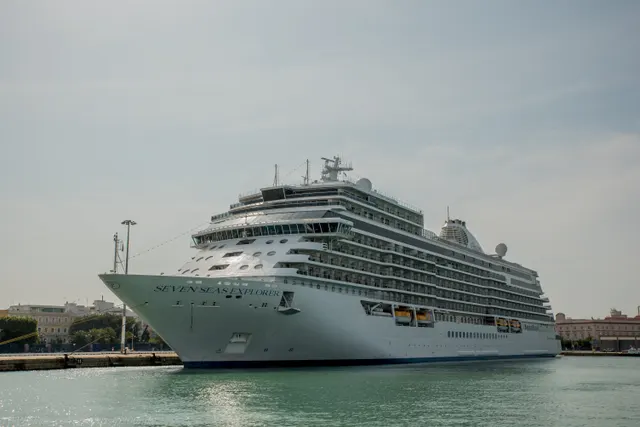
Year Built
2016
Tonnage
55,254 GT
Passengers
750
Crew
542
Decks
11
Class
Explorer
Itinerary & Route Map
Loading map…
Where this cruise calls, day by day
9 ports and 3 sea days over 11 Nights.
- Day 1
Tokyo
JapanDepartMost itineraries that say Tokyo actually berth at Yokohama, half an hour down the bay - Osanbashi Pier for medium ships, Daikoku Pier for the very large ones, with the Tokyo International Cruise Terminal at Odaiba as the third option. Yokohama is not a consolation prize: Osanbashi opens straight onto the waterfront, with Chinatown and Minato Mirai on foot. But if you want Tokyo proper, budget the round trip and pick two neighbourhoods rather than five.
- Senso-ji temple and Nakamise shopping street in Asakusa
- Meiji Jingu shrine and the walk down through Harajuku to Shibuya Crossing
- The Imperial Palace East Gardens and the Tokyo National Museum in Ueno
- Yokohama's Chinatown, Sankeien Garden and the Minato Mirai waterfront
- Getting ashore
- Docked. Osanbashi Pier in Yokohama is walkable to Chinatown and about 30 minutes by train from central Tokyo; Daikoku Pier is an industrial berth 15km out needing a shuttle, and Odaiba's terminal is on the Yurikamome line.
- Best months
- Late Mar-early Apr (cherry blossom), Oct-Nov (autumn colour)
- Day 2
Shimizu
JapanPortShimizu exists on Japan itineraries for one reason: on a clear morning Mount Fuji stands directly across Suruga Bay from the berth, and you can see it from the ship. The port itself is part of Shizuoka, a green-tea and tuna-fishing city rather than a tourist town. Whether the day is memorable depends almost entirely on cloud cover, which is worth knowing before you book anything.
- Miho no Matsubara, the pine-lined shore with the classic Fuji view across the bay
- The Nihondaira plateau and the ropeway down to Kunozan Toshogu shrine
- Shizuoka's Sumpu Castle Park, once Tokugawa Ieyasu's retirement seat
- Green tea plantations in the hills inland, and the sashimi counters at Shimizu fish market
- Getting ashore
- Docked at Hinode Pier in Shimizu, with the S-Pulse Dream Plaza waterfront complex beside the terminal; Miho no Matsubara is about 20 minutes by taxi and Shizuoka city around 15 minutes by train.
- Best months
- Nov-Feb (clearest Fuji views); summer haze often hides it
Day 3 · At sea
- Day 4
Kobe
JapanPortKobe is a narrow city pressed between the Rokko mountains and the sea, opened to foreign trade in 1868 and still visibly shaped by it. Ships use either Naka Pier, which is walking distance from the waterfront parks and Motomachi, or the terminal on Port Island, which needs the monorail. It is also the most convenient berth in the Kansai region for Kyoto, Osaka and Himeji.
- Meriken Park, the Port Tower and the preserved earthquake memorial quay
- The Kitano Ijinkan district of surviving foreign merchants' houses
- Himeji Castle, the great white keep about an hour west by train
- Nada's sake breweries, and Kobe beef if you are prepared to pay for it
- Getting ashore
- Docked. Naka Pier Cruise Terminal is a short walk from Meriken Park and Motomachi; the Port Island terminal requires the Port Liner monorail. Osaka is 25 minutes by train and Kyoto about an hour.
- Best months
- Late Mar-Apr and Oct-Nov
- Day 5
Kochi
JapanPortKochi sits on the Pacific side of Shikoku, an island most foreign visitors never reach, and it feels correspondingly untouristed. Its castle is one of only a dozen in Japan with an original keep, and the city's other landmark is a statue of Sakamoto Ryoma staring out to sea from Katsurahama beach. Ships berth at the new port a little outside town.
- Kochi Castle, with its original Edo-period keep and palace
- Hirome Market, a covered hall of food stalls where the local move is seared bonito
- Katsurahama beach and the Sakamoto Ryoma statue
- Chikurin-ji temple and the Makino Botanical Garden on Mount Godai
- Getting ashore
- Docked at Kochi Shinko (New Port); the centre and the castle are about 20-30 minutes away by shuttle or bus.
- Best months
- Apr-May and Oct-Nov
- Day 6
Hiroshima
JapanPortShips berth at Ujina on the south side of Hiroshima, and the tram in from the terminal is straightforward. What follows is a difficult, well-handled few hours: the skeletal A-Bomb Dome left standing where it was, the museum, the park built over the flattened district. It pairs, oddly but effectively, with a ferry out to Miyajima, where a vermilion torii stands in the tidal shallows.
- The Peace Memorial Park, the A-Bomb Dome and the Peace Memorial Museum
- Itsukushima Shrine and its floating torii on Miyajima
- Shukkeien, the compact Edo-period garden near the castle
- Okonomiyaki cooked Hiroshima-style, layered with noodles
- Getting ashore
- Docked at Ujina (Hiroshima Port); the tram from outside the terminal reaches the Peace Memorial Park in about 30 minutes, and ferries to Miyajima leave from the same harbour area.
- Best months
- Late Mar-Apr and Oct-Nov
Day 7 · At sea
- Day 8
Busan
South KoreaPortBusan is Korea's port city and second-largest, wedged between mountains and beaches with a working fish market at its heart. Ships use the international terminal near Busan Station, which puts the old downtown within a short taxi ride. The two things people remember are Jagalchi's tanks of live seafood and the painted hillside houses of Gamcheon.
- Jagalchi Fish Market and the neighbouring Gukje Market
- Gamcheon Culture Village, the terraced hillside of painted houses
- Haedong Yonggungsa, a Buddhist temple built right on the rocks above the sea
- Beomeosa Temple on the slopes of Geumjeongsan, or the sand at Haeundae
- Getting ashore
- Docked, but check which terminal - the Busan Port International Passenger Terminal in North Port is beside Busan Station, while the largest ships use the Yeongdo cruise terminal out on the island, which has no walk-out option and depends on shuttles.
- Best months
- Apr-Jun and Sep-Oct (mild, dry); Jul-Aug brings the monsoon
- Day 9
Nagasaki
JapanPortNagasaki is built up the sides of a narrow harbour, and the cruise terminal at Matsugae sits at the bottom of the hillside that holds most of what you came to see. This was Japan's only window on the outside world for two centuries, so there is a Dutch trading post, a Chinatown and a hillside of Western merchant houses - and then, at the north end of the city, the ground zero of the second atomic bomb.
- Glover Garden and Oura Church, both a short walk uphill from the terminal
- Dejima, the reconstructed Dutch trading island
- The Peace Park and the Atomic Bomb Museum in Urakami
- A boat out to Hashima (Gunkanjima), the abandoned coal-mining island
- Getting ashore
- Docked at Matsugae International Terminal; Glover Garden and Oura Church are a 10-15 minute walk, and the tram from nearby reaches the Peace Park in roughly 20 minutes.
- Best months
- Mar-May and Oct-Nov; Jun is the rainy season
- Day 10
Fukuoka
JapanPortFukuoka is Kyushu's largest city and the closest big Japanese city to the Asian mainland, which has shaped its trade and its food for centuries. Ships dock at Hakata Port, close enough that a taxi into Tenjin takes about a quarter of an hour. It is a relaxed, low-rise, eating-focused place - the local institution is the yatai, open-air food stalls that appear on the riverbank in the evening.
- Tonkotsu ramen at a yatai stall along the Naka River
- Kushida Shrine and the old merchant lanes of Hakata
- Dazaifu Tenmangu, the shrine to the god of learning, inland from the city
- Ohori Park and the ruins of Fukuoka Castle
- Getting ashore
- Docked at Hakata Port's Chuo Pier; Tenjin and Hakata Station are 10-15 minutes by taxi or bus, and Dazaifu about 40 minutes inland.
- Best months
- Mar-May and Oct-Nov
Day 11 · At sea
- Day 12
Tokyo
JapanArriveMost itineraries that say Tokyo actually berth at Yokohama, half an hour down the bay - Osanbashi Pier for medium ships, Daikoku Pier for the very large ones, with the Tokyo International Cruise Terminal at Odaiba as the third option. Yokohama is not a consolation prize: Osanbashi opens straight onto the waterfront, with Chinatown and Minato Mirai on foot. But if you want Tokyo proper, budget the round trip and pick two neighbourhoods rather than five.
- Senso-ji temple and Nakamise shopping street in Asakusa
- Meiji Jingu shrine and the walk down through Harajuku to Shibuya Crossing
- The Imperial Palace East Gardens and the Tokyo National Museum in Ueno
- Yokohama's Chinatown, Sankeien Garden and the Minato Mirai waterfront
- Getting ashore
- Docked. Osanbashi Pier in Yokohama is walkable to Chinatown and about 30 minutes by train from central Tokyo; Daikoku Pier is an industrial berth 15km out needing a shuttle, and Odaiba's terminal is on the Yurikamome line.
- Best months
- Late Mar-early Apr (cherry blossom), Oct-Nov (autumn colour)
Onboard Amenities
Cruise Highlights
About the Ship
What Travelers Say About Seven Seas Explorer
Reviews of the ship itself — the same for every Seven Seas Explorer sailing. Based on 400 discussions.
Seven Seas Explorer is Regent's flagship statement of ultra-luxury: an all-suite, all-balcony ship for roughly 746 guests that bills itself as the most luxurious ever built, backed by some 2,500 artworks and around 500 chandeliers. The vibe is refined, quiet and mature - an affluent, older clientele who prize space and personal service over party energy or crowds. With about 548 crew, staff learn your name fast, and the genuinely all-inclusive fare (drinks, gratuities, specialty dining, Wi-Fi and most shore excursions) means almost no nickel-and-diming once you're aboard.
What People Love
- Every one of the 373 accommodations is a balcony suite (55 to nearly 1,000 sq ft) with marble baths and walk-in closets - among the most spacious at sea
- Genuinely all-inclusive fare bundles wine, spirits, beer, soda, gratuities, all specialty dining, unlimited Wi-Fi AND most shore excursions
- Included shore excursions are a major value differentiator versus Silversea and Seabourn, which charge for most tours
Common Complaints
- Production shows in the Constellation Theater rate only about average (3/5) - the ship's weakest pillar versus big-ship entertainment
- Food execution is inconsistent in Compass Rose, with recurring reports of cold or stone-cold dishes outside the specialty venues
- Included unlimited Wi-Fi is frequently slow and degrades the farther you sail from port
More Asia Cruises
View all Asia cruisesSilversea
Silversea Silver Moon - Grand Voyage Asia
Silversea
Silver Moon - Hong Kong to Tokyo: Taiwan, Korea & Japan
Seabourn
Seabourn Ovation - Gems of Southeast Asia: Singapore to Hong Kong
Silversea
Silver Dawn - Singapore to Mumbai: Sri Lanka & the Spice Coast