Norwegian Viva - Greek Isles & Turkey
Sail the azure waters of the Adriatic and Aegean aboard Norwegian's second Prima-class ship, experiencing the romance of Venice, the drama of Santorini's caldera, and the beauty of Croatia's coast.
Price Range
$$
Mid-Range
*Prices vary by cabin type, sailing date, and availability. Confirm rates with Norwegian Cruise Line before booking.
Ship Details — Norwegian Viva
View full Norwegian Viva details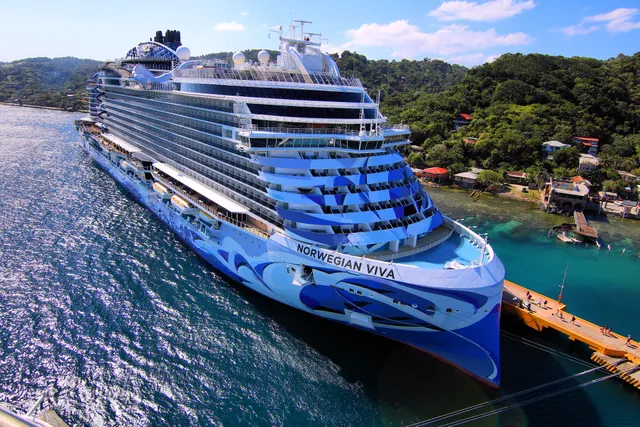
Year Built
2023
Tonnage
142,500 GT
Passengers
3,215
Crew
1,388
Decks
20
Class
Prima
Itinerary & Route Map
Loading map…
Where this cruise calls, day by day
9 ports and 2 sea days over 10 Nights.
- Day 1
Ravenna
ItalyDepartThe berth is Porto Corsini, a canal terminal on the Adriatic about 12km from Ravenna itself, so a shuttle is unavoidable. What waits at the other end is a set of fifth- and sixth-century Byzantine mosaics that survive nowhere else in Europe at this quality - gold ground, deep blue, still in the buildings they were made for. Ravenna also absorbed cruise traffic that once went to Venice.
- The Basilica di San Vitale and the adjoining Mausoleum of Galla Placidia
- Sant'Apollinare Nuovo, and Sant'Apollinare in Classe out of town
- Dante's tomb, beside the Basilica di San Francesco
- The Neonian Baptistery, oldest of the mosaic monuments
- Getting ashore
- Ships dock at Porto Corsini on the Candiano canal and a shuttle covers the 12km into Ravenna, after which the mosaic sites are all within walking distance of each other.
- Best months
- Apr-Jun and Sep-Oct
Day 2 · At sea
- Day 3
Dubrovnik
CroatiaPortDubrovnik's walled Old Town is small, hard-surfaced and steep, and on a two-ship day it does not cope - which is why the city capped cruise arrivals. Ships berth at Gruz, about 3km round the headland, so you arrive by bus or taxi rather than stepping out at the gate. The wall circuit is what people come for and it earns the ticket, but it is a 2km loop with almost no shade.
- The city walls circuit - roughly 2km, stepped, shadeless, and about EUR40
- The Stradun, the Rector's Palace, and the Franciscan monastery pharmacy of 1317
- The cable car up Mount Srd for the view down onto the Old Town and Lokrum
- A boat across to Lokrum island, or sea kayaking beneath the walls
- Getting ashore
- Docked at Gruz, about 2.5km from the Pile Gate; ship shuttles run to the gate, local buses 1A and 1B take ten minutes, and the walk is 35 minutes along a busy road.
- Best months
- May-Jun and Sep-Oct (Jul-Aug means heat on the walls and the worst of the crowding)
- Day 4
Kotor
MontenegroPortThe approach is half the day here: ships work 28km up the Bay of Kotor and through the Verige strait, only 340m wide at its tightest, past Perast and near-vertical limestone before tying up. Kotor is a compact Venetian walled town at the head of the bay, and the berth is a hundred metres from the gate - which also means a very small town absorbing everything a large ship unloads.
- The walls climb to St John's Fortress - 1,350 steps and 365m up, ticketed, with no shade
- St Tryphon's Cathedral, consecrated in the 11th century, and the Old Town lanes
- A boat to Our Lady of the Rocks, the man-made islet off Perast
- The switchback road up to Lovcen and Njegos's mausoleum, or Budva and Sveti Stefan
- Getting ashore
- There is only one usable cruise pier, a two-minute walk from the Sea Gate. The first ship in takes it; everything arriving after that anchors in the bay and tenders.
- Best months
- May-Jun and Sep-Oct (Jul-Aug is hot and the fortress climb is punishing)
- Day 5
Athens (Piraeus)
GreecePortPiraeus is Europe's busiest passenger port, and it is a port first and a place second - ferry berths, cranes, and cruise quays spread along a long waterfront. Athens is 10km inland, 30-45 minutes by road in traffic or about 25 minutes on the Line 1 metro. Almost everything you came for sits in one dense square kilometre under the Acropolis, so the day works if you pick a route and commit to it.
- The Acropolis - the Parthenon, Erechtheion and Propylaia - and the Acropolis Museum below it
- The Ancient Agora and the Temple of Hephaestus, the best-preserved Doric temple in Greece
- The National Archaeological Museum, and the marble Panathenaic Stadium
- Cape Sounion and the Temple of Poseidon, about 70km down the coast
- Getting ashore
- Docked. Terminals sit along Akti Miaouli, and ships shuttle to the port gate; the Line 1 metro ride into Athens is about 25 minutes, but budget close to an hour door to door once the shuttle, the station walk and the queue are counted.
- Best months
- Apr-Jun and Sep-Oct (in Jul-Aug heatwaves the Acropolis and the Agora now close from midday until late afternoon)
- Day 6
Santorini
GreecePortSantorini is a flooded volcanic caldera, and the towns sit on the rim some 300m above where your ship anchors - which is the whole logistical problem. There is no cruise berth, so you tender to Skala below Fira and then queue for a small cable car, walk up 588 steps, or ride a mule. Arrivals are now capped to thin the crush, but the cable car remains the bottleneck in both directions.
- Oia on the northern tip, and the caldera-edge path that walks there from Fira
- Akrotiri - a Bronze Age town buried by the eruption and excavated under a modern roof
- Assyrtiko tasting at the caldera-facing wineries, Santo Wines and Venetsanos
- A caldera boat to the crater of Nea Kameni and the warm springs at Palea Kameni
- Getting ashore
- Tender to Skala, the old port below Fira, then the cable car up the cliff - queues of an hour each way are normal on busy days, and the alternative is 588 steps. Excursion tenders often land at Athinios instead, where coaches wait.
- Best months
- May-Jun and Sep-Oct (Jul-Aug is hot, packed, and Oia at sunset is shoulder to shoulder)
- Day 7
Rhodes
GreecePortRhodes has the easiest arrival in the Greek islands for anyone who dislikes tenders: ships tie up in the commercial harbour with the medieval walls right there, and you walk in through a gate. The Old Town was built by the Knights of St John and has been lived in ever since, so it is a working town rather than a monument - though the main shopping street is given over almost entirely to cruise trade.
- The Palace of the Grand Master and the cobbled Street of the Knights
- The Archaeological Museum, housed in the Knights' Hospital
- Lindos - the acropolis above the village, and St Paul's Bay below it
- Mandraki harbour and the Acropolis of Rhodes on Monte Smith
- Getting ashore
- Docked in the commercial harbour; the Old Town gates are a 5-10 minute walk. Lindos is about 50km south, an hour each way by road.
- Best months
- Apr-Jun and Sep-Oct; Rhodes stays warm well into late October
- Day 8
Kusadasi
TurkeyPortKusadasi is a Turkish resort town that exists commercially for cruise ships, and the terminal delivers you straight into a bazaar built around that. Almost nobody stays: ships call for Ephesus, one of the most completely excavated Roman cities anywhere, half an hour inland. Go early - the site is unshaded marble, and by midday several ships' worth of passengers are on the main street at once.
- Ephesus - the Library of Celsus, the 24,000-seat Great Theatre, and the Terrace Houses
- The House of the Virgin Mary on Bulbul Dagi above the site
- Selcuk: the Basilica of St John and the single standing column of the Temple of Artemis
- Sirince, a hill village of old Greek houses now given over to fruit wine
- Getting ashore
- Docked at Ege Ports (Scala Nuova) - never a tender port, with room for four large ships. The bazaar is ten minutes on foot; Ephesus is 15km, about half an hour, and is best walked downhill from the Upper Gate to the Lower.
- Best months
- Apr-May and Sep-Oct (Jul-Aug at Ephesus is brutal - no shade, hot stone underfoot)
- Day 9
Thessaloniki
GreecePortThessaloniki is a real second city rather than a resort - Greece's food capital, with a large student population and a waterfront people actually use. A fire in 1917 took out most of the old town, so what survives is scattered: Roman monuments, a set of Byzantine churches with mosaics, Ottoman traces, and the upper town that escaped the flames.
- The White Tower and the promenade east to the Umbrellas sculpture
- The Rotunda and the Arch of Galerius, and the church of Hagios Demetrios
- Ano Poli, the upper town that survived the fire, and the Byzantine walls above it
- Vergina and the tomb of Philip II of Macedon, about 75km west
- Getting ashore
- Docked at the port at the western end of the waterfront; Aristotelous Square is roughly a 15-minute walk and the White Tower about 30.
- Best months
- Apr-Jun and Sep-Oct (in heatwaves the city's archaeological sites shut through the early afternoon)
Day 10 · At sea
- Day 11
Istanbul
TurkeyArriveGalataport put the berth back in the middle of the city: ships tie up on the Bosphorus at Karakoy, with the terminal buried underground so the waterfront stays a public promenade. You step off into Istanbul rather than into a shuttle queue. The catch is scale - the historic peninsula is a tram ride away, and no single day covers Sultanahmet, the bazaars and the Bosphorus properly.
- Hagia Sophia, now a working mosque with a ticketed upper gallery route for visitors
- The Blue Mosque, Topkapi Palace and its Harem, and the Basilica Cistern
- The Grand Bazaar, shut on Sundays, and the Spice Bazaar below Suleymaniye Mosque
- A ferry up the Bosphorus, or Galata Tower on the slope behind the terminal
- Getting ashore
- Docked at Galataport in Karakoy, a walk-off terminal, though the underground exit walk can be long. Galata Tower is 10 minutes uphill; Sultanahmet is 5km, so take the T1 tram from Tophane rather than walking it.
- Best months
- Apr-May and Sep-Oct (Jul-Aug hot and humid; winter is grey but far quieter)
Onboard Amenities
Cruise Highlights
About the Ship
What Travelers Say About Norwegian Viva
Reviews of the ship itself — the same for every Norwegian Viva sailing. Based on 900 discussions.
Norwegian Viva debuted in 2023 as the second ship in NCL's Prima Class, sharing roughly 95% of its sister Prima's DNA while quietly polishing the first-of-class rough edges. It keeps the same smaller, design-forward formula - about 3,099 guests, up to 36% more space per passenger than typical contemporary ships, and signature spaces like the three-deck Penrose Atrium and the 360-degree Ocean Boulevard promenade, which on Viva includes The Concourse sculpture garden. The result is a ship that reviewers find stylish and less crowded than NCL's older megaships, and it currently sits as the highest-rated Norwegian ship on U.S. News.
What People Love
- Newer second-in-class ship that refined Prima's debut, most notably with two main dining rooms offering rotating daily menus instead of a single fixed menu
- Expanded Indulge Food Hall seating eases the casual-dining crunch that frustrated early Prima guests
- Highest-rated NCL ship on U.S. News (4.3/5, ranked #1 in the fleet), reflecting strong guest satisfaction
Common Complaints
- Small main pool and limited pool-deck space - the same Prima-class shortcoming, with the pool described as better for socializing than swimming
- Premium pricing that some guests feel outpaces the value, especially given the modest pool deck
- Many activities and specialty restaurants carry extra charges, continuing NCL's a la carte fee structure
More Mediterranean Cruises
View all Mediterranean cruisesCelebrity Cruises
Celebrity Xcel - Western Mediterranean Cruise
Viking Ocean Cruises
Viking Vesta - Iconic Western Mediterranean
Silversea
Silver Ray - Riviera & Italian Coast: Monte Carlo to Rome
Celebrity Cruises
Celebrity Ascent - Italy, Greece & Croatia from Rome