Norwegian Gem - Adriatic & Greek Isles
Gem's summer 2026 Europe season runs one-way weeks like this Ravenna-to-Rome route down the Adriatic: Split, a late-night stay in Dubrovnik, and the fjord-like sail into Kotor Bay, then Corfu, Sicily, and the Amalfi gateway of Salerno. Seven ports in eight days with no sea days at all.
Price Range
$$
Mid-Range
*Prices vary by cabin type, sailing date, and availability. Confirm rates with Norwegian Cruise Line before booking.
Ship Details — Norwegian Gem
View full Norwegian Gem details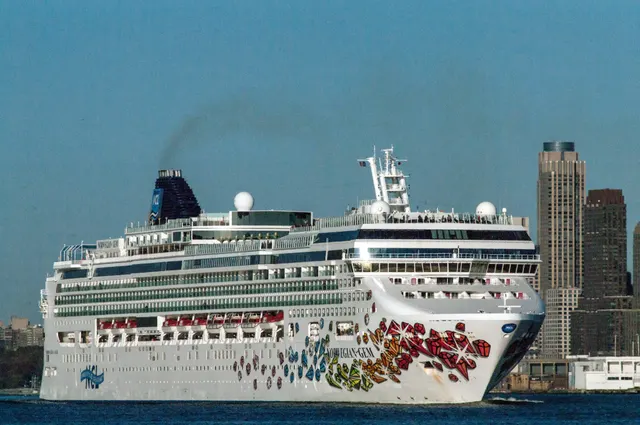
Year Built
2007
Tonnage
93,530 GT
Passengers
2,394
Crew
1,070
Decks
12
Class
Jewel
Itinerary & Route Map
Loading map…
Where this cruise calls, day by day
8 ports over 7 Nights.
- Day 1
Ravenna
ItalyDepartThe berth is Porto Corsini, a canal terminal on the Adriatic about 12km from Ravenna itself, so a shuttle is unavoidable. What waits at the other end is a set of fifth- and sixth-century Byzantine mosaics that survive nowhere else in Europe at this quality - gold ground, deep blue, still in the buildings they were made for. Ravenna also absorbed cruise traffic that once went to Venice.
- The Basilica di San Vitale and the adjoining Mausoleum of Galla Placidia
- Sant'Apollinare Nuovo, and Sant'Apollinare in Classe out of town
- Dante's tomb, beside the Basilica di San Francesco
- The Neonian Baptistery, oldest of the mosaic monuments
- Getting ashore
- Ships dock at Porto Corsini on the Candiano canal and a shuttle covers the 12km into Ravenna, after which the mosaic sites are all within walking distance of each other.
- Best months
- Apr-Jun and Sep-Oct
- Day 2
Split
CroatiaPortSplit is built inside a Roman palace. Diocletian retired here in AD 305 and the town simply kept using the walls - shops, flats and bars are wedged into the emperor's substructures, so it reads as a lived-in neighbourhood rather than a ruin. Cruise ships berth on the harbour a short walk from the Riva, which makes it one of the easier Adriatic port days to do on your own.
- Diocletian's Palace: the Peristyle, the cellars, and the Cathedral of St Domnius in his mausoleum
- The Marjan hill paths above the town, for the view along the coast
- Trogir, a walled Venetian island town about 30 minutes west
- The waterfalls and boardwalks of Krka National Park, roughly an hour inland
- Getting ashore
- Docked in the city harbour basin beside the ferries. Small ships take Gat sv. Petra, five minutes from the palace's Silver Gate; large ships take the outer Gat sv. Duje, a flat but unshaded 10-20 minutes. A blue line painted on the ground leads you in.
- Best months
- May-Jun and Sep-Oct (Jul-Aug is hot and the palace lanes are shoulder to shoulder)
- Day 3
Dubrovnik
CroatiaPortDubrovnik's walled Old Town is small, hard-surfaced and steep, and on a two-ship day it does not cope - which is why the city capped cruise arrivals. Ships berth at Gruz, about 3km round the headland, so you arrive by bus or taxi rather than stepping out at the gate. The wall circuit is what people come for and it earns the ticket, but it is a 2km loop with almost no shade.
- The city walls circuit - roughly 2km, stepped, shadeless, and about EUR40
- The Stradun, the Rector's Palace, and the Franciscan monastery pharmacy of 1317
- The cable car up Mount Srd for the view down onto the Old Town and Lokrum
- A boat across to Lokrum island, or sea kayaking beneath the walls
- Getting ashore
- Docked at Gruz, about 2.5km from the Pile Gate; ship shuttles run to the gate, local buses 1A and 1B take ten minutes, and the walk is 35 minutes along a busy road.
- Best months
- May-Jun and Sep-Oct (Jul-Aug means heat on the walls and the worst of the crowding)
- Day 4
Kotor
MontenegroPortThe approach is half the day here: ships work 28km up the Bay of Kotor and through the Verige strait, only 340m wide at its tightest, past Perast and near-vertical limestone before tying up. Kotor is a compact Venetian walled town at the head of the bay, and the berth is a hundred metres from the gate - which also means a very small town absorbing everything a large ship unloads.
- The walls climb to St John's Fortress - 1,350 steps and 365m up, ticketed, with no shade
- St Tryphon's Cathedral, consecrated in the 11th century, and the Old Town lanes
- A boat to Our Lady of the Rocks, the man-made islet off Perast
- The switchback road up to Lovcen and Njegos's mausoleum, or Budva and Sveti Stefan
- Getting ashore
- There is only one usable cruise pier, a two-minute walk from the Sea Gate. The first ship in takes it; everything arriving after that anchors in the bay and tenders.
- Best months
- May-Jun and Sep-Oct (Jul-Aug is hot and the fortress climb is punishing)
- Day 5
Corfu
GreecePortCorfu was Venetian for four centuries and then British for fifty, and the Old Town shows it - tall shuttered Italianate terraces, a cricket ground on the main square, and an arcaded promenade the French put up. The island is green and wooded in a way the Cyclades are not. The cruise terminal is a couple of kilometres from the Old Town, an unremarkable walk or a short shuttle ride.
- The Old Fortress and the Liston arcade on the Spianada, the largest square in Greece
- The Achilleion, the palace Empress Elisabeth of Austria built above Gastouri
- Paleokastritsa - the monastery on the headland and the coves beneath it
- Kanoni, with the Vlacherna monastery and Mouse Island offshore
- Getting ashore
- Docked at the cruise terminal about 2km from the Old Town; a shuttle runs to the port gate, and it is a 20-25 minute walk from there along the waterfront.
- Best months
- May-Jun and Sep-Oct (Corfu gets far more rain than the Aegean islands, so shoulder season can be wet)
- Day 6
Messina
ItalyPortMessina faces Calabria across the strait and was flattened by an earthquake in 1908, so the city is mostly rebuilt and low-slung rather than historic. Ships dock right on the seafront, but the call is really a doorway: Taormina is under an hour south and Etna a little further. If you stay put, the set-piece is the cathedral's astronomical clock.
- The Duomo's astronomical clock, the largest of its kind, which performs at noon
- Taormina and its Greek theatre, about 50 minutes down the coast
- Etna's lower craters and lava fields, by jeep or the Rifugio Sapienza cable car
- The Museo Regionale, which holds two Caravaggios
- Getting ashore
- Ships dock on the Messina waterfront a few minutes from Piazza Duomo, and coaches for Taormina and Etna load at the pier.
- Best months
- Apr-Jun and Sep-Oct (Etna can be cold and cloud-capped while the coast is warm)
- Day 7
Salerno
ItalyPortSalerno is a working southern city with a Zaha Hadid-designed cruise terminal on its waterfront and a long promenade behind. Ships call because this is the eastern end of the Amalfi Coast - Amalfi and Ravello are reachable by road or, far better, by ferry from the same harbour. The city's own draw is a Norman cathedral with a crypt worth the detour.
- A ferry along the coast to Amalfi and Positano, avoiding the coast road entirely
- Ravello's Villa Rufolo and Villa Cimbrone gardens
- The Duomo di San Matteo and its mosaic-lined crypt
- Paestum's three Greek temples, about an hour south
- Getting ashore
- Ships dock at the Salerno Maritime Terminal on the city waterfront, a short walk from the old town and from the Amalfi Coast ferry berths.
- Best months
- May-Jun and Sep-Oct (the coast road is gridlocked in Jul-Aug)
- Day 8Rome (Civitavecchia) port guide: where ships dock and what to do ashore
Rome (Civitavecchia)
ItalyArrive
Onboard Amenities
Cruise Highlights
About the Ship
What Travelers Say About Norwegian Gem
Reviews of the ship itself — the same for every Norwegian Gem sailing. Distilled from 176 traveler threads, Cruise Critic member reviews and travel blogs.
Norwegian Gem is a Jewel-class ship from 2007 carrying about 2,300 guests, making it one of the smaller, more relaxed vessels in Norwegian's fleet. Cruisers who prefer a calmer experience appreciate that it skips the megaship waterslide parks and ropes courses in favor of an easy-to-navigate layout and a more adult-friendly vibe, though families are still well served with kids' pools, a waterslide and two free kids clubs. It was last refreshed in 2022 but still shows its age in places.
What People Love
- Smaller, easy-to-navigate Jewel-class ship that feels calmer than the megaships
- Strong entertainment, with country music shows, comedians and live bands praised
- Good dining variety for its size, with Cagney's, Le Bistro, La Cucina and Teppanyaki
Common Complaints
- The ship is older (2007) and feels dated in some areas
- Reviewers report understaffed bars with long waits for drinks
- Some note crew morale and service consistency lag expectations
More Mediterranean Cruises
View all Mediterranean cruisesCelebrity Cruises
Celebrity Xcel - Western Mediterranean Cruise
Viking Ocean Cruises
Viking Vesta - Iconic Western Mediterranean
Silversea
Silver Ray - Riviera & Italian Coast: Monte Carlo to Rome
Celebrity Cruises
Celebrity Ascent - Italy, Greece & Croatia from Rome