Celebrity Solstice - Best of Japan from Tokyo
The renewed Celebrity Solstice circles Japan's main islands round-trip from Tokyo (Yokohama), with an overnight in Kobe for Kyoto's shrines and calls spanning Mt. Fuji, Kyushu, Busan and subtropical Okinawa.
Price Range
$$
Mid-Range
*Prices vary by cabin type, sailing date, and availability. Confirm rates with Celebrity Cruises before booking.
Ship Details — Celebrity Solstice
View full Celebrity Solstice details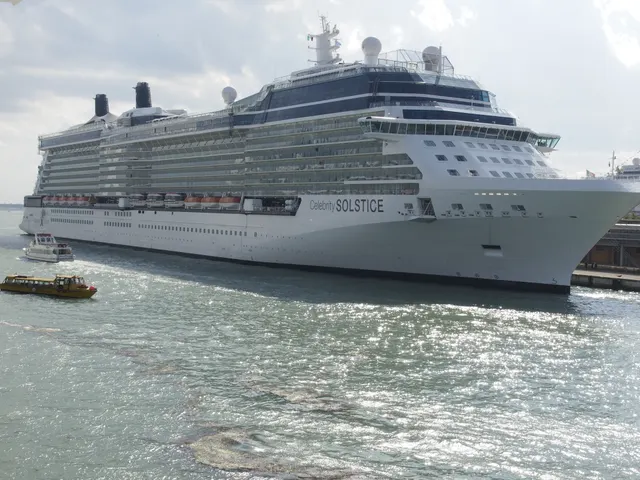
Year Built
2008
Tonnage
121,878 GT
Passengers
2,852
Crew
1,253
Decks
16
Class
Solstice
Itinerary & Route Map
Loading map…
Where this cruise calls, day by day
9 ports and 4 sea days over 12 Nights.
- Day 1
Tokyo
JapanDepartMost itineraries that say Tokyo actually berth at Yokohama, half an hour down the bay - Osanbashi Pier for medium ships, Daikoku Pier for the very large ones, with the Tokyo International Cruise Terminal at Odaiba as the third option. Yokohama is not a consolation prize: Osanbashi opens straight onto the waterfront, with Chinatown and Minato Mirai on foot. But if you want Tokyo proper, budget the round trip and pick two neighbourhoods rather than five.
- Senso-ji temple and Nakamise shopping street in Asakusa
- Meiji Jingu shrine and the walk down through Harajuku to Shibuya Crossing
- The Imperial Palace East Gardens and the Tokyo National Museum in Ueno
- Yokohama's Chinatown, Sankeien Garden and the Minato Mirai waterfront
- Getting ashore
- Docked. Osanbashi Pier in Yokohama is walkable to Chinatown and about 30 minutes by train from central Tokyo; Daikoku Pier is an industrial berth 15km out needing a shuttle, and Odaiba's terminal is on the Yurikamome line.
- Best months
- Late Mar-early Apr (cherry blossom), Oct-Nov (autumn colour)
- Day 2
Shimizu
JapanPortShimizu exists on Japan itineraries for one reason: on a clear morning Mount Fuji stands directly across Suruga Bay from the berth, and you can see it from the ship. The port itself is part of Shizuoka, a green-tea and tuna-fishing city rather than a tourist town. Whether the day is memorable depends almost entirely on cloud cover, which is worth knowing before you book anything.
- Miho no Matsubara, the pine-lined shore with the classic Fuji view across the bay
- The Nihondaira plateau and the ropeway down to Kunozan Toshogu shrine
- Shizuoka's Sumpu Castle Park, once Tokugawa Ieyasu's retirement seat
- Green tea plantations in the hills inland, and the sashimi counters at Shimizu fish market
- Getting ashore
- Docked at Hinode Pier in Shimizu, with the S-Pulse Dream Plaza waterfront complex beside the terminal; Miho no Matsubara is about 20 minutes by taxi and Shizuoka city around 15 minutes by train.
- Best months
- Nov-Feb (clearest Fuji views); summer haze often hides it
Day 3 · At sea
- Day 4
Kobe
JapanPortKobe is a narrow city pressed between the Rokko mountains and the sea, opened to foreign trade in 1868 and still visibly shaped by it. Ships use either Naka Pier, which is walking distance from the waterfront parks and Motomachi, or the terminal on Port Island, which needs the monorail. It is also the most convenient berth in the Kansai region for Kyoto, Osaka and Himeji.
- Meriken Park, the Port Tower and the preserved earthquake memorial quay
- The Kitano Ijinkan district of surviving foreign merchants' houses
- Himeji Castle, the great white keep about an hour west by train
- Nada's sake breweries, and Kobe beef if you are prepared to pay for it
- Getting ashore
- Docked. Naka Pier Cruise Terminal is a short walk from Meriken Park and Motomachi; the Port Island terminal requires the Port Liner monorail. Osaka is 25 minutes by train and Kyoto about an hour.
- Best months
- Late Mar-Apr and Oct-Nov
- Day 5
Kobe
JapanPortKobe is a narrow city pressed between the Rokko mountains and the sea, opened to foreign trade in 1868 and still visibly shaped by it. Ships use either Naka Pier, which is walking distance from the waterfront parks and Motomachi, or the terminal on Port Island, which needs the monorail. It is also the most convenient berth in the Kansai region for Kyoto, Osaka and Himeji.
- Meriken Park, the Port Tower and the preserved earthquake memorial quay
- The Kitano Ijinkan district of surviving foreign merchants' houses
- Himeji Castle, the great white keep about an hour west by train
- Nada's sake breweries, and Kobe beef if you are prepared to pay for it
- Getting ashore
- Docked. Naka Pier Cruise Terminal is a short walk from Meriken Park and Motomachi; the Port Island terminal requires the Port Liner monorail. Osaka is 25 minutes by train and Kyoto about an hour.
- Best months
- Late Mar-Apr and Oct-Nov
- Day 6
Kumamoto (Yatsushiro)
JapanPortThe port billed as Kumamoto is actually Yatsushiro, a small city about an hour down the coast, where a cruise terminal opened in 2020. The name on the itinerary refers to Kumamoto Castle, one of Japan's great fortresses, which was badly damaged in the 2016 earthquakes and has been under a long, visible reconstruction ever since. Yatsushiro itself is modest but has a good garden and a famous autumn festival.
- Kumamoto Castle and its rebuilt main keep
- Suizenji Jojuen, the Edo-period stroll garden in Kumamoto
- Shohinken, the small daimyo garden and teahouse in Yatsushiro
- Mount Aso's caldera, for those on a full-day excursion inland
- Getting ashore
- Docked at the Kumamoto Kokusai Cruise Terminal at Yatsushiro; Kumamoto city and the castle are about an hour north by coach.
- Best months
- Mar-May and Oct-Nov
- Day 7
Fukuoka
JapanPortFukuoka is Kyushu's largest city and the closest big Japanese city to the Asian mainland, which has shaped its trade and its food for centuries. Ships dock at Hakata Port, close enough that a taxi into Tenjin takes about a quarter of an hour. It is a relaxed, low-rise, eating-focused place - the local institution is the yatai, open-air food stalls that appear on the riverbank in the evening.
- Tonkotsu ramen at a yatai stall along the Naka River
- Kushida Shrine and the old merchant lanes of Hakata
- Dazaifu Tenmangu, the shrine to the god of learning, inland from the city
- Ohori Park and the ruins of Fukuoka Castle
- Getting ashore
- Docked at Hakata Port's Chuo Pier; Tenjin and Hakata Station are 10-15 minutes by taxi or bus, and Dazaifu about 40 minutes inland.
- Best months
- Mar-May and Oct-Nov
- Day 8
Busan
South KoreaPortBusan is Korea's port city and second-largest, wedged between mountains and beaches with a working fish market at its heart. Ships use the international terminal near Busan Station, which puts the old downtown within a short taxi ride. The two things people remember are Jagalchi's tanks of live seafood and the painted hillside houses of Gamcheon.
- Jagalchi Fish Market and the neighbouring Gukje Market
- Gamcheon Culture Village, the terraced hillside of painted houses
- Haedong Yonggungsa, a Buddhist temple built right on the rocks above the sea
- Beomeosa Temple on the slopes of Geumjeongsan, or the sand at Haeundae
- Getting ashore
- Docked, but check which terminal - the Busan Port International Passenger Terminal in North Port is beside Busan Station, while the largest ships use the Yeongdo cruise terminal out on the island, which has no walk-out option and depends on shuttles.
- Best months
- Apr-Jun and Sep-Oct (mild, dry); Jul-Aug brings the monsoon
Day 9 · At sea
- Day 10
Naha (Okinawa)
JapanPortOkinawa was the independent Ryukyu Kingdom until the 1870s, and Naha still looks and eats differently from mainland Japan - subtropical, with its own architecture, music and a heavy American military presence. The island was also the site of the war's worst land battle, which the memorials in the south address directly. Ships berth close to the city, and the monorail handles the rest.
- Shuri Castle, the Ryukyu royal seat, still being rebuilt after the 2019 fire
- Kokusai-dori, Naha's main shopping street, and the Makishi public market
- The Okinawa Prefectural Peace Memorial Park and museum in the south of the island
- The Churaumi Aquarium and its whale sharks, up on the Motobu peninsula
- Getting ashore
- Docked at one of Naha's cruise piers; Kokusai-dori and the monorail are 10-15 minutes away, but the Churaumi Aquarium is roughly two hours north and needs a full-day excursion.
- Best months
- Mar-May and Oct-Nov; typhoon risk peaks Aug-Sep
Day 11 · At sea
Day 12 · At sea
- Day 13
Tokyo
JapanArriveMost itineraries that say Tokyo actually berth at Yokohama, half an hour down the bay - Osanbashi Pier for medium ships, Daikoku Pier for the very large ones, with the Tokyo International Cruise Terminal at Odaiba as the third option. Yokohama is not a consolation prize: Osanbashi opens straight onto the waterfront, with Chinatown and Minato Mirai on foot. But if you want Tokyo proper, budget the round trip and pick two neighbourhoods rather than five.
- Senso-ji temple and Nakamise shopping street in Asakusa
- Meiji Jingu shrine and the walk down through Harajuku to Shibuya Crossing
- The Imperial Palace East Gardens and the Tokyo National Museum in Ueno
- Yokohama's Chinatown, Sankeien Garden and the Minato Mirai waterfront
- Getting ashore
- Docked. Osanbashi Pier in Yokohama is walkable to Chinatown and about 30 minutes by train from central Tokyo; Daikoku Pier is an industrial berth 15km out needing a shuttle, and Odaiba's terminal is on the Yurikamome line.
- Best months
- Late Mar-early Apr (cherry blossom), Oct-Nov (autumn colour)
Onboard Amenities
Cruise Highlights
About the Ship
What Travelers Say About Celebrity Solstice
Reviews of the ship itself — the same for every Celebrity Solstice sailing. Based on 2,000 discussions.
Celebrity Solstice is the lead ship of Celebrity's Solstice class (2008) and, after a March 2026 relaunch as the first ship in the line's $250 million class-wide makeover, presents itself as a refreshed premium-tier ship for travelers who prize calm elegance over high-energy spectacle. Its most famous feature, the half-acre of real grass on the top-deck Lawn Club, has been retired and reimagined as Sunset Park, an open-air sundeck with turf lawn games, live music, cabanas, and an expanded bar. The vibe is refined and adult-leaning, with tasteful décor, a serene plant-filled Solarium, and a heavy emphasis on service.
What People Love
- Freshly modernized in the 2026 $250M Solstice-class refurbishment, leaving the ship bright and well-appointed throughout
- Standout fine dining, especially Murano's tableside French service, repeatedly ranked among the best meals at sea
- Attentive, polished crew and a generous crew-to-guest ratio that keeps service personal
Common Complaints
- Loss of the iconic real-grass Lawn Club, replaced by artificial-turf Sunset Park, disappoints longtime fans
- Wi-Fi remains sluggish despite the Starlink upgrade
- Included dining feels narrowed post-pandemic, with the best food behind extra-cost specialty restaurants
More Asia Cruises
View all Asia cruisesSilversea
Silversea Silver Moon - Grand Voyage Asia
Silversea
Silver Moon - Hong Kong to Tokyo: Taiwan, Korea & Japan
Seabourn
Seabourn Ovation - Gems of Southeast Asia: Singapore to Hong Kong
Silversea
Silver Dawn - Singapore to Mumbai: Sri Lanka & the Spice Coast