Viking Orion - Far Eastern Horizons: Tokyo to Hong Kong
Viking Orion's flagship Asia crossing links three great East Asian cities - overnights in Tokyo, Shanghai and Hong Kong - via Japan's Inland Sea, the hot springs of Beppu and the WWII memorials of Hiroshima and Nagasaki.
Price Range
$$$$
Luxury
*Prices vary by cabin type, sailing date, and availability. Confirm rates with Viking Ocean Cruises before booking.
Ship Details — Viking Orion
View full Viking Orion details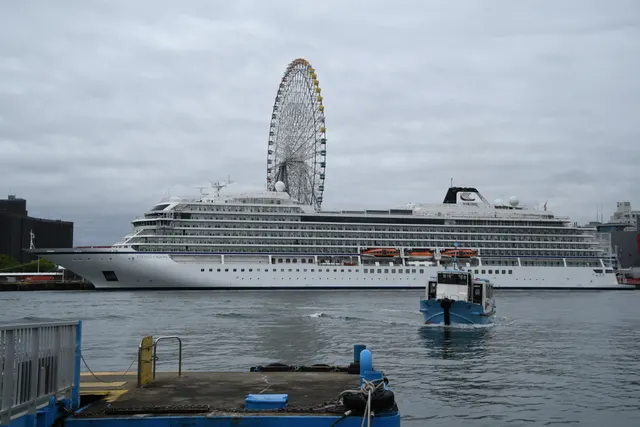
Year Built
2018
Tonnage
47,800 GT
Passengers
930
Crew
550
Decks
9
Class
Viking Ocean
Itinerary & Route Map
Loading map…
Where this cruise calls, day by day
11 ports and 4 sea days over 14 Nights.
- Day 1
Tokyo
JapanDepartMost itineraries that say Tokyo actually berth at Yokohama, half an hour down the bay - Osanbashi Pier for medium ships, Daikoku Pier for the very large ones, with the Tokyo International Cruise Terminal at Odaiba as the third option. Yokohama is not a consolation prize: Osanbashi opens straight onto the waterfront, with Chinatown and Minato Mirai on foot. But if you want Tokyo proper, budget the round trip and pick two neighbourhoods rather than five.
- Senso-ji temple and Nakamise shopping street in Asakusa
- Meiji Jingu shrine and the walk down through Harajuku to Shibuya Crossing
- The Imperial Palace East Gardens and the Tokyo National Museum in Ueno
- Yokohama's Chinatown, Sankeien Garden and the Minato Mirai waterfront
- Getting ashore
- Docked. Osanbashi Pier in Yokohama is walkable to Chinatown and about 30 minutes by train from central Tokyo; Daikoku Pier is an industrial berth 15km out needing a shuttle, and Odaiba's terminal is on the Yurikamome line.
- Best months
- Late Mar-early Apr (cherry blossom), Oct-Nov (autumn colour)
- Day 2
Tokyo
JapanPortMost itineraries that say Tokyo actually berth at Yokohama, half an hour down the bay - Osanbashi Pier for medium ships, Daikoku Pier for the very large ones, with the Tokyo International Cruise Terminal at Odaiba as the third option. Yokohama is not a consolation prize: Osanbashi opens straight onto the waterfront, with Chinatown and Minato Mirai on foot. But if you want Tokyo proper, budget the round trip and pick two neighbourhoods rather than five.
- Senso-ji temple and Nakamise shopping street in Asakusa
- Meiji Jingu shrine and the walk down through Harajuku to Shibuya Crossing
- The Imperial Palace East Gardens and the Tokyo National Museum in Ueno
- Yokohama's Chinatown, Sankeien Garden and the Minato Mirai waterfront
- Getting ashore
- Docked. Osanbashi Pier in Yokohama is walkable to Chinatown and about 30 minutes by train from central Tokyo; Daikoku Pier is an industrial berth 15km out needing a shuttle, and Odaiba's terminal is on the Yurikamome line.
- Best months
- Late Mar-early Apr (cherry blossom), Oct-Nov (autumn colour)
- Day 3
Shimizu
JapanPortShimizu exists on Japan itineraries for one reason: on a clear morning Mount Fuji stands directly across Suruga Bay from the berth, and you can see it from the ship. The port itself is part of Shizuoka, a green-tea and tuna-fishing city rather than a tourist town. Whether the day is memorable depends almost entirely on cloud cover, which is worth knowing before you book anything.
- Miho no Matsubara, the pine-lined shore with the classic Fuji view across the bay
- The Nihondaira plateau and the ropeway down to Kunozan Toshogu shrine
- Shizuoka's Sumpu Castle Park, once Tokugawa Ieyasu's retirement seat
- Green tea plantations in the hills inland, and the sashimi counters at Shimizu fish market
- Getting ashore
- Docked at Hinode Pier in Shimizu, with the S-Pulse Dream Plaza waterfront complex beside the terminal; Miho no Matsubara is about 20 minutes by taxi and Shizuoka city around 15 minutes by train.
- Best months
- Nov-Feb (clearest Fuji views); summer haze often hides it
Day 4 · At sea
- Day 5
Osaka
JapanPortOsaka docks at Tempozan Pier in the western harbour, five minutes' walk from a subway station, which makes it one of the more self-sufficient ports in Japan. The city is the blunt, food-obsessed counterweight to Kyoto - neon, street snacks and a rebuilt castle rather than temples and moss. It also works as the gateway to Kyoto and Nara, both about an hour away, which is what many passengers use the day for.
- Osaka Castle and its park
- Dotonbori and Kuromon Ichiba market for takoyaki and kushikatsu
- Fushimi Inari's torii gates or Kiyomizu-dera in Kyoto
- Todai-ji and the free-roaming deer of Nara Park
- Getting ashore
- Docked at Tempozan Pier; Osakako subway station is a five-minute walk, central Osaka about 20 minutes, and Kyoto roughly an hour by train.
- Best months
- Late Mar-Apr (blossom), Oct-Nov; Aug is punishingly humid
- Day 6
Osaka
JapanPortOsaka docks at Tempozan Pier in the western harbour, five minutes' walk from a subway station, which makes it one of the more self-sufficient ports in Japan. The city is the blunt, food-obsessed counterweight to Kyoto - neon, street snacks and a rebuilt castle rather than temples and moss. It also works as the gateway to Kyoto and Nara, both about an hour away, which is what many passengers use the day for.
- Osaka Castle and its park
- Dotonbori and Kuromon Ichiba market for takoyaki and kushikatsu
- Fushimi Inari's torii gates or Kiyomizu-dera in Kyoto
- Todai-ji and the free-roaming deer of Nara Park
- Getting ashore
- Docked at Tempozan Pier; Osakako subway station is a five-minute walk, central Osaka about 20 minutes, and Kyoto roughly an hour by train.
- Best months
- Late Mar-Apr (blossom), Oct-Nov; Aug is punishingly humid
- Day 7
Beppu
JapanPortBeppu produces more hot-spring water than anywhere else in Japan and does not let you forget it - steam rises out of drains and hillsides all over town. The tourist version of this is the jigoku, a set of coloured, boiling pools you look at rather than bathe in. The bathing happens elsewhere, in public onsen scattered across the town, some of them very plain and very cheap.
- The Kannawa 'hells' - Umi Jigoku's cobalt pool and the blood-red Chinoike Jigoku
- A soak at a municipal onsen, or a sand bath at Beppu Beach
- The Beppu Ropeway up Mount Tsurumi for the view over the bay
- Takasakiyama monkey park, or the thatched village and hot springs of Yufuin inland
- Getting ashore
- Docked at Beppu International Tourist Port; the hells at Kannawa are about 20 minutes inland by bus or taxi, and central Beppu is closer still.
- Best months
- Mar-May and Oct-Nov; steam is most dramatic in cold weather
- Day 8
Hiroshima
JapanPortShips berth at Ujina on the south side of Hiroshima, and the tram in from the terminal is straightforward. What follows is a difficult, well-handled few hours: the skeletal A-Bomb Dome left standing where it was, the museum, the park built over the flattened district. It pairs, oddly but effectively, with a ferry out to Miyajima, where a vermilion torii stands in the tidal shallows.
- The Peace Memorial Park, the A-Bomb Dome and the Peace Memorial Museum
- Itsukushima Shrine and its floating torii on Miyajima
- Shukkeien, the compact Edo-period garden near the castle
- Okonomiyaki cooked Hiroshima-style, layered with noodles
- Getting ashore
- Docked at Ujina (Hiroshima Port); the tram from outside the terminal reaches the Peace Memorial Park in about 30 minutes, and ferries to Miyajima leave from the same harbour area.
- Best months
- Late Mar-Apr and Oct-Nov
- Day 9
Nagasaki
JapanPortNagasaki is built up the sides of a narrow harbour, and the cruise terminal at Matsugae sits at the bottom of the hillside that holds most of what you came to see. This was Japan's only window on the outside world for two centuries, so there is a Dutch trading post, a Chinatown and a hillside of Western merchant houses - and then, at the north end of the city, the ground zero of the second atomic bomb.
- Glover Garden and Oura Church, both a short walk uphill from the terminal
- Dejima, the reconstructed Dutch trading island
- The Peace Park and the Atomic Bomb Museum in Urakami
- A boat out to Hashima (Gunkanjima), the abandoned coal-mining island
- Getting ashore
- Docked at Matsugae International Terminal; Glover Garden and Oura Church are a 10-15 minute walk, and the tram from nearby reaches the Peace Park in roughly 20 minutes.
- Best months
- Mar-May and Oct-Nov; Jun is the rainy season
Day 10 · At sea
- Day 11
Shanghai
ChinaPortWhich Shanghai berth you get changes the day considerably, and the reason is a bridge. The Yangpu Bridge has about 48 metres of clearance, so anything much over 70,000 tons cannot reach the North Bund terminal downtown and instead berths at Wusongkou in Baoshan, 23km out near the Yangtze mouth. The city itself is worth the drive: colonial banking houses along one bank of the Huangpu, a wall of towers on the other.
- The Bund promenade and the view across to Pudong
- Yu Garden and the old city bazaar around it
- The Shanghai Museum on People's Square
- The lane houses and cafes of the former French Concession, or Tianzifang
- Getting ashore
- Docked. Large ships use Wusongkou International Cruise Terminal in Baoshan, about 40 minutes from the Bund by car but well over two hours by metro; smaller vessels berth at the North Bund terminal, walking distance from the waterfront.
- Best months
- Apr-May and Sep-Nov
- Day 12
Shanghai
ChinaPortWhich Shanghai berth you get changes the day considerably, and the reason is a bridge. The Yangpu Bridge has about 48 metres of clearance, so anything much over 70,000 tons cannot reach the North Bund terminal downtown and instead berths at Wusongkou in Baoshan, 23km out near the Yangtze mouth. The city itself is worth the drive: colonial banking houses along one bank of the Huangpu, a wall of towers on the other.
- The Bund promenade and the view across to Pudong
- Yu Garden and the old city bazaar around it
- The Shanghai Museum on People's Square
- The lane houses and cafes of the former French Concession, or Tianzifang
- Getting ashore
- Docked. Large ships use Wusongkou International Cruise Terminal in Baoshan, about 40 minutes from the Bund by car but well over two hours by metro; smaller vessels berth at the North Bund terminal, walking distance from the waterfront.
- Best months
- Apr-May and Sep-Nov
Day 13 · At sea
Day 14 · At sea
- Day 15
Hong Kong
Hong KongArriveHong Kong is one of the great arrivals in cruising if your ship berths at Ocean Terminal, which sits at the tip of Tsim Sha Tsui with the whole Victoria Harbour skyline in front of it. The alternative, Kai Tak, was built on the runway of the old airport and is stranded on a peninsula with no rail link, so the day starts with a shuttle. Either way you get a dense, vertical, fast-moving city where the ferries and the metro do most of the work.
- The Star Ferry across to Central, then the Peak Tram up Victoria Peak
- The Tian Tan Big Buddha and Po Lin Monastery on Lantau, via the Ngong Ping cable car - a full-day commitment
- Man Mo Temple and the antique shops of Hollywood Road
- Wong Tai Sin Temple, or the street stalls of Temple Street after dark
- Getting ashore
- Docked. Ocean Terminal puts you directly in Tsim Sha Tsui on foot; from Kai Tak it is a 10-minute walk (or free shuttle bus) to Kai Tak MTR station, with free ship-day shuttles to the Star Ferry pier and the Peak Tram, and 15-20 minutes by taxi into town.
- Best months
- Oct-Dec (dry, clear); Mar-May is humid and hazy
Onboard Amenities
Cruise Highlights
About the Ship
What Travelers Say About Viking Orion
Reviews of the ship itself — the same for every Viking Orion sailing. Based on 500 discussions.
Viking Orion is one of the more established ships in Viking's ocean fleet, sailing since 2018, and it carries a genuinely distinctive feature: the Explorers' Dome planetarium, a high-resolution domed theater that Orion was the first Viking ship to introduce. Beyond that signature, it delivers the classic Viking experience, a small, adults-only ship of roughly 930 guests with understated Scandinavian styling and an itinerary-driven, mature sensibility that appeals strongly to seasoned travelers who prefer enrichment over entertainment.
What People Love
- Adults-only atmosphere with no guests under 18, giving a calm and mature onboard feel
- Strong no-nickel-and-diming value with Wi-Fi, self-serve laundry, one shore excursion per port, and wine, beer and soda at lunch and dinner all included
- Consistently friendly and efficient service that guests rate highly
Common Complaints
- Shore excursions draw criticism, with included options seen as low value and optional ones overpriced
- Main dining food can be bland or limited in variety, especially for dietary restrictions
- As a smaller ship it has more noticeable motion than megaships in rough seas
More Asia Cruises
View all Asia cruisesSilversea
Silversea Silver Moon - Grand Voyage Asia
Silversea
Silver Moon - Hong Kong to Tokyo: Taiwan, Korea & Japan
Seabourn
Seabourn Ovation - Gems of Southeast Asia: Singapore to Hong Kong
Silversea
Silver Dawn - Singapore to Mumbai: Sri Lanka & the Spice Coast