Norwegian Jade - Tokyo to Hong Kong via Okinawa & Taipei
Norwegian Jade runs south from Tokyo to Hong Kong in early winter, trading temples for subtropics: Kochi and volcanic Kagoshima, Okinawa's beaches, and Taipei's night markets from Keelung before the Victoria Harbour arrival.
Price Range
$
Budget
*Prices vary by cabin type, sailing date, and availability. Confirm rates with Norwegian Cruise Line before booking.
Ship Details — Norwegian Jade
View full Norwegian Jade details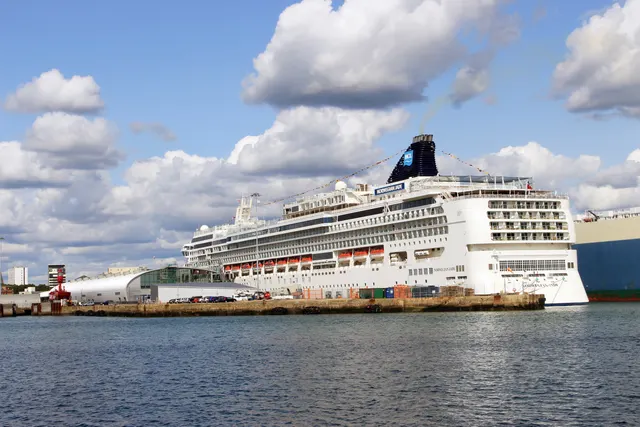
Year Built
2006
Tonnage
93,558 GT
Passengers
2,402
Crew
1,037
Decks
15
Class
Jewel
Itinerary & Route Map
Loading map…
Where this cruise calls, day by day
7 ports and 3 sea days over 9 Nights.
- Day 1
Tokyo
JapanDepartMost itineraries that say Tokyo actually berth at Yokohama, half an hour down the bay - Osanbashi Pier for medium ships, Daikoku Pier for the very large ones, with the Tokyo International Cruise Terminal at Odaiba as the third option. Yokohama is not a consolation prize: Osanbashi opens straight onto the waterfront, with Chinatown and Minato Mirai on foot. But if you want Tokyo proper, budget the round trip and pick two neighbourhoods rather than five.
- Senso-ji temple and Nakamise shopping street in Asakusa
- Meiji Jingu shrine and the walk down through Harajuku to Shibuya Crossing
- The Imperial Palace East Gardens and the Tokyo National Museum in Ueno
- Yokohama's Chinatown, Sankeien Garden and the Minato Mirai waterfront
- Getting ashore
- Docked. Osanbashi Pier in Yokohama is walkable to Chinatown and about 30 minutes by train from central Tokyo; Daikoku Pier is an industrial berth 15km out needing a shuttle, and Odaiba's terminal is on the Yurikamome line.
- Best months
- Late Mar-early Apr (cherry blossom), Oct-Nov (autumn colour)
Day 2 · At sea
- Day 3
Osaka
JapanPortOsaka docks at Tempozan Pier in the western harbour, five minutes' walk from a subway station, which makes it one of the more self-sufficient ports in Japan. The city is the blunt, food-obsessed counterweight to Kyoto - neon, street snacks and a rebuilt castle rather than temples and moss. It also works as the gateway to Kyoto and Nara, both about an hour away, which is what many passengers use the day for.
- Osaka Castle and its park
- Dotonbori and Kuromon Ichiba market for takoyaki and kushikatsu
- Fushimi Inari's torii gates or Kiyomizu-dera in Kyoto
- Todai-ji and the free-roaming deer of Nara Park
- Getting ashore
- Docked at Tempozan Pier; Osakako subway station is a five-minute walk, central Osaka about 20 minutes, and Kyoto roughly an hour by train.
- Best months
- Late Mar-Apr (blossom), Oct-Nov; Aug is punishingly humid
- Day 4
Kochi
JapanPortKochi sits on the Pacific side of Shikoku, an island most foreign visitors never reach, and it feels correspondingly untouristed. Its castle is one of only a dozen in Japan with an original keep, and the city's other landmark is a statue of Sakamoto Ryoma staring out to sea from Katsurahama beach. Ships berth at the new port a little outside town.
- Kochi Castle, with its original Edo-period keep and palace
- Hirome Market, a covered hall of food stalls where the local move is seared bonito
- Katsurahama beach and the Sakamoto Ryoma statue
- Chikurin-ji temple and the Makino Botanical Garden on Mount Godai
- Getting ashore
- Docked at Kochi Shinko (New Port); the centre and the castle are about 20-30 minutes away by shuttle or bus.
- Best months
- Apr-May and Oct-Nov
- Day 5
Kagoshima
JapanPortKagoshima faces an active volcano across a few kilometres of bay - Sakurajima erupts routinely, and the city sweeps up ash the way other places sweep leaves. The port is close to the centre, and the ferry across to the volcano runs constantly and takes a quarter of an hour. The city was also the seat of the Shimazu clan, whose garden at Sengan-en uses Sakurajima as its borrowed scenery.
- The ferry across to Sakurajima and the Yunohira observatory on its flank
- Sengan-en, the Shimazu family garden framed against the volcano
- Shiroyama Observatory, for the view over the city and bay
- A buried-in-hot-sand bath at Ibusuki, about an hour south
- Getting ashore
- Docked at Marine Port Kagoshima, close to the city centre; the Sakurajima ferry leaves from a terminal nearby and crosses in about 15 minutes.
- Best months
- Mar-May and Oct-Nov
Day 6 · At sea
- Day 7
Naha (Okinawa)
JapanPortOkinawa was the independent Ryukyu Kingdom until the 1870s, and Naha still looks and eats differently from mainland Japan - subtropical, with its own architecture, music and a heavy American military presence. The island was also the site of the war's worst land battle, which the memorials in the south address directly. Ships berth close to the city, and the monorail handles the rest.
- Shuri Castle, the Ryukyu royal seat, still being rebuilt after the 2019 fire
- Kokusai-dori, Naha's main shopping street, and the Makishi public market
- The Okinawa Prefectural Peace Memorial Park and museum in the south of the island
- The Churaumi Aquarium and its whale sharks, up on the Motobu peninsula
- Getting ashore
- Docked at one of Naha's cruise piers; Kokusai-dori and the monorail are 10-15 minutes away, but the Churaumi Aquarium is roughly two hours north and needs a full-day excursion.
- Best months
- Mar-May and Oct-Nov; typhoon risk peaks Aug-Sep
- Day 8
Keelung (Taipei)
TaiwanPortKeelung is unusual among Asian gateway ports in that the ship ties up in the middle of town - the terminal is at the head of the harbour with the city wrapped around it. Keelung is a rainy working port with one of Taiwan's best night markets a few minutes' walk away. Taipei is under an hour inland, and the old gold-mining hill town of Jiufen is about the same in the other direction.
- Miaokou Night Market, a short walk from the berth
- Taipei 101 and the National Palace Museum's Chinese imperial collection
- Jiufen's tea houses and stepped lanes above the coast
- Yehliu Geopark and its wind-eroded rock formations
- Getting ashore
- Docked at the East or West Pier terminals in central Keelung - downtown and the railway station are a 10-minute walk; Taipei is about 45 minutes by train, Jiufen around 50 minutes by bus.
- Best months
- Oct-Dec and Mar-Apr; Keelung is genuinely the wettest city in Taiwan
Day 9 · At sea
- Day 10
Hong Kong
Hong KongArriveHong Kong is one of the great arrivals in cruising if your ship berths at Ocean Terminal, which sits at the tip of Tsim Sha Tsui with the whole Victoria Harbour skyline in front of it. The alternative, Kai Tak, was built on the runway of the old airport and is stranded on a peninsula with no rail link, so the day starts with a shuttle. Either way you get a dense, vertical, fast-moving city where the ferries and the metro do most of the work.
- The Star Ferry across to Central, then the Peak Tram up Victoria Peak
- The Tian Tan Big Buddha and Po Lin Monastery on Lantau, via the Ngong Ping cable car - a full-day commitment
- Man Mo Temple and the antique shops of Hollywood Road
- Wong Tai Sin Temple, or the street stalls of Temple Street after dark
- Getting ashore
- Docked. Ocean Terminal puts you directly in Tsim Sha Tsui on foot; from Kai Tak it is a 10-minute walk (or free shuttle bus) to Kai Tak MTR station, with free ship-day shuttles to the Star Ferry pier and the Peak Tram, and 15-20 minutes by taxi into town.
- Best months
- Oct-Dec (dry, clear); Mar-May is humid and hazy
Onboard Amenities
Cruise Highlights
About the Ship
What Travelers Say About Norwegian Jade
Reviews of the ship itself — the same for every Norwegian Jade sailing. Based on 2,500 discussions.
Norwegian Jade is a mid-size Norwegian Cruise Line ship carrying about 2,352 guests, and its scale is exactly what fans love about it: it's roomy enough for a full slate of restaurants, bars and a big spa, yet small and easy to navigate compared with NCL's newer mega-ships. Built in 2006 and refreshed through the line's Norwegian Edge program, the Jade leans into NCL's signature 'Freestyle' approach — no fixed dining times, no formal nights, and a relaxed come-as-you-are vibe. It's a popular pick for scenic, port-heavy itineraries like Alaska and the Mediterranean where the ship is more of a comfortable home base than the main attraction.
What People Love
- Mid-size 2,352-guest ship that's easy to navigate and rarely feels as crowded as NCL's mega-ships, making it a favorite for Alaska and Mediterranean itineraries
- Freestyle dining means no fixed seating or formal nights — eat when and with whom you want across two main dining rooms and the Garden Cafe buffet
- Strong specialty dining lineup for the ship's size: Cagney's Steakhouse, Le Bistro French, Teppanyaki hibachi, Moderno Brazilian churrascaria and Jasmine Garden Asian/sushi
Common Complaints
- Standard cabins are notably tight, with cramped bathrooms where the toilet is wedged into a corner with little legroom
- Inside cabins have an awkward bathroom layout, a small TV and very limited channel selection
- Main dining room menus are described as limited and slow to change across a sailing
More Asia Cruises
View all Asia cruisesSilversea
Silversea Silver Moon - Grand Voyage Asia
Silversea
Silver Moon - Hong Kong to Tokyo: Taiwan, Korea & Japan
Seabourn
Seabourn Ovation - Gems of Southeast Asia: Singapore to Hong Kong
Silversea
Silver Dawn - Singapore to Mumbai: Sri Lanka & the Spice Coast