Norwegian Jade - Autumn Japan & Korea: Tokyo to Seoul
Norwegian Jade's return-to-Asia season opener, an open-jaw from Tokyo to Seoul (Incheon) that mixes marquee stops like Osaka with rarely-cruised Sea of Japan ports Kanazawa and Akita before crossing to Busan and Jeju.
Price Range
$
Budget
*Prices vary by cabin type, sailing date, and availability. Confirm rates with Norwegian Cruise Line before booking.
Ship Details — Norwegian Jade
View full Norwegian Jade details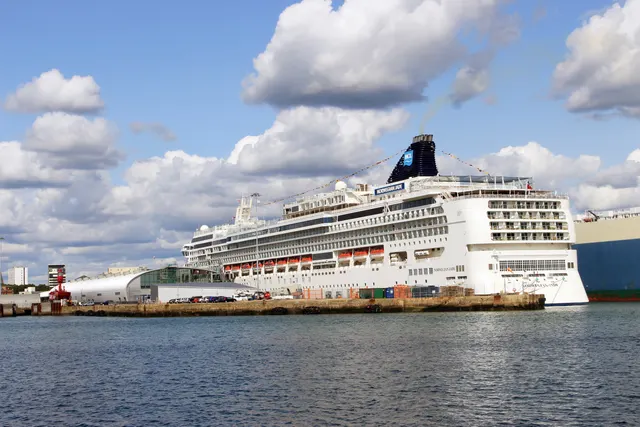
Year Built
2006
Tonnage
93,558 GT
Passengers
2,402
Crew
1,037
Decks
15
Class
Jewel
Itinerary & Route Map
Loading map…
Where this cruise calls, day by day
9 ports and 3 sea days over 11 Nights.
- Day 1
Tokyo
JapanDepartMost itineraries that say Tokyo actually berth at Yokohama, half an hour down the bay - Osanbashi Pier for medium ships, Daikoku Pier for the very large ones, with the Tokyo International Cruise Terminal at Odaiba as the third option. Yokohama is not a consolation prize: Osanbashi opens straight onto the waterfront, with Chinatown and Minato Mirai on foot. But if you want Tokyo proper, budget the round trip and pick two neighbourhoods rather than five.
- Senso-ji temple and Nakamise shopping street in Asakusa
- Meiji Jingu shrine and the walk down through Harajuku to Shibuya Crossing
- The Imperial Palace East Gardens and the Tokyo National Museum in Ueno
- Yokohama's Chinatown, Sankeien Garden and the Minato Mirai waterfront
- Getting ashore
- Docked. Osanbashi Pier in Yokohama is walkable to Chinatown and about 30 minutes by train from central Tokyo; Daikoku Pier is an industrial berth 15km out needing a shuttle, and Odaiba's terminal is on the Yurikamome line.
- Best months
- Late Mar-early Apr (cherry blossom), Oct-Nov (autumn colour)
- Day 2
Shimizu
JapanPortShimizu exists on Japan itineraries for one reason: on a clear morning Mount Fuji stands directly across Suruga Bay from the berth, and you can see it from the ship. The port itself is part of Shizuoka, a green-tea and tuna-fishing city rather than a tourist town. Whether the day is memorable depends almost entirely on cloud cover, which is worth knowing before you book anything.
- Miho no Matsubara, the pine-lined shore with the classic Fuji view across the bay
- The Nihondaira plateau and the ropeway down to Kunozan Toshogu shrine
- Shizuoka's Sumpu Castle Park, once Tokugawa Ieyasu's retirement seat
- Green tea plantations in the hills inland, and the sashimi counters at Shimizu fish market
- Getting ashore
- Docked at Hinode Pier in Shimizu, with the S-Pulse Dream Plaza waterfront complex beside the terminal; Miho no Matsubara is about 20 minutes by taxi and Shizuoka city around 15 minutes by train.
- Best months
- Nov-Feb (clearest Fuji views); summer haze often hides it
- Day 3
Nagoya
JapanPortNagoya is Japan's industrial heartland - Toyota country - and it makes no particular effort to charm visitors, which some people find refreshing. The cruise berth is at Kinjo Pier in the port district, about half an hour from the centre. The castle is a postwar reconstruction, but Atsuta Shrine is genuinely ancient, and the manufacturing museums are better than that description sounds.
- Nagoya Castle and its restored Honmaru Palace interiors
- Atsuta Shrine, one of the most important Shinto sites in Japan
- The Toyota Commemorative Museum of Industry and Technology
- Hitsumabushi - grilled eel over rice, the local dish worth planning lunch around
- Getting ashore
- Docked at Kinjo Pier in Nagoya Port; central Nagoya is about 30 minutes by road or on the Aonami Line.
- Best months
- Late Mar-Apr and Oct-Nov
- Day 4
Osaka
JapanPortOsaka docks at Tempozan Pier in the western harbour, five minutes' walk from a subway station, which makes it one of the more self-sufficient ports in Japan. The city is the blunt, food-obsessed counterweight to Kyoto - neon, street snacks and a rebuilt castle rather than temples and moss. It also works as the gateway to Kyoto and Nara, both about an hour away, which is what many passengers use the day for.
- Osaka Castle and its park
- Dotonbori and Kuromon Ichiba market for takoyaki and kushikatsu
- Fushimi Inari's torii gates or Kiyomizu-dera in Kyoto
- Todai-ji and the free-roaming deer of Nara Park
- Getting ashore
- Docked at Tempozan Pier; Osakako subway station is a five-minute walk, central Osaka about 20 minutes, and Kyoto roughly an hour by train.
- Best months
- Late Mar-Apr (blossom), Oct-Nov; Aug is punishingly humid
Day 5 · At sea
- Day 6
Kanazawa
JapanPortKanazawa came through the war unbombed, so its geisha districts and samurai quarter are the real thing rather than reconstructions. The city sits on the Sea of Japan coast and made its money from rice and gold leaf, which is why the gardens are so good and why half the souvenirs are gilded. The port is a few kilometres out at Mukaihama, so you will be shuttled in.
- Kenrokuen, generally ranked among Japan's three great landscape gardens
- The Higashi Chaya teahouse district and its gold-leaf workshops
- Kanazawa Castle Park, next door to Kenrokuen
- Omicho Market for crab and sea urchin, and the 21st Century Museum of Contemporary Art
- Getting ashore
- Docked at Kanazawa Port (Mukaihama Pier), roughly 10km from the centre - 20-30 minutes by shuttle or taxi to Kenrokuen and the old districts.
- Best months
- Apr-May and Oct-Nov; heavy snow Dec-Feb
- Day 7
Akita
JapanPortAkita is a rice and sake prefecture on the Sea of Japan coast, thinly visited and heavy with snow in winter. The port is a working one a short drive from the city, and the city itself is quiet - the draw is what surrounds it, particularly the preserved samurai street at Kakunodate. Local specialities are worth chasing here: kiritanpo, Hinai chicken, and some of Japan's best sake.
- The samurai houses and weeping cherry trees of Kakunodate
- Senshu Park, on the ruins of Kubota Castle in central Akita
- The Namahage folklore museum on the Oga Peninsula
- A sake brewery visit in the rice country inland
- Getting ashore
- Docked at Akita Port; the city centre is about 30 minutes away and Kakunodate roughly an hour inland by coach.
- Best months
- Late Apr-May (late blossom) and Oct (autumn colour)
Day 8 · At sea
- Day 9
Busan
South KoreaPortBusan is Korea's port city and second-largest, wedged between mountains and beaches with a working fish market at its heart. Ships use the international terminal near Busan Station, which puts the old downtown within a short taxi ride. The two things people remember are Jagalchi's tanks of live seafood and the painted hillside houses of Gamcheon.
- Jagalchi Fish Market and the neighbouring Gukje Market
- Gamcheon Culture Village, the terraced hillside of painted houses
- Haedong Yonggungsa, a Buddhist temple built right on the rocks above the sea
- Beomeosa Temple on the slopes of Geumjeongsan, or the sand at Haeundae
- Getting ashore
- Docked, but check which terminal - the Busan Port International Passenger Terminal in North Port is beside Busan Station, while the largest ships use the Yeongdo cruise terminal out on the island, which has no walk-out option and depends on shuttles.
- Best months
- Apr-Jun and Sep-Oct (mild, dry); Jul-Aug brings the monsoon
- Day 10
Jeju
South KoreaPortJeju is a volcanic island off the southern tip of Korea, built up from lava flows around the cone of Hallasan, and it is where mainland Koreans go on honeymoon. The coastline is black rock and the interior is a national park. Most calls use Jeju Port on the north side, though some ships berth at the newer facility near Seogwipo in the south, which changes which half of the island is convenient.
- Seongsan Ilchulbong, the tuff cone rising straight out of the sea on the east coast
- Manjanggul Lava Tube, one of the longest lava caves in the world
- The Jusangjeolli basalt columns on the south coast near Jungmun
- Haenyeo diving demonstrations, and Hallasan's lower trails
- Getting ashore
- Docked. Mid-size ships use Jeju Port beside Jeju City; the largest berth at the Gangjeong terminal near Seogwipo on the opposite coast. Seongsan Ilchulbong is roughly 45 minutes from Jeju Port and about 50 from Gangjeong.
- Best months
- Apr-Jun and Sep-Oct; canola blooms in April
Day 11 · At sea
- Day 12
Incheon (Seoul)
South KoreaArriveIncheon's cruise terminal opened in 2019 out near Songdo, and it is a long way from the Seoul most passengers have in mind - reckon on an hour or more each way. That leaves a real choice: one concentrated run at the palaces and old quarters of Seoul, or a slower day around Incheon itself, which has Korea's only Chinatown and the harbour where the 1950 landings took place.
- Gyeongbokgung Palace and the changing of the guard, in central Seoul
- Bukchon Hanok Village and the craft shops of Insadong
- Incheon Chinatown and the Jayu (Freedom) Park above it
- Songdo Central Park, close to the terminal, if you would rather not commit to the drive
- Getting ashore
- Docked at Incheon International Cruise Terminal on reclaimed land south of Songdo, about 7km from the nearest metro station; central Seoul is 60-90 minutes each way, so the ship's transfer is usually the sane option.
- Best months
- Apr-Jun and Sep-Oct; winter is bitterly cold
Onboard Amenities
Cruise Highlights
About the Ship
What Travelers Say About Norwegian Jade
Reviews of the ship itself — the same for every Norwegian Jade sailing. Based on 2,500 discussions.
Norwegian Jade is a mid-size Norwegian Cruise Line ship carrying about 2,352 guests, and its scale is exactly what fans love about it: it's roomy enough for a full slate of restaurants, bars and a big spa, yet small and easy to navigate compared with NCL's newer mega-ships. Built in 2006 and refreshed through the line's Norwegian Edge program, the Jade leans into NCL's signature 'Freestyle' approach — no fixed dining times, no formal nights, and a relaxed come-as-you-are vibe. It's a popular pick for scenic, port-heavy itineraries like Alaska and the Mediterranean where the ship is more of a comfortable home base than the main attraction.
What People Love
- Mid-size 2,352-guest ship that's easy to navigate and rarely feels as crowded as NCL's mega-ships, making it a favorite for Alaska and Mediterranean itineraries
- Freestyle dining means no fixed seating or formal nights — eat when and with whom you want across two main dining rooms and the Garden Cafe buffet
- Strong specialty dining lineup for the ship's size: Cagney's Steakhouse, Le Bistro French, Teppanyaki hibachi, Moderno Brazilian churrascaria and Jasmine Garden Asian/sushi
Common Complaints
- Standard cabins are notably tight, with cramped bathrooms where the toilet is wedged into a corner with little legroom
- Inside cabins have an awkward bathroom layout, a small TV and very limited channel selection
- Main dining room menus are described as limited and slow to change across a sailing
More Asia Cruises
View all Asia cruisesSilversea
Silversea Silver Moon - Grand Voyage Asia
Silversea
Silver Moon - Hong Kong to Tokyo: Taiwan, Korea & Japan
Seabourn
Seabourn Ovation - Gems of Southeast Asia: Singapore to Hong Kong
Silversea
Silver Dawn - Singapore to Mumbai: Sri Lanka & the Spice Coast