Diamond Princess - Japanese Explorer
Discover the ancient temples, modern cities, and stunning natural beauty of Japan on this comprehensive itinerary that covers the country's most iconic destinations.
Price Range
$$
Mid-Range
*Prices vary by cabin type, sailing date, and availability. Confirm rates with Princess Cruises before booking.
Ship Details — Diamond Princess
View full Diamond Princess details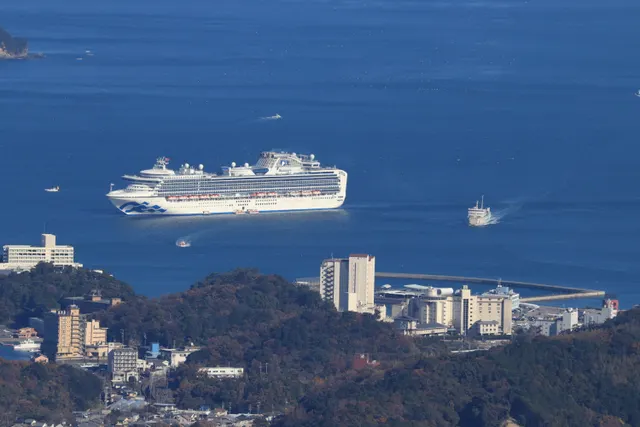
Year Built
2004
Tonnage
115,875 GT
Passengers
2,670
Crew
1,100
Decks
18
Class
Grand
Itinerary & Route Map
Loading map…
Where this cruise calls, day by day
8 ports and 4 sea days over 11 Nights.
- Day 1
Tokyo
JapanDepartMost itineraries that say Tokyo actually berth at Yokohama, half an hour down the bay - Osanbashi Pier for medium ships, Daikoku Pier for the very large ones, with the Tokyo International Cruise Terminal at Odaiba as the third option. Yokohama is not a consolation prize: Osanbashi opens straight onto the waterfront, with Chinatown and Minato Mirai on foot. But if you want Tokyo proper, budget the round trip and pick two neighbourhoods rather than five.
- Senso-ji temple and Nakamise shopping street in Asakusa
- Meiji Jingu shrine and the walk down through Harajuku to Shibuya Crossing
- The Imperial Palace East Gardens and the Tokyo National Museum in Ueno
- Yokohama's Chinatown, Sankeien Garden and the Minato Mirai waterfront
- Getting ashore
- Docked. Osanbashi Pier in Yokohama is walkable to Chinatown and about 30 minutes by train from central Tokyo; Daikoku Pier is an industrial berth 15km out needing a shuttle, and Odaiba's terminal is on the Yurikamome line.
- Best months
- Late Mar-early Apr (cherry blossom), Oct-Nov (autumn colour)
- Day 2
Shimizu
JapanPortShimizu exists on Japan itineraries for one reason: on a clear morning Mount Fuji stands directly across Suruga Bay from the berth, and you can see it from the ship. The port itself is part of Shizuoka, a green-tea and tuna-fishing city rather than a tourist town. Whether the day is memorable depends almost entirely on cloud cover, which is worth knowing before you book anything.
- Miho no Matsubara, the pine-lined shore with the classic Fuji view across the bay
- The Nihondaira plateau and the ropeway down to Kunozan Toshogu shrine
- Shizuoka's Sumpu Castle Park, once Tokugawa Ieyasu's retirement seat
- Green tea plantations in the hills inland, and the sashimi counters at Shimizu fish market
- Getting ashore
- Docked at Hinode Pier in Shimizu, with the S-Pulse Dream Plaza waterfront complex beside the terminal; Miho no Matsubara is about 20 minutes by taxi and Shizuoka city around 15 minutes by train.
- Best months
- Nov-Feb (clearest Fuji views); summer haze often hides it
Day 3 · At sea
- Day 4
Maizuru
JapanPortMaizuru is in Kyoto Prefecture but on the wrong coast for the Kyoto everyone pictures - it faces the Sea of Japan, and the city is a former Imperial Navy base with a row of red-brick warehouses to show for it. It works as a landing point for the Tango peninsula rather than as a destination. Kyoto city is reachable but takes most of the day.
- The Maizuru Red Brick Park, former naval storehouses now museums and cafes
- Amanohashidate, the pine-covered sandbar counted among Japan's three great views
- The funaya boathouses of Ine, built out over the water
- Kyoto's temples, if you are willing to spend four hours on the road
- Getting ashore
- Docked at Maizuru Port; the Red Brick Park is a few minutes away, Amanohashidate roughly an hour west, and Kyoto city about two hours south.
- Best months
- Apr-May and Oct-Nov
- Day 5
Kanazawa
JapanPortKanazawa came through the war unbombed, so its geisha districts and samurai quarter are the real thing rather than reconstructions. The city sits on the Sea of Japan coast and made its money from rice and gold leaf, which is why the gardens are so good and why half the souvenirs are gilded. The port is a few kilometres out at Mukaihama, so you will be shuttled in.
- Kenrokuen, generally ranked among Japan's three great landscape gardens
- The Higashi Chaya teahouse district and its gold-leaf workshops
- Kanazawa Castle Park, next door to Kenrokuen
- Omicho Market for crab and sea urchin, and the 21st Century Museum of Contemporary Art
- Getting ashore
- Docked at Kanazawa Port (Mukaihama Pier), roughly 10km from the centre - 20-30 minutes by shuttle or taxi to Kenrokuen and the old districts.
- Best months
- Apr-May and Oct-Nov; heavy snow Dec-Feb
Day 6 · At sea
- Day 7
Busan
South KoreaPortBusan is Korea's port city and second-largest, wedged between mountains and beaches with a working fish market at its heart. Ships use the international terminal near Busan Station, which puts the old downtown within a short taxi ride. The two things people remember are Jagalchi's tanks of live seafood and the painted hillside houses of Gamcheon.
- Jagalchi Fish Market and the neighbouring Gukje Market
- Gamcheon Culture Village, the terraced hillside of painted houses
- Haedong Yonggungsa, a Buddhist temple built right on the rocks above the sea
- Beomeosa Temple on the slopes of Geumjeongsan, or the sand at Haeundae
- Getting ashore
- Docked, but check which terminal - the Busan Port International Passenger Terminal in North Port is beside Busan Station, while the largest ships use the Yeongdo cruise terminal out on the island, which has no walk-out option and depends on shuttles.
- Best months
- Apr-Jun and Sep-Oct (mild, dry); Jul-Aug brings the monsoon
Day 8 · At sea
- Day 9
Hiroshima
JapanPortShips berth at Ujina on the south side of Hiroshima, and the tram in from the terminal is straightforward. What follows is a difficult, well-handled few hours: the skeletal A-Bomb Dome left standing where it was, the museum, the park built over the flattened district. It pairs, oddly but effectively, with a ferry out to Miyajima, where a vermilion torii stands in the tidal shallows.
- The Peace Memorial Park, the A-Bomb Dome and the Peace Memorial Museum
- Itsukushima Shrine and its floating torii on Miyajima
- Shukkeien, the compact Edo-period garden near the castle
- Okonomiyaki cooked Hiroshima-style, layered with noodles
- Getting ashore
- Docked at Ujina (Hiroshima Port); the tram from outside the terminal reaches the Peace Memorial Park in about 30 minutes, and ferries to Miyajima leave from the same harbour area.
- Best months
- Late Mar-Apr and Oct-Nov
- Day 10
Osaka
JapanPortOsaka docks at Tempozan Pier in the western harbour, five minutes' walk from a subway station, which makes it one of the more self-sufficient ports in Japan. The city is the blunt, food-obsessed counterweight to Kyoto - neon, street snacks and a rebuilt castle rather than temples and moss. It also works as the gateway to Kyoto and Nara, both about an hour away, which is what many passengers use the day for.
- Osaka Castle and its park
- Dotonbori and Kuromon Ichiba market for takoyaki and kushikatsu
- Fushimi Inari's torii gates or Kiyomizu-dera in Kyoto
- Todai-ji and the free-roaming deer of Nara Park
- Getting ashore
- Docked at Tempozan Pier; Osakako subway station is a five-minute walk, central Osaka about 20 minutes, and Kyoto roughly an hour by train.
- Best months
- Late Mar-Apr (blossom), Oct-Nov; Aug is punishingly humid
Day 11 · At sea
- Day 12
Tokyo
JapanArriveMost itineraries that say Tokyo actually berth at Yokohama, half an hour down the bay - Osanbashi Pier for medium ships, Daikoku Pier for the very large ones, with the Tokyo International Cruise Terminal at Odaiba as the third option. Yokohama is not a consolation prize: Osanbashi opens straight onto the waterfront, with Chinatown and Minato Mirai on foot. But if you want Tokyo proper, budget the round trip and pick two neighbourhoods rather than five.
- Senso-ji temple and Nakamise shopping street in Asakusa
- Meiji Jingu shrine and the walk down through Harajuku to Shibuya Crossing
- The Imperial Palace East Gardens and the Tokyo National Museum in Ueno
- Yokohama's Chinatown, Sankeien Garden and the Minato Mirai waterfront
- Getting ashore
- Docked. Osanbashi Pier in Yokohama is walkable to Chinatown and about 30 minutes by train from central Tokyo; Daikoku Pier is an industrial berth 15km out needing a shuttle, and Odaiba's terminal is on the Yurikamome line.
- Best months
- Late Mar-early Apr (cherry blossom), Oct-Nov (autumn colour)
Onboard Amenities
Cruise Highlights
About the Ship
What Travelers Say About Diamond Princess
Reviews of the ship itself — the same for every Diamond Princess sailing. Based on 4,500 discussions.
Diamond Princess is a 2004-built, roughly 2,670-guest Princess ship that has carved out a unique niche as the line's Japan-based vessel, sailing intensive itineraries around the country with a distinctly Japanese onboard flavor. Its single most distinctive feature is the Izumi Japanese Bath, an 8,800-square-foot onsen complex with indoor and outdoor bathing that no other cruise ship offers. The ship is widely remembered as the 2020 COVID quarantine vessel, but its current reputation rests on warm service and immersive Japanese cruising rather than that episode.
What People Love
- Excellent, attentive crew service repeatedly singled out as the highlight of the experience
- The only ship at sea with a full onsen - the 8,800-sq-ft Izumi Japanese Bath with indoor and outdoor pools
- Outstanding Japanese cuisine, including sushi, fresh seafood and a popular ramen station in the buffet
Common Complaints
- Built in 2004, the ship feels dated in decor, cabins and some amenities despite refits
- Bathrooms are a common gripe - very compact showers with plastic curtains and temperamental taps
- Air conditioning and cabin systems reflect the ship's age and are not always efficient
More Asia Cruises
View all Asia cruisesSilversea
Silversea Silver Moon - Grand Voyage Asia
Silversea
Silver Moon - Hong Kong to Tokyo: Taiwan, Korea & Japan
Seabourn
Seabourn Ovation - Gems of Southeast Asia: Singapore to Hong Kong
Silversea
Silver Dawn - Singapore to Mumbai: Sri Lanka & the Spice Coast